Best Tank Mates for Firemouth Cichlid: Compatible Fish and Species to Avoid
The best firemouth cichlid tank mates are sturdy fish around 3 inches (7.5 cm) or larger that stay in the middle and upper water column. Good examples are rainbowfish, Denison or rosy barbs, larger tetras and swordtails, plus armored bottom dwellers like bristlenose plecos and bronze corydoras. Skip nano fish, shrimp, snails, slow long-finned fish and the heavyweight cichlids that would bully a firemouth.
Firemouth Cichlid at a Glance
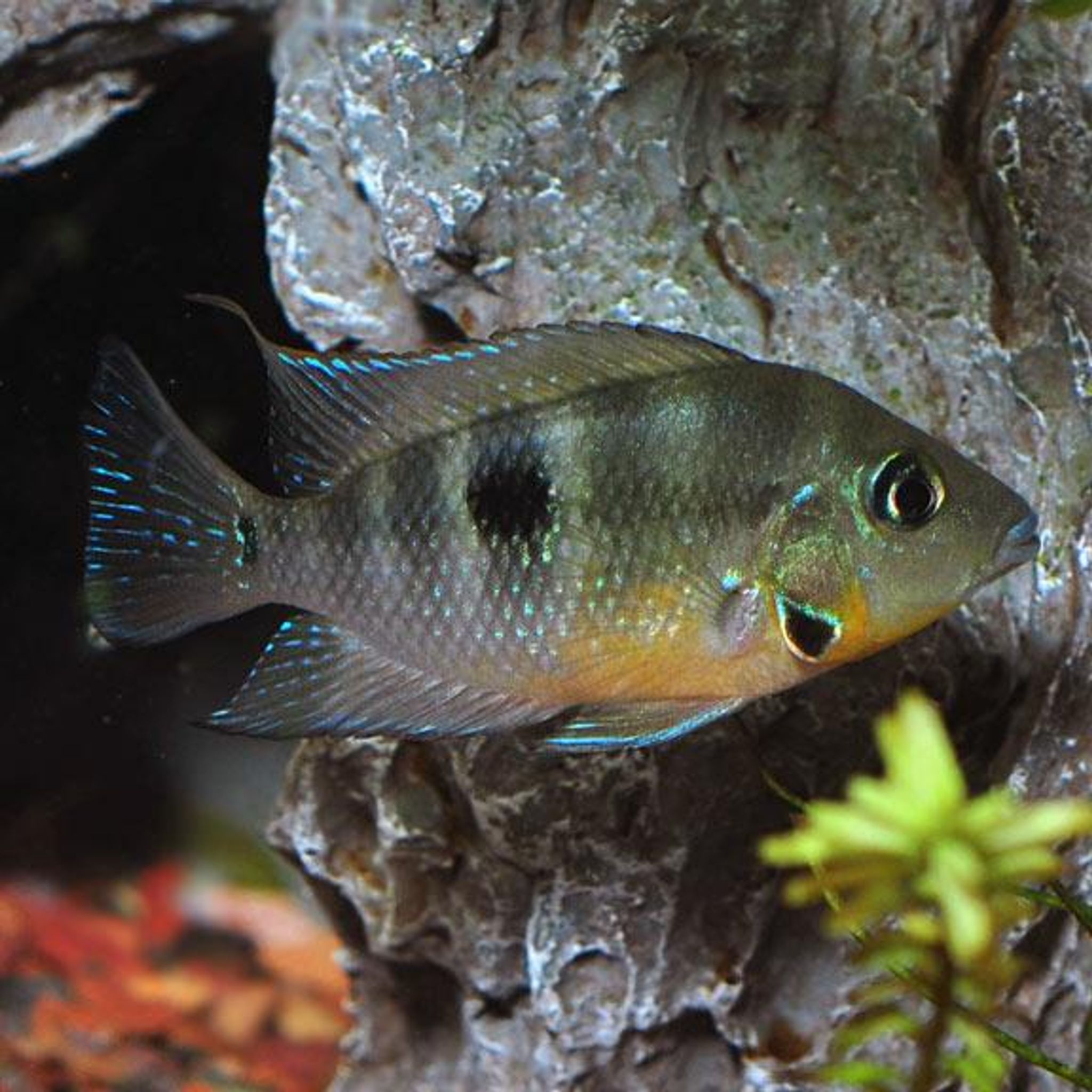
The firemouth (Thorichthys meeki) is a Central American cichlid from Mexico, Guatemala and Belize. Males grow to 6–7 inches (15–18 cm) and females to 4–5 inches (10–13 cm). With good care it can live 10–15 years, so the companions you pick now may be with it for a long time.
It's usually listed as semi-aggressive, but it's one of the mildest Central Americans you can buy. Its famous red throat is mostly for show. When a firemouth flares its gill covers and pushes that red patch forward, it's bluffing: trying to look bigger so a rival backs off without a fight.
Why the bluff matters for stocking
A fish that bluffs needs neighbors that will read the warning and move away. It does badly with fish that call the bluff. A convict or Jack Dempsey won't back off, and then the firemouth, which is built for display more than combat, loses. Timid or slow fish have the opposite problem: they can't get away, so the firemouth keeps chasing them. A flared throat by itself isn't a reason to panic. Worry when the display turns into constant chasing, nipping or torn fins.
Tank Size, Water and Setup
- 30 gallons (114 L) is the minimum for a lone firemouth or a single pair.
- 55 gallons (208 L) or more for a community tank.
- 75 gallons (284 L) or more if you add other medium cichlids.
- Allow roughly 5–10 gallons (19–38 L) for each extra mid-size fish.
Water parameters: 72–82°F (22–28°C) is the standard range. Some sources stretch it to 70–86°F (21–30°C), but for a mixed community, 75–80°F (24–27°C) keeps both the firemouth and its tank mates comfortable. Aim for pH 6.5–8.0 (ideally around 7.0–7.5) and 8–15 dGH. Moderately hard, slightly alkaline water is fine, and most US tap water already fits.
Setup: Use a sand substrate, because firemouths sift mouthfuls of it looking for food. Add rock caves, driftwood and flat stones they can use as spawning sites. They dig, so choose tough plants or keep them in pots. Moderate flow is plenty.
Nitrate control: Cichlids produce a lot of waste. Keep nitrate under 40 ppm, ideally near 20 ppm, with 25–30% weekly water changes. Poor water makes any fish grumpier.
Rules for Choosing Compatible Fish
- Too big to swallow. Pick fish around 3 inches (7.5 cm) or larger as adults. Anything that fits in the firemouth's mouth may end up as food.
- Fast or armored. Quick swimmers get out of the way, and plated catfish and plecos shrug off a charge.
- Similar water. Choose fish that like neutral to slightly alkaline, moderately hard water at 75–80°F.
- Confident, not a bully. Tank mates should hold their ground without picking fights.
- Use the open water. Firemouths mostly live near the bottom, so fish that swim in the middle and upper levels rarely step on their territory.
Dither fish lower aggression
Dither fish are active schooling fish that cruise the upper water column. When a cichlid sees a busy, relaxed school overhead, it reads the tank as safe and gets less defensive. A tank with no midwater activity often makes a firemouth more territorial, not less. Add a school of dithers early and in a good-sized group.
Firemouth Cichlid Compatibility Table
| Tank mate | Tier | Adult size | Zone | Min. tank |
|---|---|---|---|---|
| Boesemani / medium rainbowfish | Top | 3–4 in (8–10 cm) | Mid/upper | 55 gal |
| Giant danio | Top | 4 in (10 cm) | Upper | 55 gal |
| Denison barb | Top | 4–6 in (10–15 cm) | Mid/upper | 55 gal |
| Rosy barb (adults) | Top | 4–6 in (10–15 cm) | Mid | 55 gal |
| Congo, Colombian, diamond, black widow tetra | Top | 2.5–3 in (6–8 cm) | Mid | 55 gal |
| Swordtail | Top | 4–5 in (10–13 cm) | Mid/upper | 55 gal |
| Silver dollar | Top (large tanks) | 6 in (15 cm) | Mid | 75 gal+ |
| Bristlenose / clown pleco | Top | 3.5–5 in (9–13 cm) | Bottom | 55 gal |
| Bronze / emerald corydoras (6+) | Top | 2.5–3.5 in (6–9 cm) | Bottom | 55 gal |
| Hoplo catfish | Top | 5–6 in (13–15 cm) | Bottom | 55 gal |
| Pictus catfish | Good (not for breeders) | 4–5 in (10–13 cm) | Bottom | 55 gal |
| Zebra / yoyo loach | Good | 3.5–4 in (9–10 cm) | Bottom | 55 gal |
| Siamese algae eater | Good | 5–6 in (13–15 cm) | All levels | 55 gal |
| Clown loach | Good (very large tanks) | 10–12 in (25–30 cm) | Bottom | 125 gal+ |
| Severum, electric blue acara, keyhole | Conditional | 4–8 in (10–20 cm) | Mid/bottom | 75 gal+ |
| Rainbow cichlid, blood parrot | Conditional | 5–8 in (13–20 cm) | Mid/bottom | 75 gal+ |
| Angelfish (adults) | Borderline | 6 in (15 cm) body | Mid | 75 gal+ |
| Convict, salvini, Nicaraguan | Risky | 5–10 in (13–25 cm) | Bottom | Large tanks only |
| Jack Dempsey, oscar, green terror, red devil, flowerhorn | Avoid | Large | All | Not compatible |
Adult sizes and minimum tanks are typical guides. Individual fish vary, so always watch how the group actually behaves.
Top-Tier Tank Mates
Dither and midwater fish
Boesemani and other medium rainbowfish, giant danios, Denison barbs and adult rosy barbs are fast, colorful and big enough to ignore a firemouth's posturing. Swordtails are a nice regional match, since they're also Central American. You can browse barbs and rainbowfish on FishyHub when planning a school.
Tetras need a size check. Some keepers call them perfect dithers and others say they get eaten. Both are right, depending on the species. Larger tetras of about 2.5–3 inches (6–8 cm), such as Congo, Colombian, diamond and black widow tetras kept in bigger schools, are generally safe. Nano tetras are not. Silver dollars also work, but only in large tanks because they're big schooling fish.
Bottom dwellers
Armored catfish handle a firemouth well. The bristlenose pleco and clown pleco stay small and keep to their own caves. Corydoras do well in groups of 6 or more, but pick the larger species like bronze or emerald instead of the tiny pygmy types. Hoplo catfish are tough and peaceful. Browse plecos, corys and bottom dwellers to see what's available.
The pictus catfish is a fine adult tank mate, but it hunts at night and will eat fry and very small fish. If you plan to breed firemouths, leave it out.
Loaches and algae eaters
Zebra loaches and yoyo loaches are active, sturdy and suited to 55 gallons and up. Clown loaches are often recommended without a warning about size: they reach 10–12 inches (25–30 cm) and should only go in tanks of 125 gallons (473 L) or more. For algae, choose the true Siamese algae eater, not the Chinese algae eater, which gets territorial as it ages.
Other Cichlids: What Works and What Doesn't
Medium cichlids that often work
With 75 gallons or more, plenty of cover and some monitoring, these can live with a firemouth: severum, electric blue acara, rainbow cichlid (Herotilapia), blood parrot, keyhole cichlid, and other Thorichthys species in big tanks. They're similar in size and temperament, so neither side tends to dominate.
Risky cichlids
Convicts, salvinis and Nicaraguan cichlids can share a tank with firemouths, but only in large tanks with many hiding places and a backup tank ready. A spawning convict pair in a small tank can overpower and even kill firemouths.
Angelfish: borderline
Opinions split on angelfish. Some keepers see them as good companions, while others say firemouths bully them. A reasonable middle ground: keep them together only in 75 gallons or more, with tall plants, adult angels, and no spawning firemouth pair. If any of those conditions is missing, skip angels.
African cichlids: avoid
You'll sometimes see peacocks or yellow labs suggested as firemouth tank mates. It's safer to avoid African cichlids altogether. Rift lake fish want harder, more alkaline water, and they fight differently, which makes aggression hard to predict. Mbuna are a firm no.
Species to Avoid
- Large, aggressive cichlids: Jack Dempsey, green terror, red devil, oscar, flowerhorn. They ignore the bluff and win.
- Mbuna and most African rift cichlids.
- Nano fish: neon tetras, small rasboras, guppies, endlers, ember tetras. They become food.
- Shrimp and snails: firemouths eat them.
- Bettas and long-finned fancy fish: slow and easy to nip.
- Slow or timid fish: dwarf cichlids and discus get stressed and outcompeted.
Sample Stocking Plans
These plans assume good filtration, weekly water changes and plenty of rockwork.
55 gallons (208 L): classic community
- 1 firemouth pair
- 8 Denison or rosy barbs
- 1 bristlenose pleco
- 6 bronze corydoras
75 gallons (284 L): cichlid community
- 1 firemouth pair
- 1 electric blue acara or 1 severum
- 8–10 medium rainbowfish or giant danios
- 1 bristlenose pleco
- 6 bronze or emerald corydoras
75 gallons (284 L): active dither tank
- 1 firemouth pair
- 10–12 Congo or diamond tetras
- 4–5 swordtails
- 1 clown pleco and 5 zebra or yoyo loaches
How Many Firemouths?
Keep a single firemouth, a mated pair, or a group of 4 or more in a large tank. Avoid putting two males in a small tank, because they'll fight over the same floor space. If two males are already fighting, rehome one or move them to a much bigger tank.
Introducing New Fish
- Quarantine every new fish for 2–4 weeks in a separate tank.
- Add peaceful fish first and the firemouth last. If the firemouth is already there, rearrange the rocks and wood right before adding newcomers so no one owns a territory yet.
- Add dithers as a group, not one or two at a time.
- Watch closely for 1–2 weeks afterward.
Choosing healthy fish at the store
Look for clear eyes, full and upright fins, a rounded (not sunken) belly, and active swimming. Skip tanks with dead fish, fish with white spots, or fish gasping at the surface. Buy juveniles only if you've already planned for their adult size.
Feeding a Firemouth Community
Firemouths are omnivores. Offer quality sinking pellets and flake, plus bloodworms, brine shrimp and blanched vegetables. Feed small amounts twice a day. Firemouths grab food fast, so drop sinking wafers after lights-out to make sure plecos, corys and loaches eat. You can browse food and supplements on FishyHub to round out the menu.
Handling Breeding Aggression
Aggression peaks when a pair spawns and guards fry. They'll claim a patch of floor roughly 2 feet (60 cm) across and chase anything that comes close. Overcrowding and bare tanks make it worse. To manage it:
- Break lines of sight with rocks, wood and plants so other fish can escape out of view.
- Add more dithers to spread out the attention.
- Use a temporary tank divider if one fish is being targeted.
- Remove the fry, or move the parents to a separate tank to raise them.
- Space caves out along the bottom so each fish has its own spot.
Common Mistakes and Troubleshooting
- Buying juveniles for a 20–29 gallon tank without planning for 6–7 inch males.
- Adding shrimp, snails or nano fish, which get eaten.
- Pairing a firemouth with a tougher cichlid it can't escape. Warning signs are clamped fins, constant hiding, torn fins, and a pale throat, which shows a firemouth that has lost the dominance contest.
- A bare tank. No caves means no territories, and that means stress for every fish.
- Two males in a small tank, which leads to nonstop fighting.
Frequently Asked Questions
Can firemouth cichlids live with other cichlids?
Yes, if the other cichlids are similar in size and mild-mannered, like a severum, electric blue acara or blood parrot, and the tank is at least 75 gallons (284 L). Avoid bruisers such as Jack Dempseys, red devils and oscars. African cichlids aren't recommended because their water needs and fighting styles are different.
Will a firemouth eat tetras?
Small tetras like neons and embers are likely to be eaten. Larger tetras around 2.5–3 inches (6–8 cm), such as Congo, Colombian, diamond and black widow tetras, are generally safe, especially in a big school.
Can firemouths live with angelfish?
It's borderline. It can work in a 75-gallon or larger tank with tall plants, adult angelfish and no spawning firemouth pair. Without those conditions, pick a different midwater fish.
Can firemouths live with corydoras or plecos?
Yes, both are excellent choices. Bristlenose and clown plecos are armored and stay out of trouble. For corydoras, choose larger species like bronze or emerald in groups of 6 or more.
Are firemouths good for a community tank?
Yes. They're among the easiest cichlids to keep in a community, as long as tank mates aren't tiny and the tank is at least 55 gallons (208 L). Just don't add shrimp or snails, since firemouths will eat them.
How many firemouths should I keep per tank?
Keep one firemouth, a mated pair, or a group of four or more in a large tank. Avoid two males in a small tank, because they will fight over territory.
Once you know which companions to add, browse American cichlids on FishyHub to find firemouths and other Central American species for your community tank.

