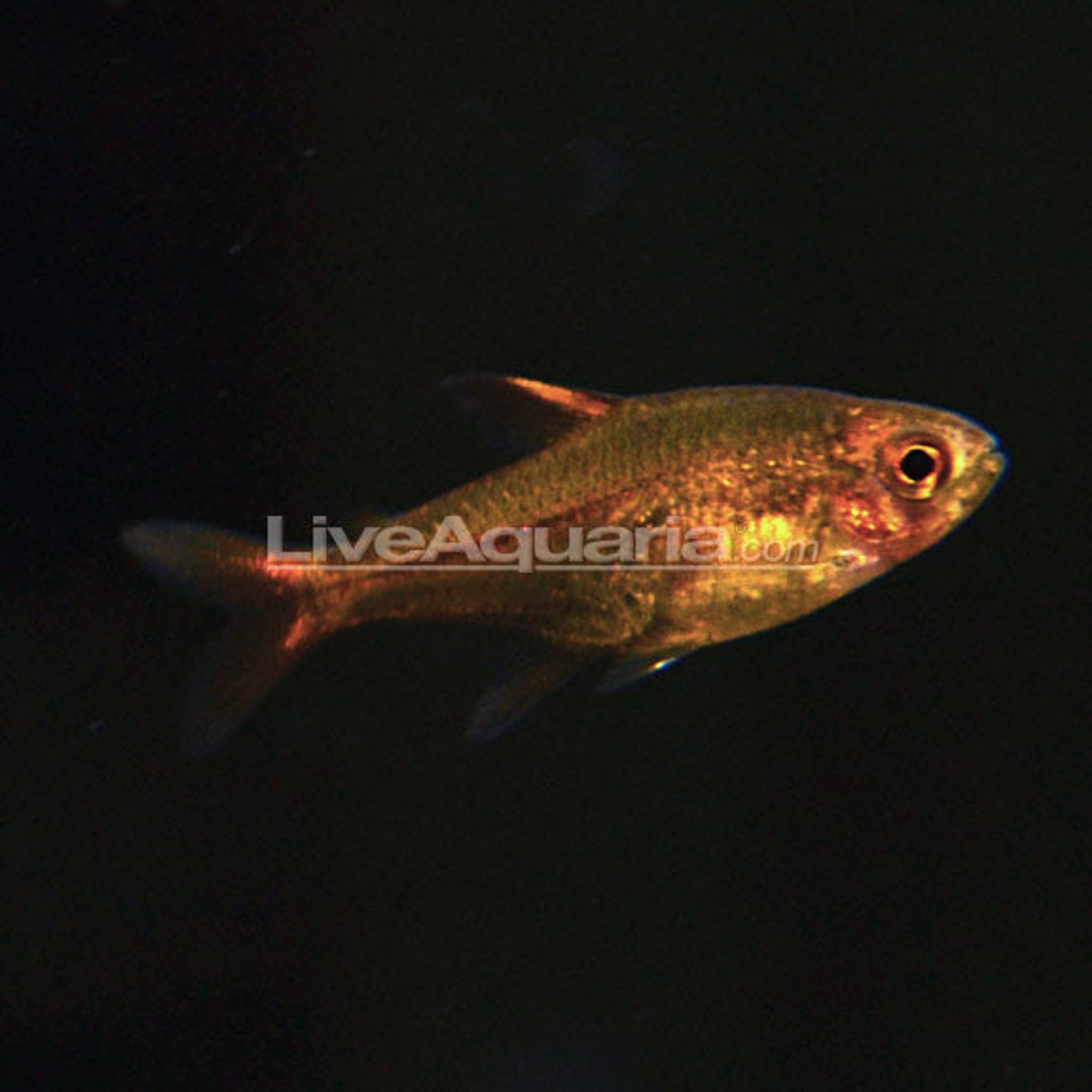
Best Tank Mates for Ember Tetra: Compatible Fish and Species to Avoid
The best tank mates for ember tetra are small, calm, soft-water fish such as neon and glowlight tetras, harlequin and chili rasboras, pygmy corydoras, otocinclus, honey gouramis and dwarf shrimp. Avoid anything with a mouth big enough to swallow a fish under 1 inch, plus fin-nippers and fast, greedy feeders. Below you'll find a ranked shortlist, a comparison table to take shopping, an avoid list with reasons, and three stocking plans in US gallons.
Ember Tetra at a Glance
The ember tetra (Hyphessobrycon amandae) comes from the Araguaia River basin in Brazil, where streams run soft and are often stained with tannins. It is one of the smallest tetras in the hobby.
- Adult size: under 1 inch (about 0.75–0.8 in, or 2 cm)
- Lifespan: 2–4 years, often longer in a stable tank with a good-sized group
- Temperature: 72–82°F (22–28°C), with a sweet spot of 74–78°F (23–26°C)
- pH: 5.5–7.0; many stable tank-raised fish accept 7.2–7.5
- Hardness: soft to moderate, roughly 2–12 dGH
- Group size: 6 minimum, 8–12 or more is better
- Temperament: peaceful, timid mid-water shoaler
Embers are no threat to other fish, apart from picking off baby shrimp. When they are stressed they lose color and hide, which is often the first sign that a tank mate is a poor match.
Five Rules for Choosing Ember Tetra Tank Mates
"Peaceful" on a store label isn't enough. Rank every candidate against these five rules:
- The mouth-size test. If an adult fish's mouth could fit a 0.75 in fish, it will eventually try. Check the adult size, not the size in the store tank. Many fish sold in US stores as juveniles at 1–2 inches grow several times larger.
- Calm to moderate swimming speed. Fast, boisterous feeders eat everything before embers get a bite.
- No fin-nippers or territorial bullies. Embers are too small and shy to push back.
- Overlapping temperature and pH. Skip species that need hard, alkaline water.
- Use other water zones. Bottom dwellers and top swimmers spread the fish load out, so the mid-water stays open for your embers.
A Note on US Tap Water
Much US tap water is moderately hard to hard and alkaline. Rather than chasing a low pH with chemicals, which risks swings, choose mates that suit the water you actually have. Tank-raised embers and most tank-raised community fish adapt to a stable pH around 7.0–7.5. Wild-caught fish of soft-water species are more sensitive and do better in genuinely soft, acidic water.
Top-Tier Tank Mates
These fish pass all five rules and share the ember's water range.
Small Peaceful Tetras
- Neon, green neon and black neon tetras: similar size and temperament. Neons prefer the lower end of the temperature range, so aim for 74–77°F.
- Lemon tetras: slightly larger but calm.
- Rummy nose tetras: excellent in 20+ gallon tanks with good water quality.
- Glowlight tetras: covered in more detail below.
Each species groups with its own kind. A mixed bag of tetras doesn't form one school, so buy a full group of 6+ of each species. You can browse tetras on FishyHub once you've picked your shortlist.
Golden Mascara and Similar Nano Tetras
Golden mascara tetras and other nano tetras of similar size are small, peaceful soft-water fish that suit ember conditions very well. Keep 6 or more of each and use them for contrast: a gold or silver-toned school looks great against the orange of the embers.
Glowlight Tetras and the "Shared Community" Idea
Glowlight tetras reach about 1.5 in (4 cm) and like 74–82°F (23–28°C) and pH 5.5–7.5, which overlaps almost completely with embers. Their list of good tank mates is nearly identical to the ember list too. That's the idea behind a shared community: choose a group of species whose compatibility lists overlap, so each new fish fits every fish already in the tank, not just one of them.
Small Rasboras and Nano Danios
- Harlequin rasboras: hardy, calm, beginner friendly.
- Chili rasboras: even smaller than embers, best in a quiet planted tank.
- Espei (lambchop) rasboras: similar to harlequins but smaller.
- Galaxy (celestial pearl) danios: shy, colorful, and fine with embers in a planted tank.
Bottom Dwellers
- Pygmy, panda and other small corydoras: keep them in groups of 6+ on sand or smooth gravel. Browse corydoras that stay small.
- Kuhli loaches: nocturnal, harmless, and they appreciate leaf litter.
- Otocinclus: add them only to a mature tank with established algae and biofilm, as they starve in new setups.
Top and Mid-Water Oddballs
- Honey gourami and sparkling gourami: small, gentle labyrinth fish.
- Hatchetfish: fill the empty top layer. Use a tight lid, since they jump.
- Endler's livebearers: the best livebearer choice for an ember tank, as they're small and tolerate a wide pH range.
Invertebrates
Cherry (neocaridina) shrimp and amano shrimp are generally safe with adult embers. The catch is that embers will pick at shrimplets, so add dense moss if you want the colony to grow. Nerite and mystery snails are also fine. You can find freshwater shrimp on FishyHub for a cleanup crew.
Ember Tetra Compatibility Table
| Species | Adult size | Zone | Temp (°F) | pH | Min group | Min tank |
|---|---|---|---|---|---|---|
| Ember tetra | under 1 in (2 cm) | Middle | 72–82 (best 74–78) | 5.5–7.0 (7.5 tank-raised) | 6 (8–12 better) | 10 gal (38 L) |
| Neon tetra | ~1.5 in (4 cm) | Middle | lower end, 74–77 in a shared tank | soft, acidic to neutral | 6 | 20 gal long (76 L) with embers |
| Glowlight tetra | ~1.5 in (4 cm) | Middle | 74–82 | 5.5–7.5 | 6 | 20 gal long (76 L) |
| Rummy nose tetra | small tetra | Middle | community range | soft, acidic to neutral | 6+ | 20 gal (76 L) |
| Harlequin rasbora | small rasbora | Middle | community range | soft to neutral | 6–10 | 20 gal long (76 L) |
| Chili rasbora | smaller than an ember | Middle | community range | soft, acidic | 8+ | 10 gal (38 L) |
| Pygmy corydoras | tiny cory | Bottom/middle | community range | soft to neutral | 6 | 10–20 gal (38–76 L) |
| Otocinclus | small | Glass, plants | community range | soft to neutral | small group | mature 20 gal (76 L) |
| Kuhli loach | slender | Bottom | community range | soft, acidic | small group | 20 gal (76 L) |
| Honey gourami | small | Top/middle | community range | soft to neutral | 1 or a pair | 20 gal (76 L) |
| Hatchetfish | small | Top | community range | soft, acidic | 6 | 20 gal long (76 L), lidded |
| Cherry/amano shrimp | small | All | community range | neutral | colony | 10 gal (38 L) |
Where the brief doesn't pin a number, the table says "community range." In practice, a shared target of 74–78°F (23–26°C) at a stable, soft-to-neutral pH suits every species listed.
Conditional Tank Mates: Possible, With Caveats
- Dwarf gourami: keep a single male only. They can get pushy and are prone to disease.
- Cherry barb: usually fine in groups of 6+. It's the one barb recommended for embers.
- Betta: only a calm individual, in a 10+ gallon heavily planted tank, with a backup plan if it hunts or harasses.
- Bolivian or German blue ram: only in larger tanks. German blues also need the warm end of the range.
- Bristlenose pleco: 20+ gallons.
- Guppies: acceptable. Endlers are the better pick.
- Platies, mollies and swordtails: a compromise at best. They prefer harder, alkaline water, and mollies and swordtails grow much larger and eat aggressively.
- Zebra danios: borderline, because they are fast and boisterous at feeding time.
- White cloud minnows: borderline, because they prefer cooler water than embers.
Species to Avoid, and Why
| Species | Why it's a problem |
|---|---|
| Angelfish | Grow large and eat small tetras as they mature |
| Convicts, oscars, Jack Dempseys, larger African cichlids | Aggressive and big-mouthed; embers become food |
| Blood parrot cichlids | Large enough to swallow embers |
| Tiger barbs, rosy barbs (adult), other nippy barbs | Fin-nipping, fast, or they outgrow embers |
| Serpae and black skirt tetras | Well-known fin-nippers |
| Red-tail and rainbow sharks | Territorial and chase smaller fish |
| Pearl gourami (borderline), three-spot and giant gouramis | Too large; three-spot and giant can be aggressive |
| Goldfish | Cold-water, messy, and big mouths |
| Large rainbowfish | Fast, large, and outcompete embers for food |
| Knife fish | Predatory, especially at night |
| Pictus catfish, iridescent sharks | Adults eat small fish; iridescent sharks grow huge |
| Puffers | Most are aggressive; even well-fed pea puffers are risky |
Setting Up a Tank That Supports a Mixed Community
- Tank size: 10 gallons (38 L) for an ember-only school or embers with shrimp. A 20 gallon long (76 L) is the realistic minimum once other species join.
- Shape: long rather than tall, so shoals have horizontal swimming room.
- Layout: dense planting around the edges with an open swimming lane in front.
- Substrate and decor: dark substrate, leaf litter and botanicals bring out color and mimic their home streams.
- Filtration: gentle flow from a sponge filter or a baffled hang-on-back filter. Strong current wears out small fish.
Live Plants for Tetras
Easy, low-light plants do the job well:
- Foreground and midground: java fern, anubias, cryptocoryne, java moss
- Background: vallisneria, cabomba, hornwort, and Amazon sword in larger tanks
- Floaters: red root floater and frogbit dim the light, which deepens ember color
Moss has a second job: it gives shrimplets somewhere to hide.
Feeding a Mixed Tank
Embers need micro foods: crushed flake, micro pellets, baby brine shrimp, daphnia and frozen cyclops.
- Spread the food across the surface or feed in two spots so faster fish can't claim it all.
- Target-feed embers with a pipette if a tank mate is greedy.
- Feed bottom dwellers at lights-out. Drop sinking food for cories and kuhli loaches after the lights go off so mid-water fish don't steal it.
Easy Schooling Fish for Beginners
If this is your first community tank, start with shoalers that are forgiving and pair well with embers: harlequin rasboras, cherry barbs, neon tetras, glowlight tetras and corydoras. Bigger groups look better and behave more calmly. Platies and zebra danios are common beginner suggestions, but they're less ideal here because of water preference and feeding speed.
Three Ready-Made Stocking Plans
| Tank | Stocking plan |
|---|---|
| 10 gallon (38 L) | 8–10 embers, cherry shrimp colony, 1 nerite snail |
| 20 gallon long (76 L) | 10 embers, 6 pygmy cories, 1 honey gourami, a few otocinclus (once mature) |
| 29 gallon (110 L) | 12 embers, 10 harlequin rasboras or rummy nose tetras, 6 corydoras, 1 small gourami or a group of hatchetfish |
Introducing New Fish
- Cycle the tank first. Test for ammonia and nitrite and stock gradually, not all at once.
- Quarantine new fish for 2–4 weeks in a separate tank.
- Add peaceful schools first, embers and other nano shoalers included.
- Add bottom dwellers and invertebrates next, once there's biofilm.
- Add the more boisterous or territorial fish last, such as a gourami or ram, so they don't claim the tank before the schools settle.
Common Mistakes and Troubleshooting
- Keeping only 3–4 embers. They hide and go pale. Increase the group to 8 or more.
- Buying by store size. Angelfish, many gouramis and some plecos look harmless as juveniles. Always check adult size.
- Fast eaters starving embers. Use smaller food and several feeding spots, and rehome the boisterous species if needed.
- Strong flow. Tired, hiding embers often mean too much current. Baffle the filter output.
- Fin damage or missing fish. Usually a hidden nipper or nighttime predator. Watch at feeding time and after lights-out.
- Overstocking a new tank. Adding many fish to an uncycled tank causes ammonia and nitrite spikes.
- pH swings from mixed needs. Keeping hard-water livebearers alongside soft-water fish tempts keepers to adjust water constantly. Pick fish that share one water type.
Frequently Asked Questions
Can ember tetras live with neon tetras?
Yes, it's a classic pairing. Run the tank at 74–77°F (23–25°C), since neons like the lower end, and keep separate groups of 6 or more of each species.
Will ember tetras eat cherry shrimp?
Adult cherry shrimp are safe. Embers will pick off shrimplets, though, so add dense moss or other fine-leaved cover if you want the colony to grow.
How many ember tetras can go in a 10 gallon tank?
About 8–10 on their own. With shrimp or a few pygmy cories, 6–8 embers is a more comfortable number.
Can ember tetras live with a betta?
Sometimes. It depends on the individual betta, so only try it in a 10+ gallon heavily planted tank and have a plan B, such as a spare tank, if the betta hunts or harasses.
Are ember tetras fin-nippers, and do they school with other tetras?
Nipping is rare and usually shows up only in undersized groups or cramped, stressed tanks. They don't really school with other tetras. Each species sticks with its own kind, so buy full groups.
Can ember tetras live with guppies, mollies or angelfish?
Guppies and Endlers are fine. Mollies are a compromise because they prefer hard water and grow much larger. Angelfish are a firm no, as adults prey on small tetras.
Build Your Ember Community
Start with a solid ember school, fill the bottom and top with species from the top tier, and check every newcomer's adult size before you buy. When you're ready for the next group, browse small community fishes on FishyHub for tetras, rasboras and other peaceful companions.

