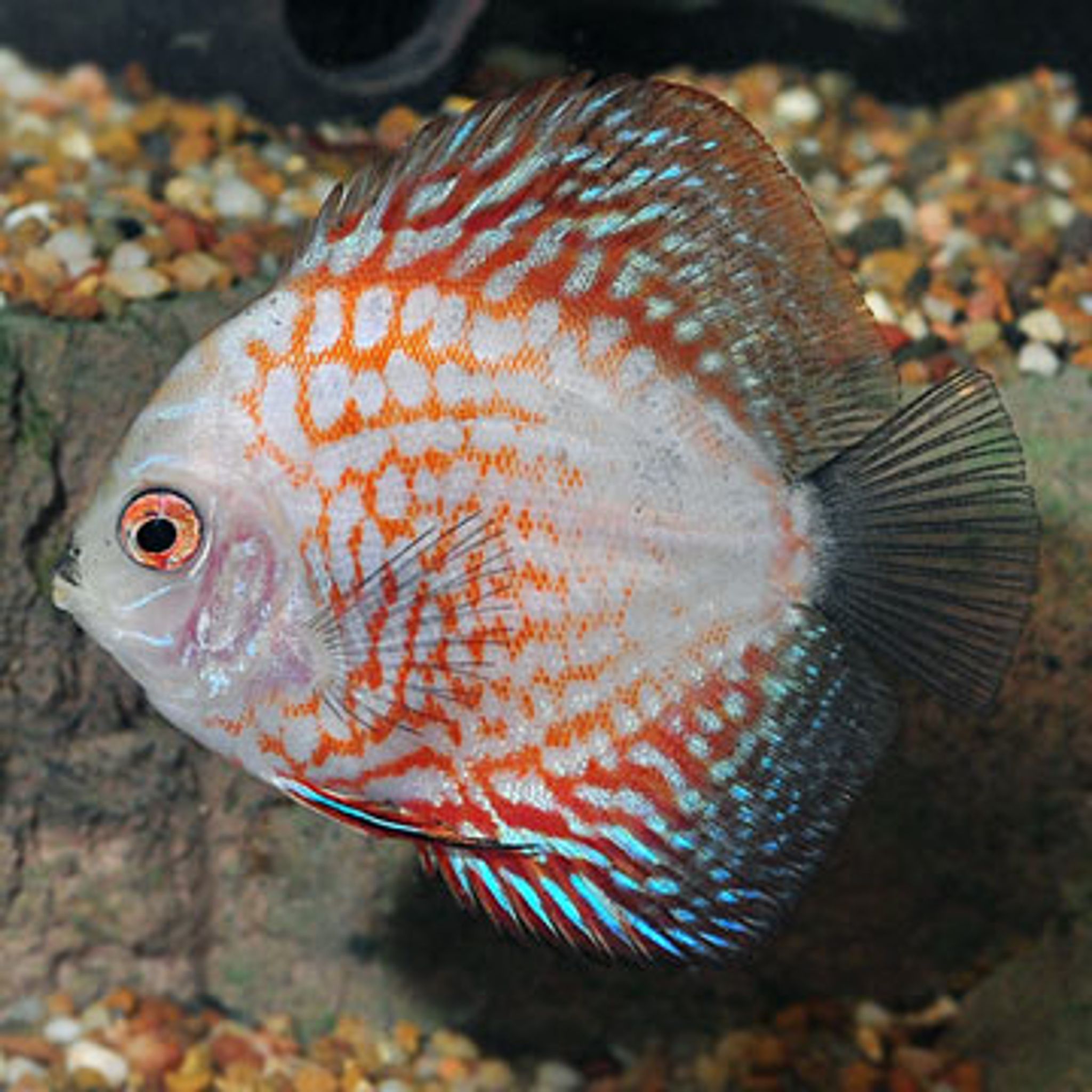

Best Tank Mates for Discus: Compatible Fish and Species to Avoid
The best tank mates for discus are calm, heat-tolerant fish such as cardinal tetras, rummy-nose tetras, sterbai corydoras and a well-fed bristlenose pleco. Plenty of popular community fish, including neons, bronze corys, guppies and danios, can't stay healthy at discus temperatures, so treat heat tolerance as your first filter. Tank mates are also optional. A discus-only tank is a perfectly good choice.
Start With the Question: Do You Need Tank Mates at All?
A species-only discus tank is often the best way to start. It is simpler to feed and to keep disease-free, and it's the obvious setup if you plan to breed. First-time discus keepers in particular can learn the fish's rhythms without juggling a second species' needs.
If you do want companions, get the discus settled first, then add other fish in stages. Every species you add brings its own feeding habits, space demands and potential pathogens.
The Heat Filter: Why Most Community Fish Fail
Discus want 82–86°F (28–30°C). Many keepers hold a steady 84°F (29°C), and young fish or fish under treatment are often kept at 86–88°F (30–31°C). Many common community fish get stressed or live shorter lives when kept above about 80°F (27°C). That is why so many "discus tank mate" lists fall apart in practice.
Companions also have to be comfortable in discus water:
- pH 6.0–7.0, soft and slightly acidic. Tank-bred discus tolerate up to about 7.5 if it stays stable.
- Ammonia and nitrite at 0.
- Nitrate ideally under 10–20 ppm.
What makes a good discus companion
- Peaceful and calm. Hyperactive fish keep discus on edge.
- Not food-competitive. Discus eat slowly and deliberately.
- Too big to be eaten. Aim for fish over roughly 1.5 in (4 cm) as adults.
- Spread across levels. Choose fish for the top, middle and bottom so no single zone gets crowded.
Tank Size and Discus Group Size
Keep discus in a group of 5–6 or more so aggression gets spread out rather than aimed at one fish. With 6 or more, a larger tank works better.
Sources disagree on minimum size, with figures ranging from 55 gal (208 L) for a discus-only tank to 75 gal or more with companions. Our recommendation: 75 gal (284 L) minimum for a community, with 90–125 gal (341–473 L) giving more breathing room. Discus are tall, disc-shaped fish, so a tank at least 20 in (51 cm) tall suits them.
Top Discus Tank Mates at a Glance
| Species | Zone | Group size | Fit at 84°F | Key caveat |
|---|---|---|---|---|
| Cardinal tetra | Middle | 15–20+ | Good, handles heat far better than neons | Tiny juveniles can be eaten |
| Rummy-nose tetra | Middle | 12+ | Good | Red nose fades when water quality drops |
| Sterbai corydoras | Bottom | 6+ | Good, fine in the mid-80s | Needs sand substrate |
| Bristlenose and small heat-loving L-numbers | Bottom | 1 per tank is typical | Good | Must be well fed so it doesn't graze discus |
| Marbled hatchetfish | Top | 8–10+ | Good | Jumpers, so use a tight lid |
| Pencilfish | Upper | School | Fair, keep near the low end | Quiet and easily outcompeted |
| German blue ram | Bottom/middle | 1 pair | Good, likes discus-level heat | Pushy when spawning, needs caves |
| Bleeding heart tetra | Middle | School | Good | Keep the school out in the open |
| Glass catfish | Middle | 6+ | Good | Prefers a dimmer tank |
| Twig/whiptail catfish | Surfaces, glass, wood | 1–2 | Good | Needs grazing surfaces |
| Kuhli loach | Bottom | Group | Good | Hides, so give it soft substrate |
| Apistogramma | Bottom | Pair or trio | Good | Territorial around caves |
| Otocinclus | Surfaces | Group | Good | Only in mature tanks with biofilm |
Notes on the shortlist
- Cardinal tetras are the classic pick. They come from the same home waters as discus and handle heat much better than neons. Buy adults or near-adults, since very small ones can end up as a snack for big discus. Browse tetras on FishyHub when you're ready to build a school.
- Rummy-nose tetras double as an early-warning system. When their red noses fade, check your water parameters.
- Sterbai corydoras are the cory to choose. Most other corys prefer cooler water. Keep 6 or more on sand so their barbels stay intact. See the corydoras selection.
- Bristlenose plecos and other small heat-loving L-numbers, such as zebra (L046) or orange-spot types, keep algae down. Feed them wafers and vegetables every day. A hungry pleco may start grazing the slime coat on your discus.
- German blue rams actually prefer discus temperatures. Keep a single pair with caves, and expect some shoving when they spawn.
Clean-up crew
Assassin snails and nerites work well, but soft, acidic water slowly erodes their shells. Supplement calcium, for example with a mineral block or calcium-rich foods, to keep them healthy.
Tank Mates to Avoid
| Fish | Why it doesn't work |
|---|---|
| Common pleco, Chinese algae eater, adult Siamese algae eater | Large suckermouths that latch onto discus slime coats |
| Neon tetra, bronze/peppered corydoras, guppy, white cloud minnow, zebra danio | Cooler-water fish that decline at discus temperatures. Danios are also too hyperactive |
| Serpae tetra, tiger barb | Fin-nippers |
| Oscars, African cichlids, convicts, severums in smaller tanks | Too big or too rough |
| Clown loach | Grows to 10–12 in (25–30 cm), needs a huge tank and is boisterous |
| Shrimp | Discus eat them |
| Angelfish | Qualified. See below |
Where keepers disagree
- Angelfish. Some keepers rate them workable because they come from the same basin and like similar water. Others rule them out because angels eat more aggressively, get territorial when spawning and often carry disease. Our take: not for beginners. If you try it, use a 125+ gal (473+ L) tank, raise both species together from juveniles and quarantine strictly.
- Neons, bronze corys, guppies, white clouds, danios. Long lists often include them, but heat-focused keepers reject them. Exclude them all.
- Clown loaches. Some call them fine in a 75 gal. Others say they need 125+ gal and get rowdy. Avoid them.
- Plecos. Some recommend any pleco, while others warn about slime grazing. Stick to small bristlenose-type species and keep them well fed.
Sample Stocking Plans
These are starting points. Adjust them for your filtration and water-change schedule, and err on the light side.
| Tank | Suggested stock |
|---|---|
| 55 gal (208 L) | Discus only, 5–6 fish, no companions |
| 75 gal (284 L) | 5–6 discus, 15 cardinal tetras, 6 sterbai corys, 1 bristlenose pleco |
| 90 gal (341 L) | 6 discus, 15–20 cardinals or 12 rummy-nose, 6–8 sterbai, 1 bristlenose, 8–10 marbled hatchetfish |
| 125 gal (473 L) | 6–8 discus, 20+ cardinals, 12+ rummy-nose, 8 sterbai, 1–2 small L-number plecos, a pair of German blue rams or a group of kuhli loaches |
Dither Fish: Why a School Helps Shy Discus
A calm school of tetras swimming out in the open tells discus the coast is clear. Dither fish draw nervous discus out from behind the wood, and relaxed discus show better color. If your discus hide in a bare tank, adding a dither school plus wood and a background often fixes the problem.
Feeding a Mixed Discus Tank
- Offer 2–3 small meals a day of high-protein foods: quality pellets, frozen bloodworms, mysis and beefheart mixes.
- Choose slow-sinking foods so the discus get a fair share before fast tetras take everything.
- Remove leftovers after about 10 minutes and vacuum under the feeding spot often.
- Watch for warning signs: discus that hide, turn dark or develop a sunken forehead are underfed or stressed. Target-feed them with a pipette or feeding cone, and reduce the number of dither fish if needed.
Water, Oxygen and Maintenance
- Big, frequent water changes: 25–50% or more each week, and more often in heavily stocked tanks.
- An oversized, mature filter. A community tank adds bioload.
- Strong aeration. Warm water holds less oxygen, so surface agitation or an air stone matters more at 84°F than in a cooler tank.
Quarantine: The Step You Can't Skip
Quarantine every newcomer for 4–6 weeks at discus temperature. Discus are notoriously vulnerable to pathogens that other fish can carry without showing any symptoms. A healthy-looking tetra can bring in something that spreads through your discus group. Skipping quarantine is the classic way to lose a whole discus tank. Holding newcomers at 84°F also shows you whether they can handle the heat before they go into the display.
Stocking Order
- Settle the discus first and let them establish a routine.
- Add mid-water companions in small batches.
- Add bottom dwellers last, once the tank is mature.
- Stop before the tank feels full. Overstocking shows up as rising nitrates and darkening, hiding discus.
Discus at Spawning Time
A bonded pair can turn aggressive, claiming a patch of the tank and chasing anything that comes near. In a busy community tank, you may need to move companions out or give the pair their own tank. That's one more reason breeders keep discus alone.
Captive-Bred vs. Wild Discus
Nearly all discus sold in the US are captive-bred color strains, and they are hardier than wild fish. They're more forgiving about pH (up to about 7.5 if stable) and more flexible about tank mates. Wild discus, especially Heckel discus, need softer, more acidic water and are the most demanding and aggressive of the group. A companion list that works for tank-bred fish may need trimming for wild ones.
Driftwood's Role in a Discus Tank
- Water chemistry: wood releases tannins that soften the water, tint it tea-colored and lower pH slightly. The humic compounds offer mild antimicrobial benefits.
- Behavior: it breaks sight lines and creates territories, which cuts down squabbling.
- Food: it grows biofilm for plecos and otocinclus.
- Prep and care: soak or boil wood before use. In low-KH water, watch for a pH crash, and replace any piece that has gone soft or rotten.
Heat-Tolerant Plants for Discus
Discus don't need plants, but the right ones add cover and help with water quality. Good choices that handle the heat include Amazon swords, anubias, java fern and floating plants, which also dim the light for glass catfish and hatchetfish. Keep in mind that floaters reduce surface movement, so keep aeration strong.
Why There Are So Few Discus Species
Researchers currently recognize two to three species: Heckel discus (Symphysodon discus) from blackwater habitats, S. aequifasciatus and S. tarzoo in the west. Some argue it's all one variable species. Discus live along a nearly continuous Amazon floodplain, so populations can interbreed, which limits the formation of new species. Past geographic barriers, including buried structural arches like the Purus arch linked to the rise of the Andes, likely split populations for a time. Genetic studies show little difference between them despite their visible variety. For hobbyists, this history matters less than the fact that most discus in the US are captive-bred hybrid strains.
Common Mistakes and Fixes
- Adding cheap community fish without checking heat tolerance. Expect slow losses and a disease spiral. Use the heat filter first.
- Skipping quarantine. This is the most common way discus tanks get wiped out.
- Fast feeders outcompeting discus. Target-feed and cut the dither count.
- A pleco sucking on discus. Remove it, feed it more vegetables and watch the discus for wound infections.
- Overstocking. Nitrates climb, and discus darken and hide. Reduce stock or change water more often.
- Discus hiding in a bare tank. Add a dither school, driftwood and a background.
Frequently Asked Questions
Can discus live alone without tank mates?
Yes. A species-only tank is the simplest discus setup and the best one for breeding. You avoid food competition and cut the risk of disease from other species.
Can discus live with angelfish?
It's possible but risky, so it's best left to advanced keepers. Use a 125+ gal (473+ L) tank, raise both species from juveniles and quarantine every fish strictly. Angels eat more aggressively and turn territorial when spawning.
Are neon or cardinal tetras better with discus?
Cardinals. Neons struggle at discus temperatures, while cardinals handle 82–86°F (28–30°C) much better. Buy cardinals large enough that adult discus won't eat them.
Which corydoras can live with discus?
Sterbai corydoras. They're comfortable in the mid-80s°F, while most other corys, including bronze and peppered, prefer cooler water. Keep 6 or more on sand.
Will discus eat small fish, shrimp or snails?
Discus aren't predators, but they will eat fry, shrimp and very small fish. Snails are fine as long as you supplement calcium, since soft, acidic water erodes their shells.
How many tank mates can go in a 75 gallon discus tank?
A good example is 5–6 discus, 15 cardinal tetras, 6 sterbai corydoras and 1 bristlenose pleco. Adjust up or down depending on your filtration and water-change routine.
Build Your Discus Community
Settle healthy discus first, then add a few heat-proven companions in quarantined batches. When you're ready to choose your centerpiece fish, browse the discus collection on FishyHub.


