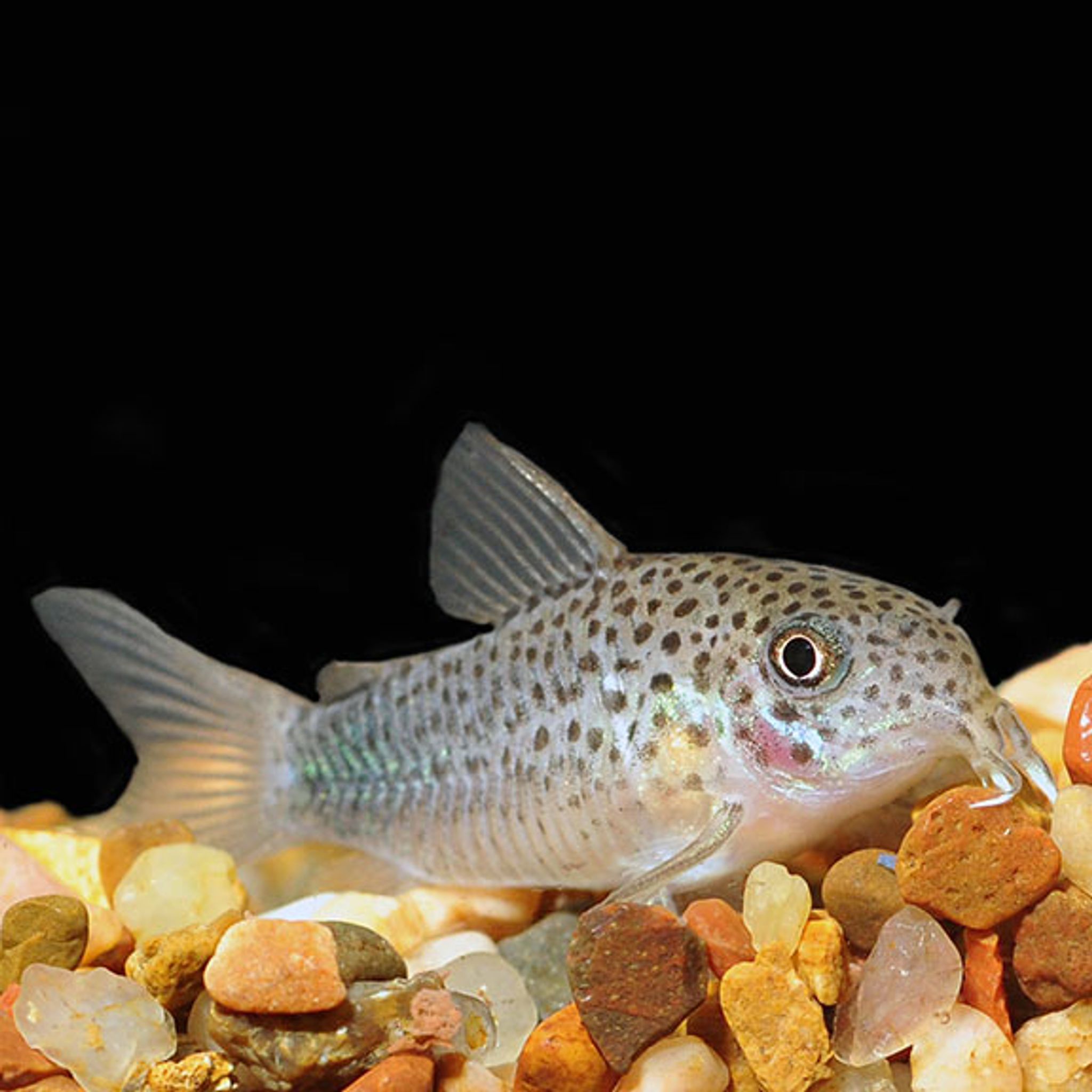

Best Tank Mates for Corydoras Catfish: Compatible Fish and Species to Avoid
The best tank mates for corydoras catfish are small, peaceful fish that live in the middle and upper water, such as small tetras, rasboras, livebearers, pencilfish, honey gouramis, otocinclus and kuhli loaches. Avoid anything big enough to swallow a cory, anything that claims the bottom as territory, and cold-water fish like goldfish. Below you'll find picks by tank size and temperature, plus the mistakes that most often go wrong.
Why Cory Compatibility Only Runs One Way
Corydoras are peaceful, armored, shoaling catfish from South America. They never chase, nip or bully other fish. So the risk only goes one way: other fish can hurt, stress or starve your corys, but corys won't cause trouble for anyone.
Run every candidate through three filters:
- Mouth size. If a fish can fit an adult cory in its mouth, it's out. Adult sizes range from about 1 inch (2.5 cm) for pygmy corys to about 2.5 inches (6.4 cm) for bronze corys, and the small species are easy prey.
- Temperature overlap. Both species need to be comfortable at the same thermostat setting.
- Competition for sinking food. Corys eat off the bottom. Fast, greedy fish that grab every pellet before it lands will slowly starve them.
Cory Basics That Shape Your Choices
Group size
Keep at least 6 of one species. Some keepers say 5 is enough, but 6 or more gives a more confident, active group, and in 29 gallons or larger you should go bigger. Different cory species will shoal together loosely, but each species settles best with its own kind.
Tank size
- Dwarf species (pygmy, habrosus, hastatus): 10 gallons (38 L) is workable.
- Standard species (bronze, peppered, sterbai, julii): 20 gallons (76 L) minimum.
- Plan on roughly 2–4 gallons (8–15 L) per extra fish once you go past a starter group.
Water parameters
| Parameter | Target | Notes |
|---|---|---|
| Temperature (general) | 70–82°F (21–28°C) | Most common species do best at 72–78°F (22–26°C) |
| Peppered and bronze | 68–76°F (20–24°C) | Cool end; good for unheated or cooler rooms |
| Sterbai | Tolerates 78–82°F (26–28°C) | The best choice for warm tanks with rams or discus |
| pH | About 6.0–8.0 | Wild-caught fish prefer 5.5–7.0; tank-bred fish adapt more easily |
| Alkalinity | About 3–10 dKH | Keep it stable |
| Ammonia / nitrite | 0 ppm | Non-negotiable |
| Nitrate | Low | Corys are sensitive to nitrate and dirty substrate |
Sources disagree on the exact temperature range (some say 70–80°F, others 72–82°F). The practical answer is to go by the specific species you keep.
Substrate and décor
Smooth sand about 2 inches (5 cm) deep is ideal. Fine, rounded gravel is acceptable. Sharp gravel wears down the barbels corys use to find food. Add caves, driftwood, leaf litter and plant cover, but leave open patches of sand for foraging.
Best Tank Mates for Corydoras
Corys own the bottom, so choose fish that use the middle and top of the tank. You'll get a fuller-looking tank and less fighting over food.
Top picks
- Small tetras: neon, cardinal, ember and rummy-nose. Black skirt tetras only work if yours aren't nippy.
- Rasboras: harlequin and chili rasboras.
- Pencilfish and hatchetfish: calm mid- and surface-dwellers with tiny mouths.
- Livebearers: guppies, platies, mollies and swordtails.
- Gouramis: honey and dwarf gouramis (not the large species).
- Cherry barbs: a peaceful barb, unlike tiger barbs.
- Otocinclus and kuhli loaches: gentle bottom companions that don't compete much.
- Bristlenose pleco: a good fit in 20–29 gallons or more (see below).
- Dwarf rams: with sterbai corys, in a warm tank.
- Bettas: depends on the individual (see FAQ).
- Invertebrates: nerite and mystery snails, adult amano shrimp.
You can browse many of these on FishyHub's small community fishes page.
Picks by water temperature
| Setup | Cory species | Good companions |
|---|---|---|
| Cool tank, 68–76°F (20–24°C) | Peppered, bronze | Peaceful community fish whose own range overlaps this band, such as platies; keep the heater set toward the upper end so tropical tetras stay comfortable |
| Standard tropical, 72–78°F (22–26°C) | Bronze, julii, pygmy, habrosus | Neons, harlequins, chili rasboras, guppies, otos, kuhli loaches, honey gouramis |
| Warm tank, 78–82°F (26–28°C) | Sterbai | Cardinals, rummy-nose tetras, German blue or other dwarf rams, discus |
US homes and unheated tanks: many American homes cool down in winter. Only peppered and bronze corys handle the cooler end, and even they need stable temperatures. A heater is cheap insurance for most community tanks.
Where dwarf cichlids fit
Some sources say "no cichlids, ever." Others allow small ones. The reasonable middle ground: dwarf cichlids such as rams and apistogrammas are fine in 30 gallons (114 L) or more with plenty of caves. Skip breeding pairs in small tanks, because a pair guarding eggs will chase corys off the bottom.
Stocking Templates by Tank Size
| Tank | Corys | Suggested companions |
|---|---|---|
| 10 gal (38 L) | 6 pygmy, habrosus or hastatus | Small school of chili rasboras or embers, a few nerite snails or amano shrimp |
| 20 gal (76 L) | 6–8 of one standard species | A school of neons or harlequins, a honey gourami or a calm betta, a few otos |
| 29 gal (110 L) | 8+ of one species | Rummy-nose or cardinal tetras, a small group of livebearers, kuhli loaches, one bristlenose |
| 40+ gal (150+ L) | 8–10+, or 6+ of each of two species | Larger tetra schools, pencilfish or hatchetfish, dwarf rams (with sterbai), a bristlenose |
Watch total bottom stocking. Corys, loaches and plecos all share the same floor space, so don't max out every bottom dweller at once.
Fish and Invertebrates to Avoid
Rule of thumb: anything with a mouth big enough to swallow an adult cory (1–2.5 in / 2.5–6.4 cm) is off the list.
| Avoid | Why |
|---|---|
| Oscars, Jack Dempseys, convicts, flowerhorns | Large, aggressive cichlids that eat or harass corys |
| Goldfish | Cold water, eat anything that fits, very messy |
| Redtail catfish; pictus catfish in small tanks | Large predatory catfish |
| Crayfish and large crabs | Claws catch sleeping or foraging corys |
| Tiger barbs and other nippy barbs | Fin-nipping and constant stress |
| Red-tail and rainbow sharks | Defend the bottom as territory |
| Common pleco in small tanks | Grows to around 2 feet and can bully at night |
| Arowanas and large gouramis | Predators or too boisterous |
Other Community-Safe Catfish
If you want more catfish variety, these are safe choices. Each one needs its own food, not just what the corys leave behind.
- Bristlenose pleco: 4–6 inches (10–15 cm), needs driftwood and vegetable/algae foods.
- Otocinclus: tiny algae grazers; keep them in groups.
- Pygmy and other dwarf corys: about 1 inch; great for small or nano tanks.
- Clown pleco: a small, wood-eating pleco.
- Glass catfish: mid-water, and only happy in groups.
Scavengers and Bottom Feeders
Corys are often sold as a "cleanup crew," but scavengers still need dedicated food and don't replace water changes or gravel vacuuming. Good bottom companions include kuhli loaches, otos, bristlenose plecos and nerite snails.
If you see a cory or another scavenger nibbling on a fish, that fish is usually already sick or dying. Isolate the fish being nibbled and check your water; don't blame the scavenger.
Corydoras and Plecos
Corys and plecos live very different lives:
- Plecos are nocturnal grazers that need wood and vegetable or algae-based food.
- Corys are active during the day, shoal, and eat a mixed diet.
A bristlenose (4–6 in) is a good match for tanks of 20–29 gallons or more. A common pleco can reach around 2 feet (60 cm), outgrows most home tanks, and can bully other fish at night. Plecos mostly aim their territorial behavior at other plecos, but they will happily hog algae wafers. Give each group its own caves and drop food in more than one spot. The pleco selection on FishyHub includes smaller species suited to community tanks.
Corydoras in a Planted Aquarium
Corys don't eat plants, so they fit well in planted tanks, with a few adjustments:
- Root tabs work well in sand for heavy root feeders.
- Corys dig while foraging, so anchor rooted plants well, or use epiphytes like anubias and java fern tied to wood.
- Leave open sand in the foreground for foraging.
- Some aquarium soils have sharp grains that can damage barbels. Cap soil with sand.
Feeding Corys in a Community Tank
Corys can't live on leftovers. Feed them daily with sinking pellets or wafers, gel food, bloodworms, blackworms and daphnia.
- Feed after the lights dim so fast mid-water fish don't grab everything first.
- Spread several wafers around the tank instead of dropping one pile.
- Remove leftovers within a few minutes to protect water quality.
- Signs of underfeeding: thin or sunken bellies and constant, frantic searching.
Quarantine, Medications and Stocking Order
- Quarantine new fish for 2–4 weeks before adding them to a cory tank.
- Corys are sensitive to many medications, including copper, some dewormers and salt. Dose at half strength or treat in a separate hospital tank.
- Add corys to a mature, cycled tank, never a new one.
- Add boisterous fish last so the corys can settle first.
Common Mistakes and How to Fix Them
- Buying only one or two corys. They hide and stay stressed. Complete the group to 6 or more.
- Relying on leftovers. Corys end up with thin bellies. Target-feed sinking food.
- Sharp gravel or dirty substrate. Barbels fray or disappear. Switch to sand, vacuum regularly and keep nitrate low.
- Goldfish and corys in an unheated tank. The temperatures don't match, and goldfish may eat small corys.
- Fast eaters taking all the food. Feed at lights-out or spread wafers out.
- Panicking over surface dashes. An occasional dash to the surface is normal; corys gulp air. Constant surfacing points to low oxygen or poor water quality.
- Salt and copper treatments. These can harm corys. Use a hospital tank.
- Rough handling. Cory spines get tangled in nets, so scoop them with a container. Don't pack two corys tightly in one bag; stressed corys can release a toxin in close quarters.
Frequently Asked Questions
Can corydoras live with bettas?
Usually, yes, in a tank of 10 gallons or more. It depends on the betta: a calm one will ignore corys, while an aggressive one may chase them. Watch for torn fins and make sure the betta isn't eating all the sinking food.
Can corydoras live with shrimp?
Yes. Corys get along with cherry and amano shrimp and won't bother adults. They may eat very tiny shrimplets they find while foraging, so dense moss or plant cover helps if you want the shrimp to breed.
Do corys and plecos compete for food?
A little. Plecos, especially bristlenose, will hog algae wafers, and both use the bottom. Give each group their own food and caves, and feed in more than one spot.
How many corys can go in a 20-gallon tank?
About 6–8 of one standard species, such as bronze or peppered, plus a school of peaceful mid-water fish. Don't pack in many other bottom dwellers on top of that.
Can corydoras live with goldfish?
No. Goldfish prefer cooler water than most corys, produce heavy waste, and will eat anything that fits in their mouths, including small corys.
Are corys good with angelfish?
Adult angelfish usually leave larger cory species alone. Pygmy and other dwarf corys are small enough to be eaten, so stick with bronze, sterbai or similar-sized species in angelfish tanks.
Build Your Cory Community
Start with a group of six or more corys in a cycled tank with soft sand, then add mid- and top-water fish that pass the mouth-size, temperature and food tests. When you're ready, browse FishyHub's plecos, corys and bottom dwellers collection to choose your group.


