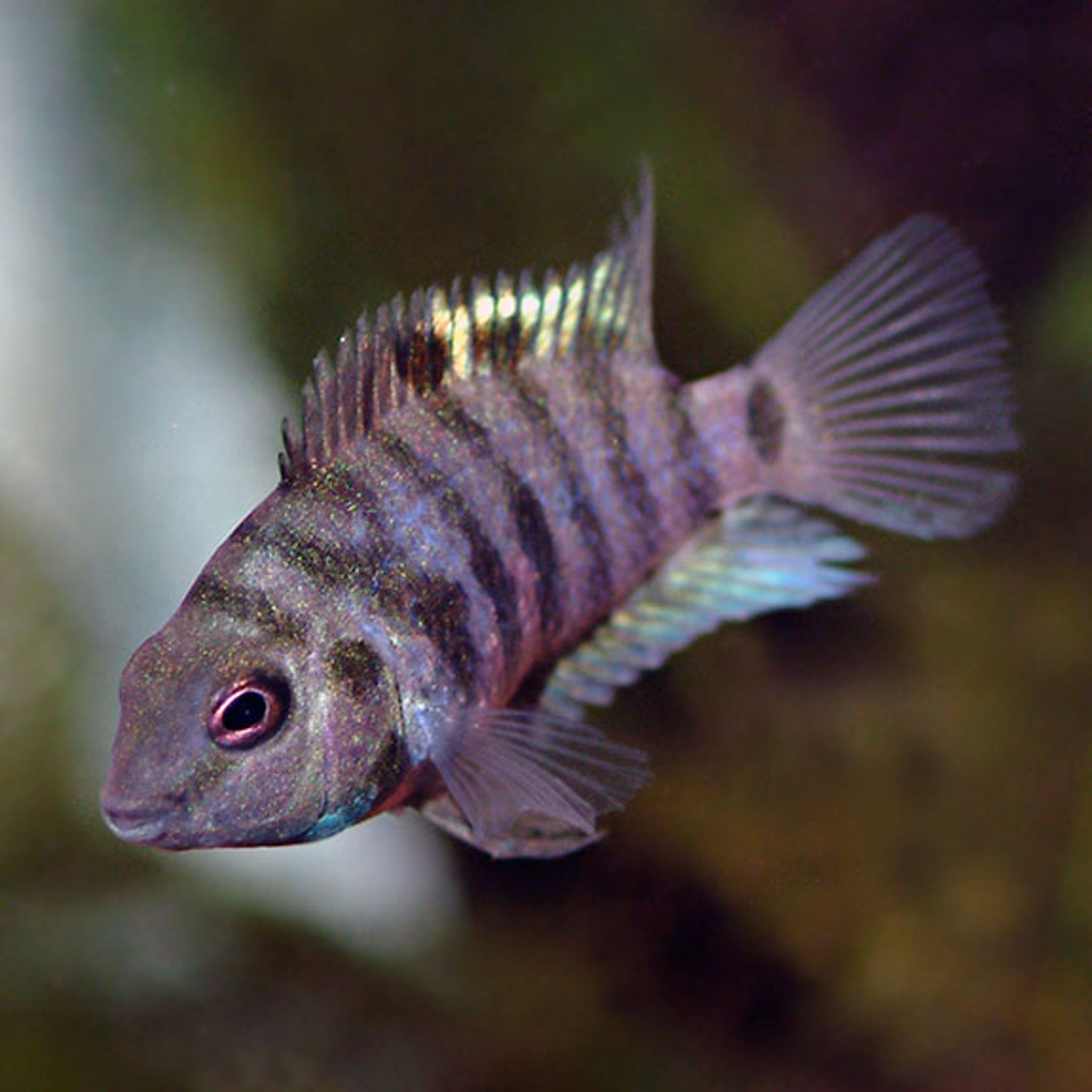
Best Tank Mates for Convict Cichlid: Compatible Fish and Species to Avoid
The best convict cichlid tank mates are similar-sized, sturdy Central American cichlids like firemouths and T-bars, armored catfish like bristlenose plecos, and big, fast dither fish like giant danios, kept in at least 55 gallons (208 L). Small, slow or long-finned community fish belong on the "don't buy" list. Plan every choice around what happens when your convicts pair up and spawn, because that's when a calm tank turns into a battlefield.
Why Convicts Are Harder to House Than Their Size Suggests
Convict cichlids (Amatitlania nigrofasciata) only reach about 4–6 inches (10–15 cm), but they are among the most territorial cichlids from Central America. They're cheap, hardy and easy to keep, and that's where the trouble starts: they breed readily and often. A single spawning pair can claim most of a 55-gallon tank and guard it hard for weeks.
In the store and during the first quiet week at home, convicts can look peaceful. Don't build your stocking plan on that. Build it on the pair digging a pit in the corner and chasing everything that comes near.
Pink (leucistic) convicts act exactly the same as the striped wild type. The color changes nothing about temperament.
Cichlid Aggression, Explained
Cichlid aggression evolved to protect three things: food, territory and young. Fights usually escalate in stages:
- Displays – flared fins, darkened color, gill flaring
- Tail-beating – pushing water at the rival
- Jaw-locking – mouth-to-mouth wrestling
- Circling and fin-biting – real damage starts here
In the wild, the loser swims away. In a glass box it can't, so the winner keeps going. That's why crowding and a lack of cover turn normal cichlid behavior deadly. Interestingly, large open-water predators are often calmer day to day than small territorial species like convicts, which spend all their energy defending a patch of rock.
Tank Size and Water Parameters
How big a tank do convicts need?
Recommended minimums vary a lot, from 10–20 gallons for a single pair up to 55–75 gallons for communities. A practical rule:
- Pair alone: 20–30 gallons (76–114 L)
- Any tank mates: 55 gallons (208 L) or more, ideally a 4-foot (120 cm) tank
- Large or aggressive mates (green terror, Jack Dempsey, oscar, clown loaches): 75 gallons (284 L) and up
Footprint matters more than height. A long tank lets territories spread out.
Water conditions
Convicts do well at 74–82°F (23–28°C), pH 6.5–8.0, in moderate to hard water. Most Central American cichlids share this range, so matching parameters is rarely the problem. Behavior is.
Rules for Picking Convict Cichlid Tank Mates
- Similar or larger size. Anything that fits in a convict's mouth is food.
- Robust bodies. Deep-bodied or armored fish take a nip and recover.
- Quick swimmers that can get out of the way.
- No long, flowing fins. They're targets.
- Different depths. Top-water fish and bottom dwellers overlap less with mid-level convicts.
Best Tank Mates for Convict Cichlids
Central American cichlids (best match)
Similar size, similar attitude and the same water make these the most natural companions:
- Firemouth cichlid – bluffs more than it fights, a classic pairing
- Sajica (T-bar cichlid) – about the same size and toughness
- Honduran red point – small, tough and similar in temperament
- Salvini – colorful and able to hold its ground
- Nicaraguan cichlid – a sturdy, heavier-bodied fish
- Jack Dempsey – only in bigger tanks (see the advanced notes below)
If you want something calmer that's still easy to find in US stores, look at the rainbow cichlid (Archocentrus multispinosa) and the blue-eye cichlid. Both are mid-sized and less combative. You can browse American cichlids on FishyHub to compare options.
Gentler South American cichlids
Severums and electric blue acaras can work if they're big enough and added at the same time as the convicts. The catch: both are mellower, and a breeding convict pair can beat them. Watch them closely during spawns.
Bottom dwellers
- Bristlenose pleco – ideal for mid-sized setups like a 55
- Common or sailfin pleco – only for big tanks; both grow large
- Pictus catfish – fast and spined
- Larger Synodontis species – armored and confident
- Clown loaches – only in 75+ gallons and in groups of 5 or more, since they reach about 12 inches (30 cm)
Armored catfish are a strong pick because they work the substrate, not the mid-water zone convicts defend. See the plecos, corys and bottom dwellers section for sizes.
Dither fish for the upper water
Dither fish are active schools that swim in the open. They spread out aggression and make shy cichlids feel safe enough to come out. Good choices:
- Giant danios
- Larger tetras, such as Buenos Aires or redeye tetras
- Robust barbs in big schools
Keep dithers in large groups so no single fish takes all the attention. Tiger barbs come up often, but they nip fins, so treat them as optional rather than a go-to.
Compatibility by Tank Size
| Tank size | Convicts | Good additions | Advanced / use caution |
|---|---|---|---|
| 20–30 gal (76–114 L) | 1 pair, or 1 single fish | None recommended with a pair | — |
| 55 gal (208 L), 4 ft | 1 pair | Firemouth or T-bar, bristlenose pleco, school of giant danios | Severum, electric blue acara |
| 75 gal (284 L) | 1 pair (a small group only at this size) | 1–2 Central Americans (red point, salvini), pictus catfish, larger Synodontis, dither school | Clown loaches (5+), Jack Dempsey |
| 125 gal (473 L) | 1 pair or a group | Several Central Americans, common or sailfin pleco, clown loach group, big dither schools | Green terror, oscar, Jack Dempsey (all raised together) |
Pairs vs. groups
Some keepers argue a group spreads out aggression. Others point out that several convicts will pair off and bully the rest. The safer rule is one pair per tank unless it's 75 gallons or larger.
Oscars, green terrors and Jack Dempseys
These appear on both "good" and "risky" lists for a reason. Size gaps cut both ways: a pair of convicts can harass a bigger fish, and a grown oscar or green terror can swallow a convict. Only try this in 75–125 gallons, with all fish grown up together. It's an advanced setup.
Fish to Avoid With Convicts
- Peaceful community fish: small tetras, guppies, gouramis, bettas
- Angelfish and discus: slow, long-finned, and they prefer softer, warmer water anyway
- Big predators like wolf cichlids and jaguar cichlids: your convicts become food
- Mbuna and other African rift lake cichlids: very different water chemistry and diets
- Shrimp: convicts will eat them
Jewel Cichlid Tank Mates (and Jewels With Convicts)
Jewel cichlids are an equally aggressive West African substrate spawner, so the same rules apply: robust, similar-sized mates, 55+ gallons and lots of caves. Jewels and convicts are sometimes kept together, but only in large tanks where each pair has its own zone. Water overlaps well (jewels like roughly pH 6.5–7.5 and 72–82°F / 22–28°C). As with convicts, the danger point is when either species pairs off.
Setting Up the Tank
Stocking order
Add the most peaceful fish first and the convicts last. That way territories get divided after everyone is in, rather than the convicts owning the whole tank from day one.
Quarantine
Quarantine new mates for 2–4 weeks before adding them. A sick newcomer brings disease, and a stressed convict picks more fights.
Aquascape
- Caves, rock piles and driftwood placed to break up sight lines
- Sturdy or floating plants, since convicts dig and uproot
- One obvious cave for the pair, so they settle into a single corner instead of roaming
Diet
Convicts are omnivores that lean toward meaty foods. Feed a quality cichlid pellet with frozen foods and some greens. Well-fed fish fight less.
Buying Tips: Sexing, Pairs and Singles
- Males grow larger, with longer fins and a forehead hump with age.
- Females are smaller with orange color on the belly and sides. They're just as fierce when guarding fry.
- A proven pair gives you predictable behavior but guarantees breeding.
- A single convict is often the calmest option and leaves room for more tank mates.
Common Mistakes and Troubleshooting
- Adding convicts to a peaceful community tank. It rarely ends well.
- Buying an unsexed group for a 29–40 gallon tank. A pair forms and kills or corners the rest.
- Bare tanks with no broken sight lines.
- Ignoring fry. There can be hundreds per spawn, and few stores will take them.
Warning signs: torn fins, a fish hiding at the surface or in a corner, clamped fins, and a pair digging pits.
Fixes: rearrange the decor to reset territories, add a tank divider, remove the eggs or the pair, or rehome fish.
Have a Plan B before you stock
Pairs can spawn every few weeks. Keep a spare tank or a divider ready, and line up a way to rehome fry before you need it. Never release fish or fry outdoors. Convicts are established invasive species in parts of the US, and releasing aquarium fish can be illegal as well as harmful.
Frequently Asked Questions
Can convict cichlids live with community fish?
Generally no. Small, slow or long-finned community fish get bullied or eaten. The exceptions are large, fast dithers like giant danios and armored catfish like bristlenose plecos, in a tank of 55 gallons or more.
Can a convict cichlid live alone?
Yes. A single convict is often the calmest option because there's no pair to defend eggs. It also leaves more room for tank mates.
Are male or female convicts less aggressive?
Neither is reliably calmer, since both guard fry. Females are smaller with orange belly color and can be every bit as fierce, while males grow larger and develop a forehead hump.
Can convicts live with angelfish?
It's not recommended. Angelfish are slow, long-finned and prefer softer water, which makes them easy targets for a territorial convict.
Will convicts eat shrimp or snails?
Shrimp, yes. Large mystery snails may get their feelers picked at, but nerite snails usually do fine.
What's the best first tank mate for a convict?
A firemouth cichlid or a bristlenose pleco in a 55-gallon tank. If a breeding pair starts attacking others, use a divider, remove the eggs, rearrange the decor or move the pair.
Build a Tank That Survives Spawning Season
Convicts are rewarding fish when you give them space, cover and neighbors that can stand up to them. Pick sturdy, similar-sized mates, stock the convicts last, and have a plan ready for fry. When you're ready to choose companions, browse the angelfish, discus, rams and cichlids collection on FishyHub.

