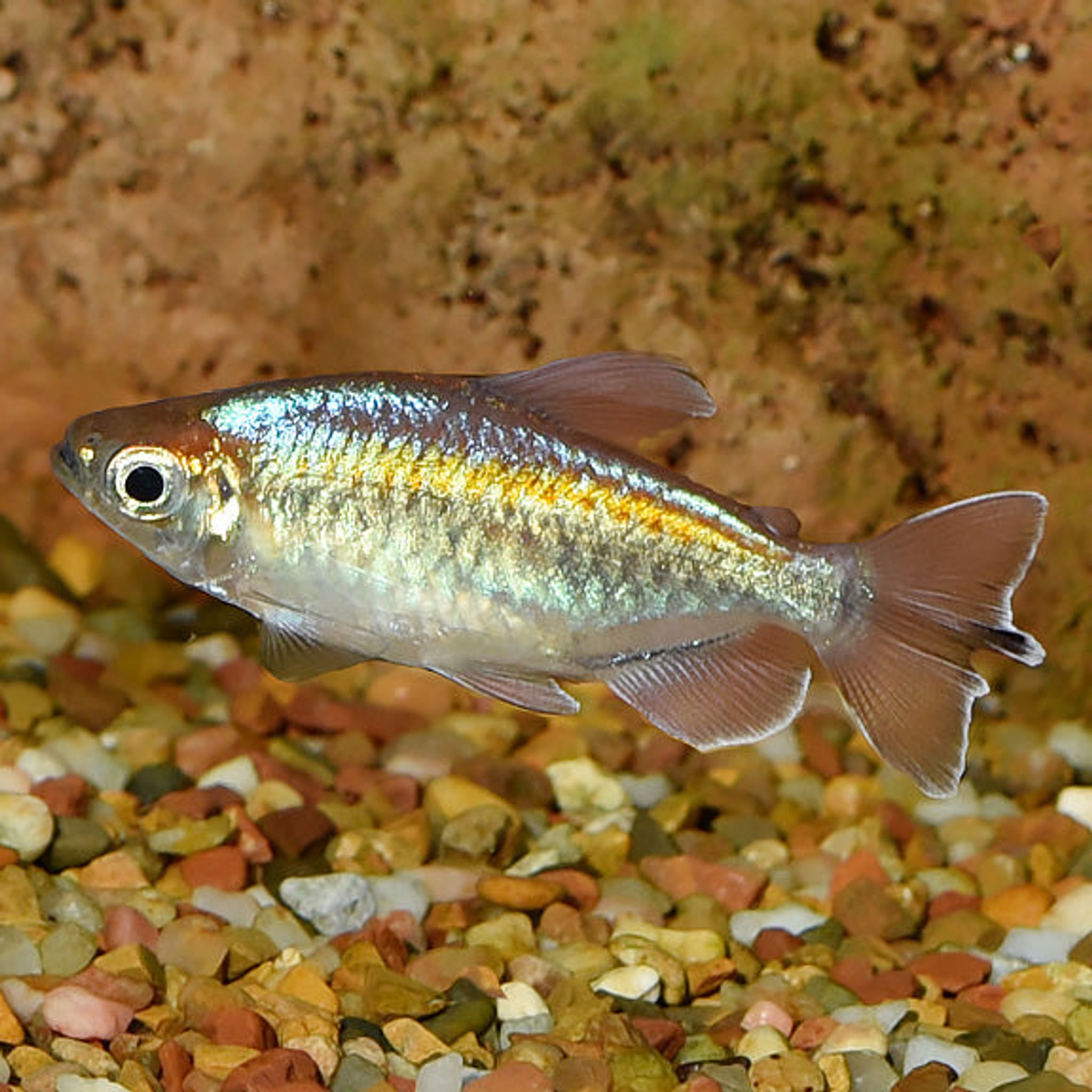
Best Tank Mates for Congo Tetra: Compatible Fish and Species to Avoid
The best tank mates for Congo tetra are peaceful fish that grow to roughly 1.5–4 inches, like warm, soft-to-medium water, and don't nip fins. Good choices include corydoras, bristlenose plecos, rasboras, rainbowfish, medium tetras, angelfish and pearl gouramis. Skip tiger barbs, serpae tetras, aggressive cichlids, bettas and goldfish. Below you'll find the reasons behind each pairing, stocking lists for 30, 55 and 75 gallon tanks, and a way to stop your Congos from eating everyone else's food.
Congo Tetra Basics That Shape Compatibility
The Congo tetra (Phenacogrammus interruptus) is a large African tetra from the Congo River basin. It's much bigger than the tetras most people know:
- Males: about 3–3.5 in (7.5–9 cm), with long, feathery tail and dorsal fins
- Females: about 2.5–2.8 in (6.5–7 cm), with duller color
- Lifespan: roughly 3–5 years, sometimes longer
That size cuts both ways. A Congo is too big for most community fish to eat, but it's big enough to eat very small fish. Those flowing male fins are also a target for nippers.
Temperament and Group Size
Congos are peaceful mid-water schoolers, but they're skittish. In a small group they hide, lose their color and sometimes get a little nippy. They look best as the headline schooler of a tank, not as a minor species squeezed into a busy community.
- Keep 6 at the very least. 8–10 or more is better.
- Keep more females than males so males spread their displays across several fish.
- Males spar with each other. It looks dramatic but is mostly harmless.
Water Parameters Tank Mates Must Share
| Parameter | Full range | Target for a community |
|---|---|---|
| Temperature | 73–82°F (23–28°C) | 76–78°F (24–26°C) |
| pH | 6.0–7.5 (tolerates up to about 8.0) | 6.5–7.2 |
| Hardness | about 3–18 dGH | soft to moderately hard |
Published temperature ranges vary a little (73–82°F versus 75–81°F), but 76–78°F sits comfortably inside both and suits most community fish. The pH ceiling is also debated, with figures from 7.5 up to 8.0. Treat the high end as something Congos tolerate, not something they prefer.
US note: Many Congos sold in the US are farm-raised and adapt to moderately hard tap water. Still, acclimate them slowly, because a sudden jump in pH or hardness stresses them more than the final number does.
Tank Size and Layout
Congos are active swimmers that need length. Recommendations range from 15–20 gallons to a 40-gallon breeder or bigger. A practical guide:
- 30 gal (114 L): the absolute floor for a group of 6 kept alone
- 40–55+ gal (151–208+ L): the right size once you add tank mates
- 55 gal (208 L), 4 ft (120 cm) long: the sweet spot for a real school plus companions
A setup that lowers stress includes live plants (low-light epiphytes and swords), floating plants to dim the light, open swimming space in the middle, and a dark substrate that brings out their color. Males need clear lanes so they can swim without shredding their fins on clutter.
Rules for Choosing Congo Tetra Tank Mates
Every good companion passes these five checks:
- Peaceful temperament. No bullies, no fin-nippers.
- Adult size about 1.5–4 in (4–10 cm). Nothing big enough to swallow a Congo, and nothing small enough to become food.
- Similar water needs. Warm and soft-to-medium.
- Similar activity and flow preference. Long fins and strong current don't mix.
- Ideally a different zone. Bottom and top dwellers share space more easily than a second large mid-water school.
Judge fish by their adult size, not their store size. Juvenile Congos in a store tank look small and dull, and buyers regularly underestimate how big they get and how much room they need.
Compatible Tank Mates by Tank Zone
Mid-Water Schoolers
These share the Congos' zone, so leave enough open water for both groups.
- Medium to larger tetras: lemon, rummynose, diamond, Colombian (blue), emperor, black phantom and bleeding heart tetras. Black skirt tetras work only in big groups, since small groups get nippy.
- Cardinals and neons: fine in large schools. Neons are less than half an adult Congo's size, so keep them only in schools of 10+ in a planted tank. Cardinals are the better pick because they handle the warmer temperatures well.
- Harlequin and other rasboras: calm, colorful and a similar temperament.
- Rainbowfish: active and bright, best in larger tanks.
- Smaller danios: fine, but they're fast. Don't pick the most hyperactive kinds.
- Rosy barbs and cherry barbs: peaceful barbs that don't target long fins the way tiger barbs do.
You can browse compatible tetras on FishyHub when you're ready to build the school.
Bottom Dwellers
This is the easiest zone to fill because it doesn't compete for mid-water space.
- Corydoras in groups of 6 or more
- Bristlenose pleco: stays small and grazes algae
- Otocinclus: peaceful algae grazers for planted tanks
- Kuhli loaches: shy, nocturnal and need soft substrate
- Clown loaches: only in large tanks, since they grow big and live in groups
- Dwarf Synodontis and other peaceful African catfish: a natural fit for an African-themed tank
A group of corydoras is the classic partner for a Congo school, as long as the corys actually get fed (more on that below).
Centerpiece Fish
- Angelfish: a good match once the Congos are grown, because adult Congos are too big for an angelfish to eat. Add them at similar sizes.
- Pearl, honey or dwarf gourami: peaceful, but they can be timid. Dense plants and floating cover help them hold their own.
- Peaceful livebearers: platies and mollies do fine if your water isn't too soft. Platies are the safest choice. Skip long-tailed fancy guppies, since their tails draw attention and guppies prefer harder water.
Invertebrates
- Amano shrimp: big enough to be safe
- Nerite and mystery snails: ignored by Congos
- Cherry and other dwarf shrimp: adults are mostly left alone, but Congos will pick off the babies
Species to Avoid With Congo Tetras
| Avoid | Why |
|---|---|
| Tiger barbs, serpae tetras, Buenos Aires tetras in small groups | Fin-nippers that shred male finnage |
| Oscars, jack Dempseys, mbuna, convict cichlids | Too big, too aggressive, or need very different water |
| Any predator that can swallow a 3 in (7.5 cm) fish | Congos become food |
| Bettas | Clash of fin displays. The betta may be stressed or nipped |
| Goldfish | Coldwater fish that need cooler temperatures |
| Micro-rasboras and other tiny nano fish | Outcompeted for food, or eaten |
| Hyperactive, constantly darting fish | Keep skittish Congos on edge |
Where Slow and Shy Fish Fit
Gouramis, leaf fish and similar slow or shy species sit in a gray area. Some hobbyists find they get intimidated or simply out-eaten by the Congos. They can work in a densely planted tank with targeted feeding, but they aren't beginner pairings.
Feeding Without Starving the Tank Mates
Congos are omnivores and fast, greedy eaters, and feeding competition is the problem most stocking lists skip. A peaceful tank can still leave corys thin and gouramis hungry.
What to feed: quality flakes and pellets, frozen or live foods, and some plant matter. Feed small portions 2–3 times a day.
Feeding-Time Checklist
- Scatter food across the surface so it spreads out instead of landing in one spot.
- Feed the Congos first at one end, then drop food for slower fish at the other.
- Give sinking foods for bottom dwellers after lights-out, when Congos are resting.
- Use a feeding tube or target feeder to place food near corys.
- Check your corydoras' bellies weekly. They should look rounded, not pinched.
- If Congos nibble soft plants, they're probably underfed. Add vegetable-based foods.
Sample Stocking Lists by Tank Size
| Tank | Congo tetras | Bottom | Mid-water or centerpiece |
|---|---|---|---|
| 30 gal (114 L) | 6 (mostly females) | None, or a few otocinclus | None. Keep it Congo-only |
| 55 gal (208 L) | 8–10 (for example, 9) | 8 corydoras, 1 bristlenose pleco | 3 pearl gouramis or a pair of angelfish |
| 75 gal (284 L) | 9–10 | 8 corydoras, 1 bristlenose pleco | Angelfish pair or gouramis, plus a rainbowfish or rummynose school |
Those numbers assume good filtration, regular water changes and a planted layout. Build up gradually and watch your water tests as you add fish.
Community Tank vs Single-Species Tank
A Congo-only school in a planted 55 is striking, low-risk and easy to fine-tune, since you only have one set of needs to meet. A community tank gives you more variety, but it costs more and raises the risk of disease and compatibility problems.
The African Biotope Middle Ground
For a themed tank, stick to African fish: a Congo school, dwarf Synodontis, African red-eyed tetras, and perhaps a pair of kribensis in a large tank with caves. Everything comes from similar waters, which makes matching parameters simpler.
Principles for a Peaceful Freshwater Community
These apply to any community tank, not just one with Congos:
- Match water chemistry before you look at colors.
- Anything that fits in a mouth will get eaten eventually.
- Match activity level and flow. Long-finned fish don't belong in strong current.
- Use all three zones (top, middle and bottom) so fish aren't crowded into one layer.
- Add sight-breaks with plants and hardscape so fish can get out of each other's view.
- Introduce passive fish first so they settle before the bolder ones arrive.
- Watch for diet mismatches. A fast eater can quietly starve a slow one.
Using Compatibility Checkers and Charts
Online compatibility checkers and charts rate pairs as usually, sometimes or rarely compatible. Use them as a first filter, then check adult size, water needs, diet and flow yourself. Individual fish don't always follow the chart.
What Other Keepers Report
Hobbyists commonly say Congos stay peaceful alongside plecos, otos and clown loaches in 55–80 gallon tanks. The most common complaint isn't aggression but how quickly they grab food. Timid gouramis sometimes hide, and adding floating plants tends to help them come out.
How to Add Tank Mates Safely
- Quarantine every new fish for 2+ weeks. New fish are a common source of ich.
- Add peaceful fish and bottom dwellers first.
- Add the Congo school as one group rather than a few at a time.
- Watch closely for the first 1–2 weeks.
Signs a Pairing Isn't Working
- Clamped fins or constant hiding
- Split or ragged tails, especially on male Congos
- Thin bellies on bottom dwellers or slow eaters
- One fish chasing another nonstop
If you see these, fix the cause instead of waiting it out. Rehome a nipper, add cover, change how you feed, or increase the group size. Watch damaged fins for fin rot while they regrow.
Common Mistakes and Fixes
- Keeping only 2–4 Congos. They turn shy, pale and sometimes nippy. Grow the group to 6–10+.
- Buying for store size. Plan around a 3.5 in (9 cm) adult male and a long tank.
- Mixing with tiger barbs or serpae. Expect ragged male fins. Rehome the nipper.
- Starving the bottom crew. Target-feed and check body condition.
- Bright, bare tanks. Add floating plants and dim the lights.
- Skipping quarantine. One new fish can bring ich into the whole tank.
Frequently Asked Questions
Can Congo tetras live with angelfish?
Yes, once the Congos are adult size. A grown Congo is too large for an angelfish to eat. Add both at similar sizes so neither group has a size advantage.
Can Congo tetras live with bettas?
It isn't recommended. Both fish rely on showy fins, and the betta may end up stressed or nipped in a tank with an active Congo school. Keep bettas in their own setup.
Can Congo tetras live with neon or cardinal tetras?
Usually yes, if the small tetras are kept in large schools with plenty of plant cover. Cardinals are the better choice because they handle the warm temperatures Congos like. Keep neons only in groups of 10 or more.
Can Congo tetras live with shrimp?
Amano shrimp are a safe match. Adult cherry shrimp are mostly left alone, but any babies will likely be eaten, so don't count on a breeding colony.
Can Congo tetras live with African cichlids?
Rift-lake mbuna are a poor match because they need hard, alkaline water and are aggressive. Kribensis can work in a 55 gallon or larger tank with caves for them to claim.
Are Congo tetras fin nippers, and how many fit in a 55 gallon?
Congos generally aren't fin nippers. Males spar with each other, and mild nipping shows up only when the group is too small or they're underfed. A 55 gallon tank comfortably holds about 8–10 Congos plus a group of corydoras and a centerpiece fish.
Build Your Congo Tetra Community
Start with a solid Congo school, add a calm bottom crew, and choose one centerpiece that won't compete at feeding time. When you're ready to stock, browse freshwater livestock on FishyHub to find Congos and compatible companions for your tank.

