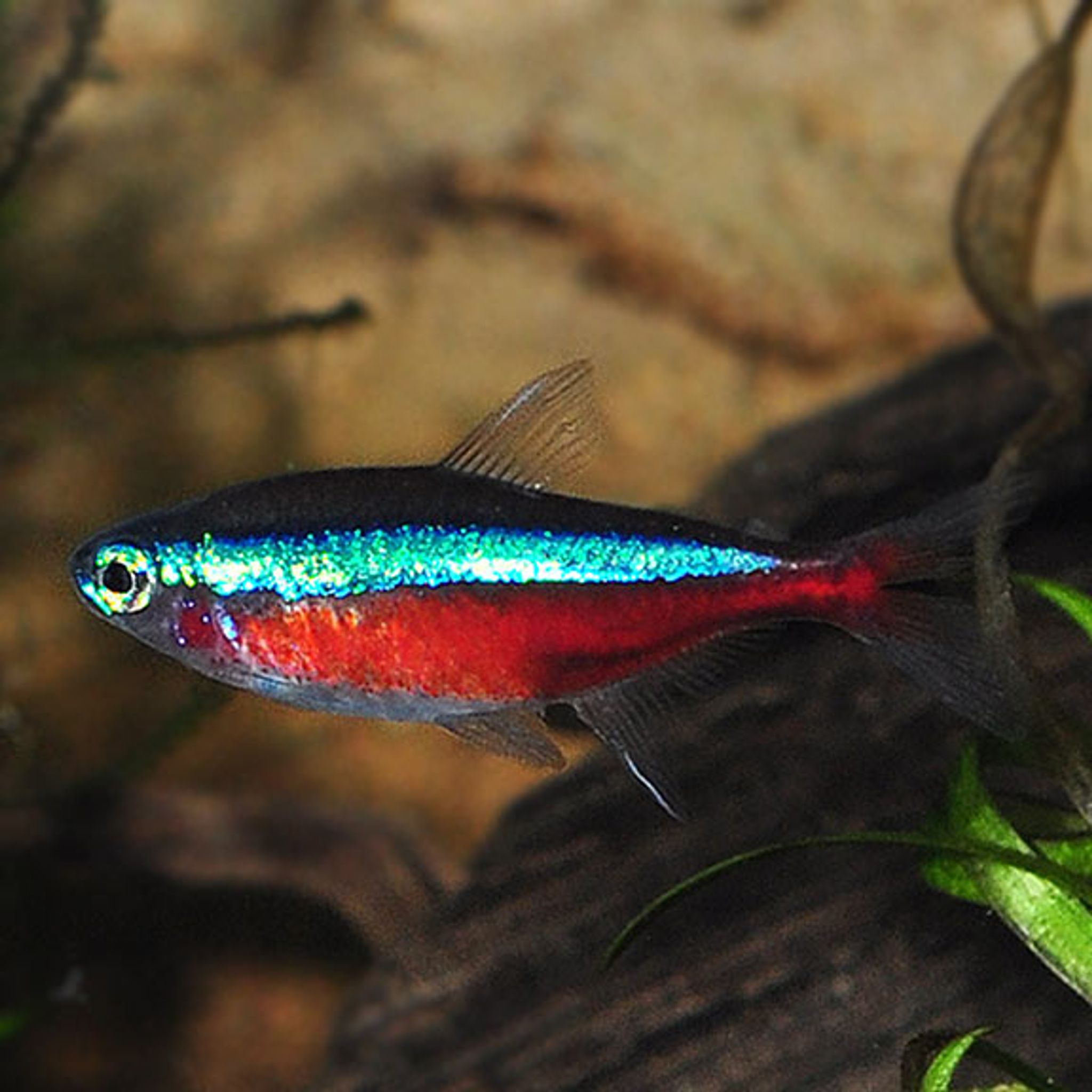
Best Tank Mates for Cardinal Tetra: Compatible Fish and Species to Avoid
The best tank mates for cardinal tetra are small, peaceful fish that like warm, soft, acidic water: other small tetras, pencilfish, hatchetfish, rasboras, heat-tolerant Corydoras, otocinclus, kuhli loaches and dwarf cichlids such as rams. Avoid anything with a mouth big enough to swallow a 1.5-inch fish, fin-nippers, and cool-water or hard-water species. Below you'll find picks by tank layer, sample lineups for 20, 29 and 40+ gallon tanks, and the species that don't belong.
Cardinal Tetra Basics That Decide Every Match
Cardinal tetras (Paracheirodon axelrodi) are peaceful schooling fish that reach about 1.5–2 inches (4–5 cm) as adults and typically live 4–5 years, often longer in stable tanks. Most cardinals sold in the US are still wild-caught from the Rio Negro basin, which matters for how you acclimate and quarantine them.
- Group size: 6 is the minimum; 10–15 or more gives better color, more confidence and tighter schooling. In the wild they form loose groups that grow larger toward dusk.
- Tank size: a 20-gallon long (76 L) is the practical minimum for a school plus companions. Allow roughly 2 gallons (7.5 L) for each extra cardinal, and favor length over height.
- Temperature: 73–81°F (23–27°C), with a sweet spot of 76–80°F (24–27°C), which is warmer than neon tetras prefer.
- Water chemistry: pH about 5.0–7.0 (ideal under 6.5), GH 0–6 dGH, low KH. Stability matters more than hitting an exact number.
- Setup: dense planting, floating plants or dim light, driftwood and leaf litter for tannins, and soft sand, mimicking shaded forest streams.
Where care guides disagree
- pH: some care sheets go as low as 4.6, others as high as 7.5. For captive or acclimated stock, 5.5–7.0 is a sensible target. Don't chase pH with chemicals.
- Minimum tank: 10 gallons is sometimes listed, but that's too tight for a community. Plan on 20 gallons or more.
- Difficulty: cardinals get labeled both "expert only" and "beginner friendly." The truth is in between: they're easy in a mature, stable tank and fragile in a new one.
The Five Rules for Choosing Cardinal Tetra Tank Mates
- Peaceful temperament. No bullies, no chasers.
- The mouth-size rule. If an adult fish's mouth could fit around a 1.5-inch cardinal, it will eventually try. As a rule of thumb, be wary of any companion that grows to roughly four times the cardinal's length or has a wide, predatory mouth.
- Water overlap. It must be comfortable at 76–80°F in soft, acidic water.
- Not a food hog. Hyperactive eaters can starve out cardinals at feeding time.
- Complementary swim level. Spread fish across top, middle and bottom so no layer gets crowded.
Why Tetras Make Great Community Fish
Tetras are peaceful, they school, and they fill the middle of the tank with movement. Keep each species in its own group of 6 or more so they stay focused on their own kind rather than pestering others. Mixing several tetra species works well as long as every species has a proper school. You can browse small tetra species on FishyHub to plan a mixed shoal.
Best Tank Mates by Layer
Top water
- Marbled and silver hatchetfish: true Amazon neighbors that stay at the surface. Keep a lid on, since they jump.
- Pencilfish: slender, calm and happy in the same soft, warm water.
Mid water
- Rummy-nose tetra: a warm-water tetra that schools tightly and pairs beautifully with cardinals.
- Ember, black neon, glowlight, lemon and green neon tetras: small, peaceful and well suited to a planted blackwater look.
- Harlequin and other small rasboras: gentle schoolers that handle soft water well.
- Diamond tetra: see the dedicated section below.
Bottom
- Corydoras: C. sterbai handles heat best. Peppered and bronze cories prefer cooler water and struggle at 80°F (27°C).
- Otocinclus: tiny algae grazers for planted tanks.
- Kuhli loaches: shy, sand-sifting and harmless.
- Bristlenose pleco: stays around 4–5 inches (10–13 cm), unlike common plecos.
Heat-tolerant bottom dwellers can be browsed in FishyHub's plecos, corys and bottom dwellers section.
Centerpiece fish
- Honey, dwarf or pearl gourami: calm, colorful focal fish for the upper-middle layer.
- Apistogramma, Bolivian rams and German blue rams: dwarf cichlids that generally ignore adult tetras in a planted tank.
- Discus: the classic warm-water partner, but only in 55+ gallon (208+ L) expert setups.
Invertebrates
- Amano and cherry shrimp: adults are generally safe, though cardinals may pick off shrimplets.
- Nerite and mystery snails: fine in any cardinal tank.
Diamond Tetras as Companions
Diamond tetras grow to about 2 inches (5 cm) and are peaceful but very active. They do best at 75–83°F (24–28°C) and pH 5.5–6.5 in soft water, so their needs overlap well with cardinals. Minor nipping mostly shows up in small groups, so keep 6 or more in a 20+ gallon tank.
Temperature Overlap Chart
| Species | Comfortable range | Fit with cardinals |
|---|---|---|
| Cardinal tetra | 73–81°F (23–27°C) | Baseline |
| Rummy-nose tetra, hatchetfish, pencilfish | Warm, soft water | Excellent |
| Diamond tetra | 75–83°F (24–28°C) | Excellent |
| Sterbai cory | Tolerates heat well | Excellent |
| Rams, Apistogramma | Warm, soft water | Good |
| Neon tetra | Cooler than cardinals | Good at 75–78°F (24–26°C) |
| Discus | 80–82°F (27–28°C) | Works in large, mature tanks only |
| Peppered and bronze cories | Cool-leaning | Poor at 80°F (27°C) |
| White cloud minnow, goldfish | Cool water | Avoid |
Sample Stocking Plans by Tank Size
| Tank | Cardinals | Companions |
|---|---|---|
| 20 gal long (76 L) | 10–12 | 6 sterbai cories or a few otos, plus nerite snails or adult shrimp |
| 29 gal (110 L) | 15–20 | 6 kuhli loaches or sterbai cories, a small group of hatchetfish or pencilfish, or one honey gourami |
| 40+ gal (150+ L) | 15–20+ | A second tetra school (rummy-nose or diamond), sterbai cories, a bristlenose pleco and a pair of rams or Apistogramma |
Treat these as starting points. Heavy planting and strong maintenance let you stock closer to the upper end.
Fish to Avoid With Cardinal Tetras
- Adult angelfish: they will eat cardinals, especially at night.
- Mid-size and large cichlids: oscars, convicts, Jack Dempseys and similar fish.
- Big predators: arowana and large catfish.
- Fin-nippers: tiger barbs, serpae tetras and similar species.
- Aggressive or territorial bottom fish: red-tail sharks and other pushy, tall-bodied bottom dwellers.
- Cold-water fish: goldfish, white clouds and anything that needs cool water.
- Large hard-water livebearers: big mollies want very different water.
The angelfish debate
Some keepers report success when angels and cardinals are raised together, but in most tanks it isn't worth the risk. If you try it, use a large, heavily planted tank, add cardinals at full adult size first, and expect some losses as the angels mature.
Bettas and fin-nipping
A few guides label cardinals fin-nippers, but most keepers find them gentle. A betta can work in a 20+ gallon tank at warm temperatures, depending on the individual fish. Watch long fins closely and have a backup tank ready.
Livebearers are a compromise
Guppies, platies and mollies are often suggested for neon tanks, but they prefer harder, alkaline water. They can live with cardinals at moderate pH and GH, but neither species is at its best.
South American Doesn't Always Mean Compatible
Not every South American fish suits cardinals. Fish from Andean-foothill rivers, such as the Rio Guejar, prefer cool (below 75°F / 24°C), fast, rocky water, which clashes with the cardinal's warm, still blackwater. The cardinal's true neighbors in the Rio Negro include hatchetfish, pencilfish, other small characins and dwarf cichlids. That same habitat also holds leaf fish and wolf fish, which prey on cardinals, so don't copy a biotope blindly.
Filtration and Flow
Cardinal and neon tetras do need a filter. Choose a gentle, well-established filter such as a sponge filter, a hang-on-back filter with a baffle, or a canister, and aim for low-to-moderate flow. Turnover of about 4–5 times the tank volume per hour is plenty. Never add them to an uncycled tank.
Stocking Order and Quarantine
- Cycle fully and let the tank mature for 1–2 months.
- Add plants and a hardy bottom crew first.
- Add the cardinal school next.
- Add the centerpiece fish last, so it doesn't claim the whole tank.
Quarantine every new fish for 2–4 weeks. Because most US cardinals are wild-caught, ask your store how long they've held the fish and whether they quarantine.
Softening hard US tap water
Many US tap waters are hard. Rather than chemical pH adjusters, blend RO water with tap water to lower GH and KH, and use driftwood or botanicals like leaf litter to add tannins gently.
Feeding Cardinals in a Community
Cardinals are omnivores. Offer quality micro-pellets or flakes plus frozen or live daphnia, brine shrimp and bloodworms, in small portions once or twice a day. Watch feeding time to make sure faster eaters aren't taking everything.
Common Mistakes and Troubleshooting
- Adding cardinals to a newly cycled tank. This often leads to die-offs in the first weeks. Wait until the tank is 1–2 months mature.
- Buying only 3–4 fish. Small groups hide, look pale and stay stressed.
- Mismatched temperatures. Cool-water companions, or pushing heat to 82°F (28°C) and above for discus, can shorten a cardinal's life.
- Fish that outgrow the tank. Juvenile angelfish and common plecos start small but don't stay that way.
- Fading color. Paling at night or when stressed is normal. Constant fading means testing ammonia, nitrite and nitrate and checking for bullying.
- Neon tetra disease. Pale patches and a bent spine signal this incurable, contagious disease. Remove affected fish; quarantine is the best prevention. Also watch for ich after temperature swings.
- Big swings during water changes. Match the temperature and change 20–30% weekly.
Frequently Asked Questions
Can cardinal and neon tetras live together?
Yes, usually. They'll school loosely together but mostly stick with their own kind. Keep the tank at a compromise temperature of 75–78°F (24–26°C) so both are comfortable.
How many cardinal tetras can go in a 20-gallon tank?
About 10–12 cardinals with a small bottom crew is a good target for a 20-gallon long. In a 29-gallon, you can keep around 15–20.
Will cardinal tetras eat shrimp?
They won't bother adult Amano or cherry shrimp, but they will eat baby shrimp. If you want a shrimp colony to grow, provide dense moss and plant cover for shrimplets. Browse freshwater shrimp on FishyHub if you plan to add a cleanup crew.
What are the best bottom dwellers for cardinal tetras?
Sterbai cories, otocinclus, kuhli loaches and a bristlenose pleco all handle warm, soft water. Skip peppered and bronze cories if you run the tank near 80°F (27°C).
Can cardinal tetras live with guppies?
Yes, if both are kept at moderate pH and GH, but it isn't ideal. Guppies prefer harder, alkaline water, while cardinals thrive in soft, acidic water.
Can cardinal tetras live with discus?
Yes, in a large, mature tank of 55 gallons or more at 80–82°F (27–28°C). Buy healthy, established cardinals, since the higher temperature is on the edge of their range.
Build Your Cardinal Community
A cardinal tank comes together when every fish shares warm, soft water, a peaceful temperament and a mouth too small for a 1.5-inch tetra. Start with a mature tank and a full school, then add companions layer by layer. Browse FishyHub's small community fishes to find companions that fit your lineup.

