Best Tank Mates for Black Skirt Tetra: Compatible Fish and Species to Avoid
The best tank mates for black skirt tetras are fast, short-finned fish of similar size, such as robust tetras, harlequin rasboras, zebra danios, cherry barbs and a group of Corydoras on the bottom. Avoid bettas, fancy guppies, goldfish, big cichlids and anything with long, trailing fins. Below is a short, ranked list sorted by tank size, an honest look at fin nipping, and sample stocking plans you can copy.
Black Skirt Tetra Basics That Shape Compatibility
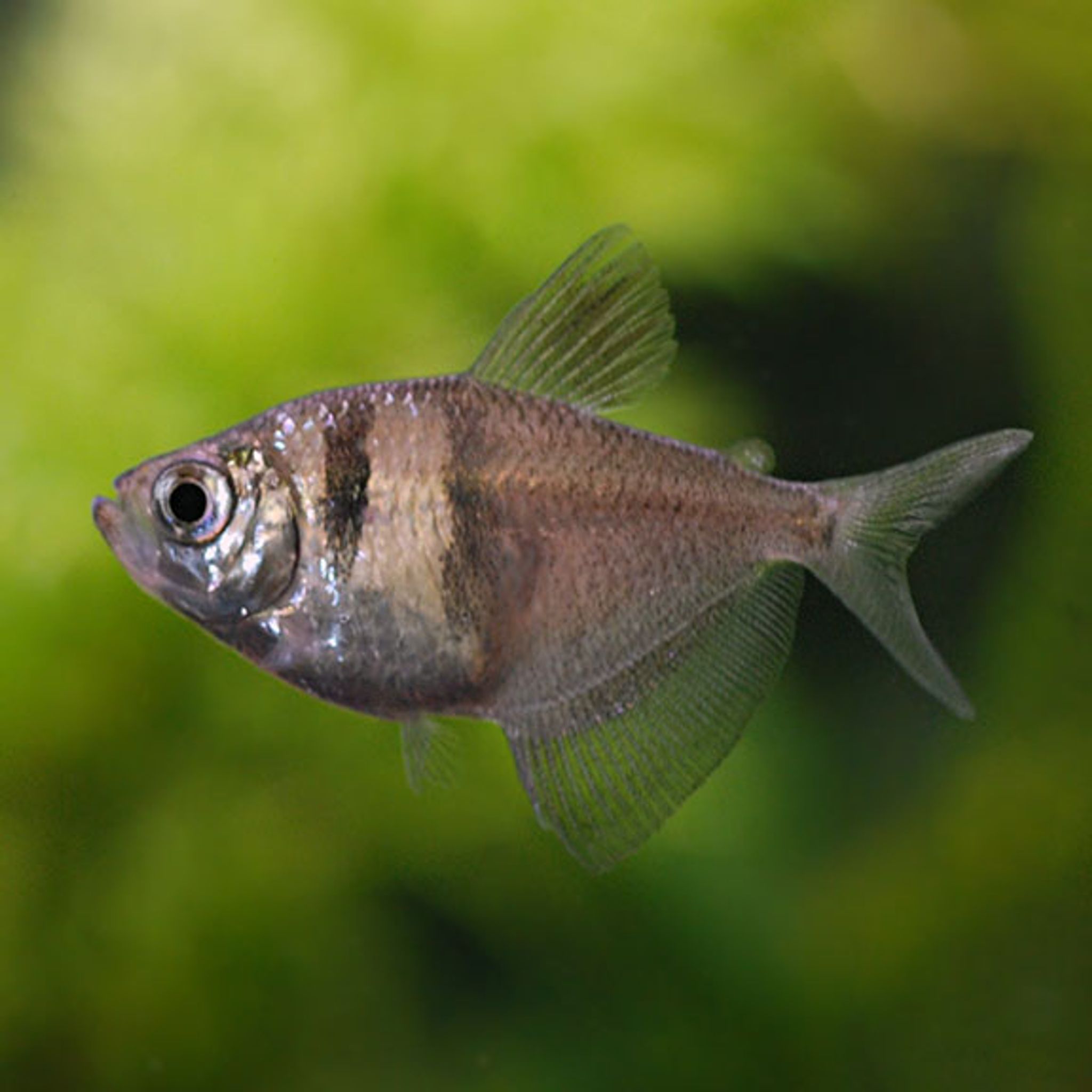
The black skirt tetra (Gymnocorymbus ternetzi) comes from South America, mainly the Paraguay and Guaporé river basins. Adults reach about 2–2.5 inches (5–6 cm) and have a deep, disc-like body. Long-fin varieties, color-dyed fish and GloFish tetras are all the same species, so everything in this guide applies to them.
Key facts for choosing companions:
- Temperature: 72–82°F (22–28°C)
- pH: 6.0–7.5, tolerating up to about 8.0
- Hardness: soft to moderate, roughly 4–12 dGH
- Easiest overlap for a community: 74–78°F (23–26°C) with neutral pH
- Minimum tank: a 20 gallon long (76 L) for a group of 6 plus a few companions; 29–40 gallons (110–150 L) for a real community
- School size: 6 at minimum, 8–10 or more is better
Black skirts are active mid-water swimmers, so tank length matters more than height. Sources quote minimums anywhere from 10 to 30 gallons; a 20 gallon long is the sensible floor.
The Honest Part: Black Skirts Nip Fins
Black skirts are mostly peaceful but boisterous, and they are well-known fin-nippers. Slow fish with long or trailing fins are the usual targets. Treat them as semi-aggressive toward long-finned fish and peaceful toward everything else.
The biggest trigger is a small school. With only 2–4 fish, the tetras turn their energy outward. In a group of 8–10+, the chasing and squabbling mostly stays inside the school.
One detail most care sheets skip: long-fin black skirts often become victims of their own kind. If you mix standard and long-fin types, expect the long-fin fish to lose fin tissue first. Keep long-fin black skirts in a large, same-variety group or leave them out.
What Makes a Good Black Skirt Tank Mate
Look for fish that are:
- Similar in size, about 1.5–4 inches (4–10 cm)
- Fast or short-finned, so they can move away or have little to nip
- Peaceful but not timid, so they don't hide and waste away
- Using a different tank level, ideally the bottom or the top
- Comfortable in the same water, around 74–78°F and neutral pH
Best Tank Mates for Black Skirt Tetra
Mid-Water Companions
- Other robust tetras: rummy nose, emperor, rosy, black phantom, lemon, and red eye (Congo tetras in larger tanks). Serpae tetras work but with caution, as they are nippy too.
- Harlequin and other medium rasboras: calm, schooling, similar size.
- Zebra and pearl danios: too fast to be bothered and happy in the upper water.
- Cherry and gold barbs: peaceful barbs that hold their own.
You can browse a range of tetras for your community tank on FishyHub.
Bottom Dwellers
- Corydoras in groups of 6+: the most consistent pick across every compatibility list.
- Kuhli loaches: shy but safe, and they stay under the action.
- Bristlenose pleco: a small pleco that handles algae.
- Otocinclus: best in established, planted tanks.
A group of Corydoras catfish is the easiest first addition to almost any black skirt tank.
Also Workable, With Conditions
- Platies, mollies and swordtails: stick to short-finned or wild-type varieties.
- Dwarf, honey and pearl gouramis: fine in larger planted tanks, but watch their feelers, which can draw nips.
- Bolivian ram and Apistogramma: workable in roomier tanks with plenty of cover.
- Snails: nerites, mystery snails and similar are ignored.
Compatibility at a Glance
| Species | Verdict | Minimum tank | Notes |
|---|---|---|---|
| Corydoras (6+) | Excellent | 20 gal (76 L) | Bottom level, peaceful |
| Harlequin rasbora | Excellent | 20 gal (76 L) | Similar size and water |
| Zebra/pearl danio | Excellent | 20 gal long | Fast, top level |
| Cherry barb | Very good | 20 gal (76 L) | Short fins, calm |
| Rummy nose / lemon / phantom tetras | Very good | 29 gal (110 L) | Separate schools of 6+ |
| Neon tetra | Good | 20 gal (76 L) | Large schools of both |
| Platy, short-fin molly | Good | 29 gal (110 L) | Avoid fancy fins |
| Dwarf/honey gourami | Caution | 29 gal (110 L) | Feelers get nipped |
| Serpae tetra, rosy barb | Caution | 40 gal (150 L) | Nippy; raises fin problems for others |
| Angelfish | Risky | 55 gal (210 L) | Only juveniles added together |
| Cherry shrimp | Poor | — | Shrimplets get eaten |
| Betta | Avoid | — | Fins get shredded |
| Fancy guppy | Avoid | — | Long, slow fins |
| Fancy goldfish | Avoid | — | Cooler water, slow |
| Tiger barb | Avoid | — | Mutual nipping and stress |
| Oscar, Jack Dempsey, convict | Avoid | — | Aggressive or predatory |
Fish to Avoid and Why
- Bettas: slow and long-finned, the classic nipping target.
- Fancy long-finned guppies: same problem on a smaller fish.
- Fancy goldfish: they prefer cooler water and are too slow to share food or space.
- Large or aggressive cichlids (oscars, Jack Dempseys, convicts): they will bully or eat tetras.
- Any predator whose mouth fits a 2 inch tetra.
- Tiger barbs: they nip back, which creates a stress cycle where both species keep fighting.
- Very tiny fish and dwarf shrimp: fry and baby shrimp become food.
Where Advice Conflicts
Angelfish
Some keepers rate angels as workable; others call them a poor match. Adult angelfish can eat small fish, and black skirts pick at angel fins, so the risk runs both ways. Only try it in 55 gallons (210 L) or more, add juvenile angels at the same time as the tetras, and keep a large tetra school. Otherwise, skip it.
Guppies and Long-Finned Livebearers
Choose short-finned or wild-type livebearers only.
Gouramis
Dwarf, honey and pearl gouramis are fine in larger planted tanks. Watch for nipped feelers.
Very Small Species
Celestial pearl danios, ember tetras and neons get mixed ratings. Neons usually do well in large groups. The tiniest nano fish tend to get bullied or outcompeted at feeding time, so only try them in 29 gallons (110 L) or more with heavy planting.
Rosy Barbs and Serpae Tetras
Both are nippy. They get along with black skirts, but together they raise the fin damage for every other fish in the tank.
Related Tetras as Companions
Bleeding heart, black phantom, yellow phantom, rosy, lemon, flame and red eye tetras are all a similar size and share the same water range: low-to-mid 70s°F and slightly acidic to neutral. That makes them natural neighbors. Keep each species in its own school of 6+. Phantoms and rosy/bleeding heart types are the calmest.
Black Phantom and Yellow Phantom Tank Mates
The same rules apply: rasboras, Corydoras, otos and small gouramis work well. Males of both phantom species spar, but it's harmless display. In a mixed tetra group, the black skirt is often the nippiest member.
Flame, Lemon and Rosy Tetra Tank Mates
Flame and lemon tetras are gentle. Rosy types are less nippy than black skirts, which makes them good, calmer neighbors as long as the black skirt school is large.
Red Eye Tetra Tank Mates
Red eyes are slightly larger and energetic but peaceful. They pair well with rummy nose tetras, harlequins and snails, and need 6+ of their own to avoid stress nipping.
GloFish Tetra Tank Mates
GloFish tetras are genetically modified black skirts and are widely sold in the US. Every rule in this guide applies. They can school with regular black skirts, and they do best with peaceful fish in 68–80°F (20–27°C) water.
Sample Stocking Plans
These assume good filtration, regular water changes and fish added in stages.
20 gallon long (76 L)
- 8 black skirt tetras
- 6 Corydoras (a small species)
- A few nerite snails
29 gallon (110 L)
- 8–10 black skirt tetras
- 8 harlequin rasboras
- 6 Corydoras
- 1 bristlenose pleco
40 gallon breeder (150 L)
- 10 black skirt tetras
- 8 rummy nose or lemon tetras
- 6 zebra danios
- 8 Corydoras or 6 kuhli loaches
- 1 honey or dwarf gourami (planted tank)
Setting Up to Reduce Conflict
- Dense planting or background cover gives chased fish a place to break line of sight.
- An open swimming lane in the front lets the school run without cornering others.
- Gentle to moderate flow suits every fish on this list.
- Dim light or tannin-stained water is optional but can calm the tank.
- Add fish in the right order: put the tetras in before or together with sensitive fish, not into a tank where others are already established.
Feeding
Black skirts are omnivores. Offer flakes or micro-pellets plus frozen or live foods. Feed at several spots so Corydoras and loaches get their share instead of watching the tetras grab everything mid-water.
Quarantine
Quarantine new fish for 2–4 weeks. After adding a new species, check fins daily for the first week.
Common Mistakes and Troubleshooting
- Buying 2–4 tetras: this almost guarantees nipping. Enlarge the school to 8+.
- Mixing with bettas or long-finned guppies: rehome one of them.
- Crowding a 10 gallon: upgrade to at least a 20 gallon long.
- Torn fins: check school size and look for one bully. Add plants. Test water: ammonia and nitrite should be 0 and nitrate under 20–40 ppm. If fin edges look white or ragged, treat for secondary fin rot.
- Tetras hiding or losing color: likely causes are too much light, strong flow, bullying from bigger fish, or a new, unsettled tank.
- Shrimp colony shrinking: adults may survive, but shrimplets get eaten.
Frequently Asked Questions
Can black skirt tetras live with bettas?
Generally no. A betta's long, slow fins are exactly what black skirts target. Even in a big tank, the betta usually ends up stressed with torn fins.
Can black skirt tetras live with neon tetras?
Usually yes, in 20 gallons or more with large schools of both. Big groups keep each species focused on its own kind, and plants give the neons cover.
Are black skirt tetras aggressive?
They are nippy rather than truly aggressive. The behavior gets much worse in small groups, so a school of 8–10 is the simplest fix.
How many black skirt tetras should I keep?
Six is the minimum and 10 is ideal. Larger groups spread the chasing among the tetras themselves.
Can black skirt tetras live with shrimp?
Amano shrimp are large enough to be safe. Cherry shrimp adults may survive, but the colony will lose most of its babies.
Can GloFish tetras and black skirts school together?
Yes. They are the same species, so they school together and follow the same care and tank mate rules. They cannot live with goldfish for the same reason black skirts can't: mismatched temperature and speed.
Build Your Black Skirt Community
Start with a full school, add a peaceful bottom crew, and choose short-finned mid-water fish, and black skirts make a lively, easy community centerpiece. Browse small community fishes on FishyHub to plan your lineup.

