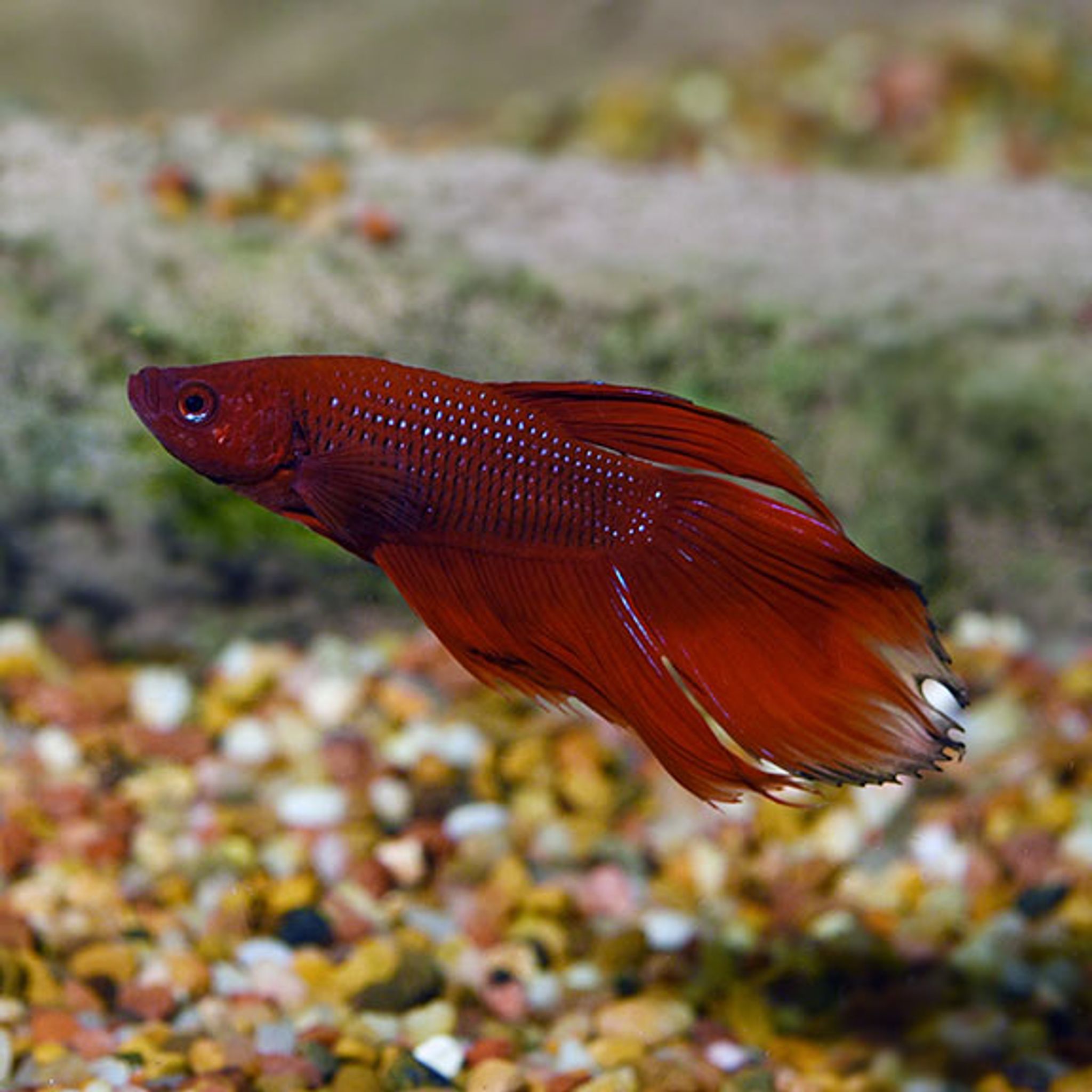

Best Tank Mates for Betta Fish: Compatible Fish and Species to Avoid
The best tank mates for betta fish are small, calm, plain-looking species that stay out of the betta's space: snails, Amano shrimp, pygmy corydoras, kuhli loaches, and small schoolers like ember tetras and harlequin rasboras. What works depends mostly on tank size. A 5-gallon betta tank should hold snails at most, while fish companions need 20 gallons to be realistic. Stay away from other bettas, fin nippers, flashy long-finned fish, cichlids and goldfish.
Start Here: Your Betta Doesn't Need Company
Bettas are solitary by nature, so they don't get lonely. Tank mates are there because you enjoy a busier tank, not because the betta needs them. That matters because temperament varies a lot from one betta to the next. Some tolerate a whole community. Others go after anything that moves, and some bettas will never accept a tank mate.
Try a quick mirror test
Before you buy anything, hold a small mirror against the glass for a minute or two. A betta that flares briefly and loses interest is a better candidate for a shared tank than one that flares nonstop and rams the glass. It isn't a guarantee, but it's a free early warning. Keep it short, because long sessions stress the fish.
Fin type matters too
Wild-type and plakat (short-finned) bettas swim faster and can be more aggressive than long-finned show strains like halfmoons. Long-finned bettas are slow, which makes them easy targets for nippy tank mates. Match your stocking to the fish you actually have.
Tank Size Comes First
Most failed betta communities come down to a tank that's too small. Sources disagree on the minimum for a community, with figures from 10 to 20 gallons. Our recommendation: 10 gallons for invertebrate-only setups and 20 gallons for fish tank mates.
| Tank size | What can live with the betta | Example lineup |
|---|---|---|
| 5 gal (19 L) | Betta alone, or snails (possibly a few shrimp) | Betta + 1–2 nerite snails |
| 10 gal (38 L) | Invertebrates; a small bottom group only if you're experienced | Betta + nerite snails + 3–5 Amano shrimp, or betta + 6 pygmy corys |
| 20 gal (76 L) | Small calm schoolers and bottom-dwellers | Betta + 8–10 ember tetras + 6 pygmy corys + nerite snails |
| 29 gal (110 L) | Two schools, larger snails, a bristlenose | Betta + 10 harlequin rasboras + 6 kuhli loaches + 1 bristlenose pleco + mystery snail |
Mollies, bristlenose plecos and gouramis all need 20+ gallons, even though some of them get recommended for smaller tanks.
Water Parameters Everyone Has to Share
A betta community only works if every species is happy in the same water. Aim for:
- Temperature: 76–81°F (24–27°C), with 78–80°F (26–27°C) the sweet spot for tropical community fish
- pH: 6.5–7.5
- Hardness: soft to moderate
- Ammonia and nitrite: 0 ppm
- Nitrate: under 20 ppm
Run a heater, and keep the flow gentle and baffled. Bettas struggle in strong current, and a sponge filter is a good fit.
Watch for parameter conflicts. Mollies and other livebearers prefer harder, more alkaline water, while corydoras and many tetras want it soft. Pick companions that like the same side of the range instead of mixing both.
What Makes a Good Betta Tank Mate
Look for a species that is:
- Small and calm, not boisterous
- Dull-colored and short-finned, so the betta doesn't read it as a rival
- Not a fin nipper
- Living at a different level: a bottom-dweller, or a tight midwater schooler that stays below the betta's surface zone
- Comfortable in warm, soft water
Best Tank Mates for Betta Fish, Safest First
Snails
- Nerite snails: the easiest first tank mate. They eat algae, stay small and can't breed in freshwater.
- Malaysian trumpet snails: burrow in the substrate and turn it over.
- Mystery and apple snails (adults only): see the notes below on tank size.
Do bettas eat snails? They pick at small pest snails and may nip antennae. Large adult nerite, mystery and apple snails usually do fine.
Mystery snails get mixed reviews. Some keepers call them ideal. Others point out that they're active in daylight and catch the betta's eye. Keep them in 15+ gallons, watch for antenna nipping, and know that they lay egg clutches above the waterline.
Bottom-dwelling fish
- Pygmy corydoras (or other small corys): groups of 6+ of one species, on sand. Pygmies tolerate warmth well (72–79°F / 22–26°C), which makes them the ideal nano companion.
- Kuhli loaches: groups of 6+. They're nocturnal and spend the day hidden.
- Otocinclus: keep them in a group, and only in a mature tank. They're fragile.
Browse corydoras if you're planning a bottom crew.
Small schooling fish
Keep schoolers in groups of 6–10 or more:
- Ember tetras
- Harlequin rasboras: peaceful, about 2 inches (5 cm), keep 6–8+. They like soft, warm water.
- Chili rasboras
- Neon tetras (with conditions, below)
- Celestial pearl danios
One camp avoids schoolers completely, tetras and guppies included. Others recommend embers, rasboras and neons. Our view is that small calm schoolers work in 20+ gallons and in large groups. Small groups get stressed and nippy. You'll find these fish among FishyHub's small community fishes.
Neon tetras are workable in a 20-gallon with 10+ neons kept at 78°F (26°C). Their temperature overlap with bettas is narrow, and they sometimes nip fins. Stress can bring on ich, so watch closely in the first weeks.
Shrimp
Order of preference: Amano shrimp, then cherry shrimp in dense plants, then bamboo shrimp for bigger tanks.
Will bettas eat shrimp? Yes, often. Shrimplets and small cherry shrimp are a likely snack. Amano shrimp, at about 2 inches (5 cm), are the sturdiest choice. Some keepers say only bamboo shrimp are reliably safe, so if you go with cherries, keep a dense colony and treat some losses as likely. Give them moss and plant thickets for cover, and add shrimp before the betta.
Other options
- Bristlenose pleco: 20+ gallons only.
- Platies: peaceful and plain enough to work.
- Endler's livebearers and female guppies: safer than fancy male guppies.
- African dwarf frogs: conditional (see below).
Species-by-Species Notes
Algae eaters
Your best choices are nerite snails and otocinclus (in a group, in a mature tank). A bristlenose works only in 20+ gallons. Siamese algae eaters grow to about 6 inches (15 cm) and need large tanks.
Plecos
Common plecos grow far too large, and some rasp the slime coat off other fish. The only plecos to consider are bristlenose or clown plecos, in 20+ gallons.
African dwarf frogs
Sources split here, and we recommend them only with conditions: 10+ gallons, target feeding and a tight lid. They're bottom-dwelling, nocturnal and slow to eat, so the betta will beat them to food. Use tongs or a feeding dish. They must swim up for air, so skip deep, tall tanks. Don't confuse them with African clawed frogs, which get much larger.
Mollies
They can work in 20+ gallons with plain varieties, but they prefer harder water and a higher pH than a soft-water betta setup provides.
Guppies
Avoid colorful male guppies. Female or Endler's guppies are safer. The risk runs both ways: the betta may attack them, or they may nip the betta.
Gouramis
Some keepers pair a honey gourami with a betta in 20+ gallons. We recommend skipping gouramis if you're a beginner. They're labyrinth fish with a similar body shape, which invites rivalry.
GloFish
Judge each GloFish by its base species. GloFish tetras are black skirt tetras (fin nippers), and GloFish barbs are tiger barbs, so avoid both. GloFish danios are fast but workable in large tanks.
Species to Avoid
- Other male bettas, ever
- Fin nippers: tiger barbs, serpae and black skirt tetras, and most other barbs
- Long-finned or flashy fish the betta may take for a rival: fancy male guppies and most gouramis
- Cichlids and angelfish. Angelfish grow large, turn territorial and nip fins.
- Goldfish. They do best around 65–72°F (18–22°C), produce a heavy waste load, and fancy varieties have long fins.
- Large or common plecos
- Any fish big enough to eat or bully the betta
Male and Female Bettas
Males and females together
Only briefly, for supervised breeding. Otherwise use a divider or separate tanks. Two males must never share a tank.
Female tank mates and sororities
Female bettas are less territorial than males but still aggressive. A sorority needs 5+ females (odd numbers help spread aggression), 20+ gallons and heavy planting. Expect losses, or for it to fail outright, and have backup tanks ready. Tank mates for a female follow the same rules as for a male.
Aquascaping to Keep the Peace
- Dense live plants and caves to break up lines of sight
- Floating plants to soften light and give cover
- Light surface cover, like broad leaves near the top, so the betta has resting spots
How to Introduce Tank Mates
- Cycle the tank fully before adding anything.
- Quarantine new fish for 2–4 weeks. Tank mates can bring in diseases like columnaris and ich, and a separate tank lets you spot problems first.
- Add tank mates first so they settle in, then add the betta last.
- Rearrange the decor if you're adding to an existing betta tank, which resets territories.
- Watch closely for 24–72 hours, and keep checking for weeks.
Before step one, set up a backup plan: a spare cycled tank or a divider or breeder box.
Signs of aggression
- Constant flaring and chasing
- Torn fins on either fish
- Tank mates hiding or clamping fins
- Shrimp disappearing
Feeding a mixed tank
Bettas eat meaty food at the surface. Bottom-dwellers and frogs need sinking food delivered to them, often at lights-out when the betta is resting.
Common Mistakes and Troubleshooting
- Adding tank mates to a 5-gallon or uncycled tank.
- Buying on looks: fancy guppies, tiger barbs and other labyrinth fish.
- Groups that are too small, which leaves schoolers stressed and nippy.
- Starving the bottom crew because the betta steals the food.
- No backup tank. If the betta chases a tank mate, separate them right away, rearrange the decor, and try again only with a different species.
- Blaming the wrong culprit. Torn fins can come from tail biting or sharp decor. Check for both before you blame a tank mate.
Every species recommended here is common in US stores. If you come across an unusual import, check your state's local rules before buying.
Frequently Asked Questions
Do bettas get lonely?
No. Bettas are solitary by nature and do fine on their own. Tank mates are an option for your enjoyment, not something the betta needs.
Can a betta live with other fish in a 5-gallon tank?
Not with other fish. A 5-gallon tank has room for the betta plus snails, or maybe a few shrimp. Fish companions need 20 gallons to be realistic.
What's the easiest first tank mate for a betta?
A nerite snail. It's hardy, eats algae, stays small and won't overrun the tank, and bettas generally leave adults alone.
Can two female bettas live together?
A pair is risky, because aggression lands on one fish. Either set up a proper sorority of 5+ females in 20+ gallons with heavy planting, or keep a single female.
Should I add the betta first or last?
Last. Letting tank mates settle in first means the betta arrives in a tank it hasn't already claimed, which cuts down on territorial aggression.
What if my betta attacks the new fish?
Separate them right away, using your backup tank or a divider. Rearrange the decor, give everyone time to recover, and only try again with a different, calmer species.
Find Your Betta and Its Companions
Start with a betta whose temperament and fin type suit the tank you have, then add companions slowly, with a backup plan ready. You can browse bettas on FishyHub along with shrimp, snails and small community fish to plan your lineup.


