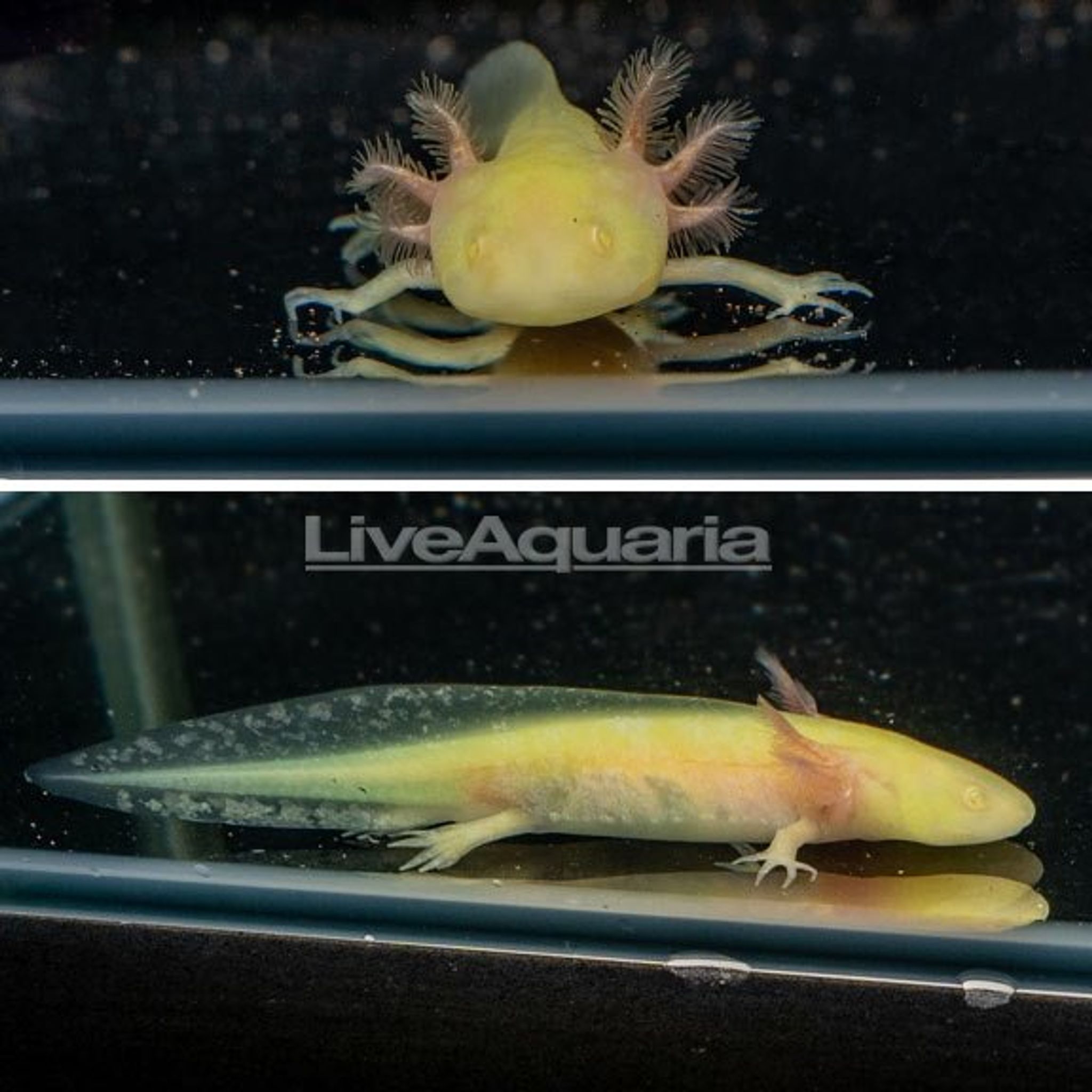
Best Tank Mates for Axolotl: Compatible Fish and Species to Avoid
The best tank mate for an axolotl is usually no tank mate at all, and the next best is another axolotl of the same size. If you want a community tank anyway, only a short list of cool-water species is low-risk: White Cloud Mountain minnows, large adult mystery or apple snails, and in big tanks, zebra danios. Guppies, goldfish, bettas, plecos, corys, turtles and shrimp are all poor choices, and this guide explains why.
Why Axolotls Are Hard to House With Others
Axolotls are solitary, nocturnal ambush predators. Anything that moves and fits in their mouth gets sucked in. This is instinct, so you can't train it out of them. Many attacks happen at night, when fish are resting near the bottom and the axolotl is at its most active.
The trouble runs both ways. An axolotl's feathery external gills are soft and tempting to fish that nip, and its skin has no scales to protect it. A tank mate can end up as dinner, or it can slowly shred the gills of a pet that can't escape.
Legal note for US readers: axolotls are banned or need a permit in some states and localities, including California, Maine, New Jersey, Virginia and Washington, D.C. Check your local rules before buying one.
Water Conditions Any Tank Mate Must Share
A companion has to live happily in the water your axolotl needs, not the other way around.
| Parameter | Target for axolotls |
|---|---|
| Temperature | 60–64°F (16–18°C) ideal; 59–68°F (15–20°C) acceptable |
| Danger zone | Above 72°F (22°C): heat stress, fungus, appetite loss |
| pH | 6.5–8.0, about 7.4–7.6 ideal |
| General hardness | Roughly 7–14 dGH |
| Ammonia / nitrite | 0 ppm |
| Nitrate | Under about 20–40 ppm is best; never over 60 ppm |
Sources disagree on the upper "ideal" temperature, with figures from 64°F to 68°F. The safe approach is to aim for 60–64°F and treat 68°F as a hard limit.
Tank Size
- One adult axolotl: 20 gallons (76 L), long footprint.
- Axolotl plus tank mates: 40 gallons (151 L) minimum, 55 gallons (208 L) or more preferred.
- Two axolotls plus companions: budget roughly 55 gallons (208 L).
Also wait until your axolotl is at least 6 inches (15 cm) long and settled in before you add anything else.
The Four-Filter Test for Axolotl Tank Mates
Run every candidate through these four checks. If it fails even one, leave it out.
- Thrives below 68°F (20°C). Tropical fish fail here immediately.
- Is fine in low flow. Axolotls need gentle water movement, so species that want current won't do well.
- Won't nip the external gills. Fin-nippers and grazers that pick at soft tissue are out.
- Has no spines or hard shell and can't be swallowed whole. Anything small enough to swallow, spiny or hard-shelled is a choking or impaction risk.
Compatible Tank Mates, Ranked
1. Another Axolotl (Same Size, Adults Only)
A second axolotl is the most natural companion, with conditions:
- Match sizes closely. Juveniles nip and eat each other's limbs and gills.
- Adults only. Keep babies apart until they're grown.
- Same sex unless you want to breed. A male-female pair will breed and can lay hundreds of eggs.
- Give each one its own hide.
2. White Cloud Mountain Minnows
This is the best fish option. White Clouds are comfortable in roughly 60–72°F (16–22°C), which overlaps well with axolotl water. They're quick and stay in the upper water column, away from the axolotl's usual hunting zone.
- Keep a school of 6 or more.
- Expect to lose a few over time. Some will get eaten eventually.
- Buy tank-bred White Clouds specifically. "Minnows" in general, especially wild-caught or bait minnows, often carry parasites.
3. Adult Mystery or Apple Snails
The lowest-risk invertebrate. Adults are too big to swallow, and they clean up leftover food. Avoid small pest snails and juvenile snails, since their shells can cause impaction if eaten.
4. Zebra Danios (Conditional)
Danios are fast and handle cool water down to the mid-60s°F (about 18°C), but they're borderline at 60–64°F. They're also hyperactive, which can stress an axolotl. Only consider them in a 55-gallon (208 L) or larger tank, and remove them if your axolotl seems unsettled.
Species to Avoid
| Species | Main problem | Verdict |
|---|---|---|
| Guppies | Need 74–82°F; overbreed; parasites | Avoid |
| Goldfish | Nip gills, heavy waste, want 65°F+ and bright light | Avoid |
| Bettas | Tropical temperatures, nipping | Avoid |
| Tetras, mollies | Tropical temperatures | Avoid |
| Plecos | Tropical temperatures | Avoid |
| Cory and otocinclus catfish | Fin spines, bottom-food competition, otos need more flow | Avoid |
| Shrimp (ghost, Amano, cherry) | Eaten within days | Food only |
| Crayfish and crabs | Claws injure gills and limbs | Never |
| Cichlids and territorial fish | Aggression, gill damage | Never |
| Turtles | Warm water, basking heat, bites, Salmonella | Never |
| Frogs (incl. African dwarf frogs) | Tropical water, disease risk | Never |
Axolotls and Guppies
Some keepers say guppies are fine because they swim mid-water. Most disagree, and so do we. Guppies need 74–82°F (23–28°C), which is lethal territory for an axolotl. Each female can drop 20 or more fry a month, which quickly overcrowds the tank and cuts oxygen. Imported guppies also often carry parasites, so don't use them as feeders either.
Axolotl and Goldfish
Goldfish are cold-water fish, which is why people try this pairing. It still fails. Goldfish nip at gills, produce heavy ammonia that a sponge filter can't keep up with, prefer bright light and water above 65°F (18°C), and small ones can be swallowed and cause choking. Verdict: no.
Axolotl and Turtle
Turtles need water around 75–85°F (24–29°C) and a basking area of 90–100°F (32–38°C). They bite unpredictably, produce heavy waste and carry Salmonella. Verdict: never.
Catfish, Tropicals and Aggressive Species
Cory and otocinclus catfish have fin spines that can lodge in an axolotl's mouth or gut. They also compete for food on the bottom, and otos want more flow than axolotls tolerate. Tropical fish such as bettas, tetras, mollies and plecos need 74°F (23°C) or warmer, and keeping a tank that warm harms the axolotl. Crayfish, crabs, cichlids and other territorial species cause injuries and gill damage.
What About Shrimp?
Some lists call shrimp safe companions. In practice, ghost and Amano shrimp are often eaten within days. Treat shrimp as snacks, not tank mates. Cherry shrimp can work as occasional live food, but only after quarantine.
Setting Up a Shared Axolotl Tank
- Filtration: a sponge filter or a baffled hang-on-back filter. More livestock means more waste, so size up the filter, not the flow. You can browse aquarium filters on FishyHub.
- Substrate: fine sand or a bare bottom. Never gravel, which axolotls swallow and which can cause impaction. See aquarium sand options if you're replacing gravel.
- Lighting: dim, with shaded areas the axolotl can retreat to.
- Cover: plenty of caves and plants, so the axolotl and any fish have places to retreat.
- Cooling: in most US homes, a chiller or clip-on fan is needed in summer.
Keeping the Tank Cool in a US Summer
A fan blowing across the water surface cools through evaporation, typically by about 2–4°F (1–2°C). That's enough in mild climates but often not in a heat wave. A chiller is the reliable option; size it to your tank's gallons. In an emergency, frozen water bottles floated in the tank buy time. Check the temperature every day during hot spells, and top off with dechlorinated water, since fans speed up evaporation.
Best Plants for Axolotls
Choose hardy, low-light plants that tolerate cool water:
- Anubias and java fern: tie them to wood or rock and leave the rhizome unburied.
- Hornwort and elodea (anacharis): easy, undemanding stem plants for cool water.
- Marimo balls, crypts and vallisneria: slow, sturdy and low-light friendly.
- Floating plants such as frogbit and water lettuce shade the tank. Thin them regularly so they don't block gas exchange.
Skip high-light species, CO2 setups and any plant that needs to be buried in gravel. Dense planting also gives minnows cover from a hungry axolotl.
Feeding Without Food Theft
Tank mates will steal food, and an underfed axolotl gets more interested in eating its neighbors. Feed a sinking pellet at night with tongs and target-feed the axolotl directly. Remove anything left uneaten so it doesn't foul the water.
Quarantine and Disease Risk
New arrivals are the biggest disease risk. Cheap feeder fish often carry parasites and can cause thiamine problems, and amphibians such as frogs can carry chytrid fungus and ranavirus, which is one more reason not to mix axolotls with other amphibians.
Follow a simple routine:
- Make sure the main tank is fully cycled and holds a steady temperature.
- Quarantine every newcomer for 3–4 weeks in a separate tank, watching for spots, clamped fins, odd swimming or weight loss.
- Keep a spare tub ready so you can pull the axolotl or a tank mate out in an emergency.
- Once everyone shares a tank, do 25–30% water changes weekly and test ammonia, nitrite and nitrate regularly.
Warning Signs: When to Separate
Remove the tank mate immediately if you see any of these. Don't wait to see if things improve.
- Ragged or shrinking gills
- Fungus, often white fuzz on the gills
- Skipped meals
- Floating or trouble staying down
- Chasing by either animal
Common Mistakes and Fixes
- Putting an axolotl in a warm community tank. Move it to its own cool tank.
- Gravel substrate. Switch to fine sand or go bare-bottom to prevent impaction.
- Strong filter outflow, which shows as gills curled forward. Add a baffle or switch to a sponge filter.
- Mixing axolotls of different sizes, leading to missing limbs. Limbs regrow, but separate them now.
- Using cheap feeder fish as tank mates. Quarantine them or skip feeders entirely.
- Ignoring summer heat. Use fans, a chiller or frozen bottles, and check the temperature daily.
- Fungus on the gills. This usually points to stress or heat. Check temperature and water quality, then remove any tank mates.
Frequently Asked Questions
Can axolotls live alone?
Yes, and they do best that way. Axolotls are solitary animals that don't get lonely. A single axolotl in a cool, well-filtered tank is the lowest-risk setup.
Can two axolotls live together?
Yes, if they're the same size, have enough room (30–40 gallons, or 114–151 L, or more) and each has its own hide. Watch for nipping, and keep same-sex pairs unless you want eggs.
Will my axolotl eat its tank mates?
Anything that fits in its mouth will eventually be eaten. Even fast fish like White Clouds get caught now and then, especially at night. Plan for some losses if you add small fish.
Are snails safe with axolotls?
Large adult mystery and apple snails are. Small pest snails and baby snails are an impaction risk because axolotls can swallow them shell and all.
Can axolotls live with bettas, plecos or frogs?
No. Bettas and plecos need tropical temperatures, bettas may nip, and some bottom dwellers have spines. African dwarf frogs also need tropical water, and amphibians can spread chytrid disease.
Do tank mates mean I need a bigger filter?
Yes. More fish means more waste, so use a larger sponge filter and change water more often. Increase filter capacity, not flow, because strong current stresses axolotls.
Building a Calm, Cool Community
Start with a cool, cycled tank, pass every candidate through the four-filter test and quarantine before anything goes in. If you do decide to add companions, you can browse cool-water fish such as White Clouds and danios in FishyHub's freshwater livestock category.

