Best Tank Mates for African Peacock Cichlid: Compatible Fish and Species to Avoid
The best tank mates for African peacock cichlids are other peaceful Lake Malawi fish: yellow labs and other mild mbuna, non-predatory haps of similar size, and Synodontis catfish on the bottom. Stay away from aggressive mbuna, large predatory haps, American cichlids and small soft-water community fish. Below you'll find a safe / conditional / avoid table, stocking plans for 55, 75 and 125 gallon tanks, and the reasoning you need to judge any fish that isn't on the list.
Know the Peacock Before You Pick Its Neighbors
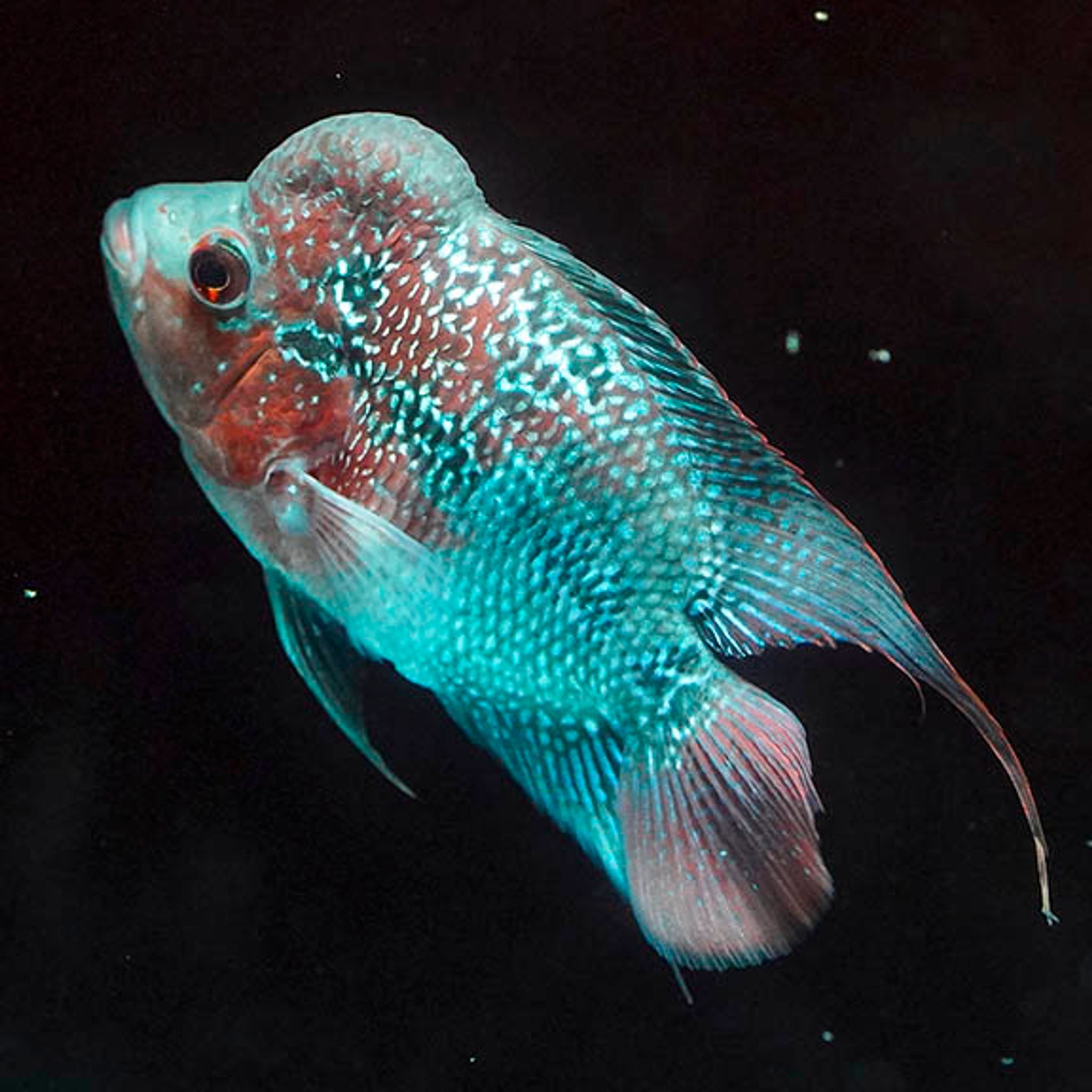
Peacocks (genus Aulonocara) come from Lake Malawi. They spend most of their time over open sand, hunting small invertebrates, and on the cichlid scale they are mid-to-low aggression. Males reach about 5–6 inches (13–15 cm) and carry the bright blues, reds and yellows. Females are smaller and a drab brownish-silver. With good care they live roughly 8–10 years.
Where peacocks fit among African cichlids
"African cichlid" covers fish from three big lakes: Malawi, Tanganyika and Victoria. They share a taste for hard, alkaline water, but temperament and diet vary widely between lakes. Peacocks are Malawi fish, so stock them with other Malawi species. Tanganyikan fish such as Tropheus have specialized diets and behave differently, and mixing lakes is a common source of stress and disease.
Care parameters at a glance
| Parameter | Target for a peacock community |
|---|---|
| Tank size | 55 gal (208 L) minimum for a small group; 75 gal (284 L), 48 in (122 cm) long, as a realistic starter; 100+ gal (378+ L) for a mixed Malawi community |
| Temperature | 76–82°F (24–28°C) |
| pH | 7.8–8.6 |
| General hardness | About 10–20 dGH (published figures vary) |
| Carbonate hardness | 6+ dKH recommended for pH stability |
| Filtration | 4–6x tank volume per hour minimum; crowded Malawi tanks often run 8–10x |
| Water changes | 20–30% weekly |
Two notes on those numbers. Footprint matters more than height: a long tank gives males room to set up separate territories. And stability beats precision. A steady pH of 8.0 is better than a pH that swings between 7.6 and 8.6. Hardness numbers vary between sources (some quote 4–6 dGH). Aim for moderately hard water with enough KH to lock the pH in place.
The Four Rules of Peacock Compatibility
Instead of memorizing a list, check any candidate against these four points.
- Temperament. The fish should be peaceful to mildly territorial. Peacocks lose to hard-charging rock-dwellers and get bullied into hiding, and their colors fade.
- Diet overlap. Peacocks are carnivore-leaning omnivores. Many mbuna are herbivores that need a veggie-heavy diet. When both groups share one food, someone ends up poorly fed, and protein-rich food can cause bloat in herbivores.
- Lookalike males fight. Males that share the same color and body shape see each other as direct rivals. Mix colors (a yellow fish with blue peacocks) and shapes (a torpedo-shaped hap next to a stocky peacock).
- Hybridization. Aulonocara species and many haps interbreed readily, and the drab females of different species look nearly identical. More on this below.
Compatibility Table: Safe, Conditional, Avoid
| Fish | Verdict | Why |
|---|---|---|
| Other Aulonocara species/color forms | Safe, with care | Same needs and temperament; watch hybridization and lookalike males |
| Yellow lab (Labidochromis caeruleus) | Safe, top pick | Peaceful mbuna, similar diet, yellow doesn't match most peacocks |
| Rusty cichlid (Iodotropheus sprengerae) | Safe | Mild mbuna, small, stays near rocks |
| Pseudotropheus acei | Safe | Mellow mbuna that also swims in open water |
| Cynotilapia species | Safe | Among the calmer rock-dwellers |
| Copadichromis haps | Safe | Peaceful open-water planktivores |
| Protomelas (redfin, "taiwan reef") | Safe | Similar size and mood |
| Placidochromis electra | Safe | Gentle, sand-oriented hap |
| Sciaenochromis fryeri | Conditional | Fine in large tanks, but will eat very small fish |
| Synodontis catfish | Safe | Hardy, hard-water tolerant bottom dwellers |
| Bristlenose or common pleco | Safe (common pleco needs a large tank) | Handles algae and scraps; not native, but works |
| Hard-water-tolerant Botia loaches | Safe | Active bottom dwellers that hold their own |
| Aurora cichlid (Pseudotropheus aurora) | Conditional | Semi-aggressive; males can resemble some peacocks |
| Demasoni | Conditional | Tiny but very aggressive; needs a group of 12+ |
| Rainbow/red-tail sharks | Conditional | Large tanks only |
| Larger rainbowfish, giant danios | Conditional | Can work as fast dithers |
| Auratus, zebra types, P. crabro, M. lombardoi | Avoid | Aggressive mbuna that batter peacocks |
| Buccochromis, Dimidiochromis compressiceps, Nimbochromis livingstonii | Avoid | Large predatory haps that eat or bully peacocks |
| Oscar, Jack Dempsey, convict, angelfish, discus | Avoid | Wrong continent, wrong water, wrong temperament |
| Bettas, guppies, tetras, small community fish | Avoid | Eaten or stressed; most prefer softer water |
| Goldfish, soft-water species | Avoid | Different temperature and water chemistry |
| Most shrimp and snails | Avoid | Peacocks eat them |
Best Tank Mates in Detail
Yellow lab: the classic companion
The yellow lab grows to about 5 inches (13 cm) and is one of the most peaceful mbuna you can buy. It's an omnivore that needs some meaty food rather than an algae-only diet, so it eats the same pellets and frozen foods as your peacocks. Its bright lemon color doesn't mimic most peacock males, which keeps color-driven fights down. Keep it in a group.
Mild haps
Copadichromis, Protomelas and Placidochromis electra are open-water haps of roughly peacock size that eat a similar protein-leaning diet. They fill the middle of the tank and offer a different body shape. Sciaenochromis fryeri (the electric blue hap) is gorgeous, but its blue can overlap with blue peacocks and it will eat very small fish. Save it for large tanks.
Other peaceful mbuna
Rusty cichlids, Pseudotropheus acei and Cynotilapia species add movement around the rockwork without the constant harassment of more aggressive mbuna. Feed them some plant matter, but don't switch the whole tank to a spirulina-heavy menu.
Bottom dwellers: Lake Malawi catfish and cichlids
Synodontis catfish are the go-to cleanup crew. S. njassae is native to Lake Malawi, and the cuckoo catfish (S. multipunctatus) is famous as a brood parasite: it slips its eggs in among spawning mouthbrooders so the cichlid mother incubates them. Lucipinnis and petricola types work too. Synodontis do best in groups. A bristlenose pleco is the budget choice, and a common pleco only suits a large tank. Plecos aren't from Malawi, but they tolerate hard water and stay out of the way. You can browse catfish on FishyHub when planning your bottom layer.
Conditional Tank Mates
Aurora cichlid
The aurora grows to 4–5 inches (10–13 cm), needs 55+ gallons (208+ L), and does well at 75–80°F (24–27°C) and pH 7.5–9, all of which overlap with peacock needs. The problem is temperament and color: it's semi-aggressive, and males show yellow and blue that can look like some peacocks. Add it only with plenty of rockwork, and watch for sustained chasing.
Demasoni
Demasoni stay small but are among the most aggressive mbuna. They only settle in large groups of 12 or more, which makes them a poor fit for most peacock tanks.
Sharks, rainbowfish and danios
Rainbow and red-tail sharks can work in large tanks where they have room to claim their own patch of bottom. Larger rainbowfish and giant danios can act as dither fish, fast swimmers whose calm schooling tells the cichlids the tank is safe. Skip tetras. Some lists call them compatible, but they're small, prefer soft water, and usually get eaten or stressed.
Species to Avoid
- Aggressive mbuna: Melanochromis auratus, zebra-type Maylandia, Pseudotropheus crabro and Metriaclima lombardoi. They claim rocks and chase everything.
- Large predatory haps: Buccochromis, Dimidiochromis compressiceps and Nimbochromis livingstonii will eat or bully peacocks.
- Central and South American cichlids: oscars, Jack Dempseys, convicts, angelfish and discus. Mixed opinions exist on keeping peacocks with "other cichlids," and the useful split is this: skip non-Malawi and aggressive species, but mild Malawi haps and peaceful mbuna are fine.
- Small community fish: bettas, guppies, tetras and similar fish.
- Goldfish and soft-water species: they need different temperatures and water chemistry.
- Shrimp and most snails: sooner or later they become food.
Stocking Ratios and Hybridization
For mixed-sex groups, keep 1 male to 2–4 females per species. That spreads the male's attention so no single female is harassed to exhaustion.
The alternative is an all-male "show" tank: many males of different species and colors, no females. You get the full color display with no breeding and no hybrids. It needs heavier stocking and stronger filtration, and the lookalike rule matters even more.
Hybridization is a real risk. Peacock species and haps crossbreed readily, and their females are hard to tell apart. Keep only one female type per species, or go all-male. If hybrid fry do turn up, don't sell them as pure stock or release them. Buying from reputable breeders helps keep strains pure, since many "assorted peacocks" sold in stores are already hybrids.
Sample Stocking Plans by Tank Size
These are starting points. Adjust for individual temperament and your filtration.
| Tank | Suggested stocking |
|---|---|
| 55 gal (208 L) | 1 peacock male + 3 females of one species, 5–6 yellow labs, 3 small Synodontis or 1 bristlenose pleco |
| 75 gal (284 L) | 6–10 peacocks (e.g. 2 species at 1 male : 3–4 females, or an all-male mix), 5–6 yellow labs, 3–4 Synodontis, 1 bristlenose pleco |
| 125 gal (473 L) | 3–4 peacock species or an all-male peacock/hap group, a trio of Copadichromis or Protomelas, a group of yellow labs or acei, 4–6 Synodontis, optional fryeri |
In larger tanks, moderate overstocking is normal practice for Malawi cichlids. It spreads aggression so no single fish becomes the constant target. The catch is that it only works with filtration and water changes that keep up.
Tank Setup That Keeps the Peace
Substrate and rock
Sources disagree on substrate. Most recommend sand because peacocks sift it for food, while others prefer crushed coral or aragonite for buffering and warn that fine sand can cloud filters. Aragonite sand gives you both: a sift-friendly bed that also helps hold pH up.
Stack rockwork directly on the tank bottom and pour sand around it. Cichlids dig, and rocks sitting on sand can topple when fish undermine them.
Lava rock
Lava rock is porous, lightweight and generally inert. It won't raise pH, so pair it with aragonite. Its pores give beneficial bacteria plenty of surface. The edges can be sharp enough to nick fins, so place pieces with care. Rinse and boil new rock, never bleach it, and do a vinegar test: if it fizzes, it contains carbonates.
Aquascaping to cut aggression
- Build several separate rock piles with many caves, so more than one male can claim a territory.
- Use rock and decor to break sight lines. A male who can't see a rival across the tank doesn't chase him.
- Leave open sand zones where peacocks can cruise and display.
- Rearrange the rocks before adding new fish so everyone has to re-establish territories.
Feeding a Mixed Malawi Tank
Base the diet on a quality cichlid pellet, with frozen brine shrimp or mysis as supplements. Avoid mammal meat (beef heart and similar), and don't feed live worms heavily. If you keep herbivorous mbuna, add plant-based foods alongside the protein, but don't feed the whole tank spirulina-heavy food. Peacocks on a veggie-only diet can bloat or fall out of condition.
Quarantine and Introductions
Quarantine every new fish for 2–4 weeks. Malawi bloat and ich spread quickly in a crowded cichlid tank. When you add fish:
- Rearrange the rockwork first.
- Add several fish at once rather than one at a time, so no single newcomer becomes the target.
- Keep the lights off for the rest of the day to lower tension.
- Watch closely for a few days and have a backup tank or divider ready.
Common Mistakes and Fixes
- Mixing in aggressive mbuna. Peacocks get battered, hide and lose color. Rehome the bully or add more rockwork.
- Keeping two species with lookalike females. You get hybrid fry. Keep one female type per species or go all-male.
- Understocking a big tank. One dominant male can kill his rivals. Stock more densely and add filtration to match.
- Feeding everyone like herbivores. A spirulina-heavy mbuna diet leads to bloat or poor condition in peacocks. Offer a mixed diet.
- Small dithers disappearing. Small fish get eaten. The same goes for shrimp and snails.
- A stressed female. If a single male is wearing out one female, raise the female count or move a holding female to a breeder net.
- pH drift from soft tap water. Add aragonite or a buffer and test KH regularly.
Frequently Asked Questions
Can peacock cichlids live with mbuna?
Yes, with the peaceful ones. Yellow labs, rusty cichlids and Pseudotropheus acei are good choices. Avoid aggressive mbuna like auratus, zebras, crabro and lombardoi, which will dominate the rockwork and harass your peacocks.
How many peacocks can I keep in one tank?
Plan on about 6–10 peacocks in a 75 gallon (284 L) tank. All-male setups can hold more, but they need heavier filtration and diligent water changes. Use a 1 male to 2–4 female ratio in mixed-sex groups.
Will peacock cichlids crossbreed with other fish?
Yes. Aulonocara species crossbreed with each other and with many haps, and the drab females are hard to tell apart. Keep one female type per species or run an all-male tank, and never sell or release hybrids.
What is the best bottom feeder for a peacock tank?
Synodontis catfish are the top choice. They're hardy, handle hard water, and do well in groups. A bristlenose pleco is a good budget option that also grazes algae.
Can I keep just one peacock cichlid?
It's possible in a 55 gallon (208 L) tank, but peacocks are at their best in groups. A single male in a mixed Malawi community usually does fine and often shows good color without rivals of his own species.
Are peacock cichlids good for beginners?
They're among the easiest Malawi cichlids to keep, as long as the water stays stable. Get the tank size, filtration and hard, alkaline water right, choose calm tank mates, and they're forgiving fish.
Build Your Malawi Community
A peaceful peacock tank comes down to calm Malawi neighbors, well-matched diets, mixed colors and shapes, and rockwork that gives everyone a territory. When your stocking plan is ready, browse the African Cichlids collection on FishyHub to find your peacocks and their companions.

