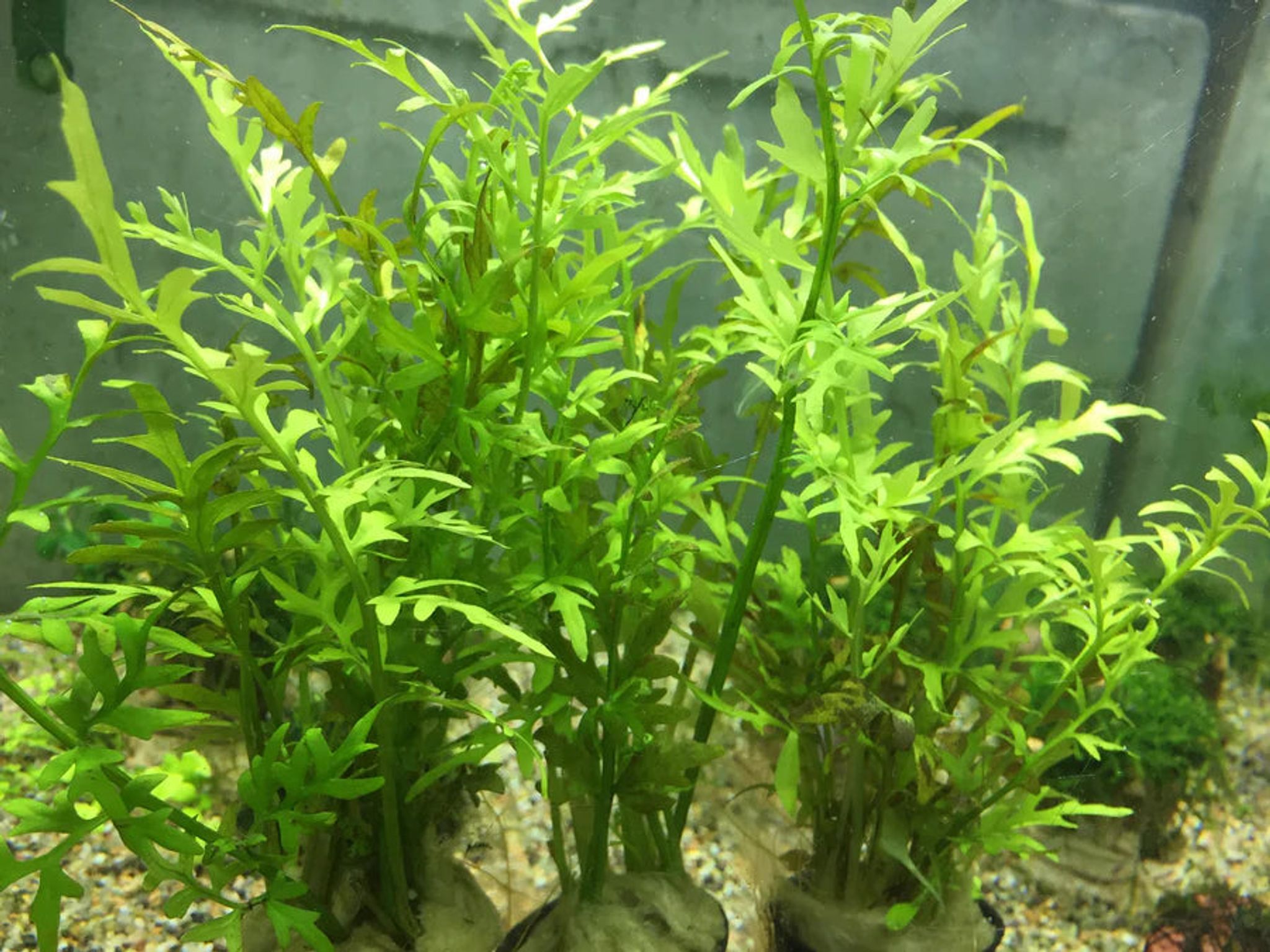
Best Tank Mates and Aquascaping Uses for Water Sprite
Water sprite (Ceratopteris thalictroides and C. cornuta) is one of the most forgiving stem-and-rosette plants a freshwater keeper can buy, but its feathery growth doesn't fit neatly into "foreground, midground, background" the way a carpet plant does. This guide covers exactly which tank mates leave it alone, which ones shred it, and the specific layout roles — rooted background, floating curtain, fry nursery, even paludarium accent — where it earns its keep.
Quick ID and Care Refresher
Also sold as Indian fern or oriental water fern, water sprite is a fast-growing fern-like plant with lacy, deeply dissected leaves that can be rooted in substrate or left to float freely.
| Parameter | Range |
|---|---|
| Temperature | 68–82°F (20–28°C), ideal 72–82°F (22–28°C) |
| pH | 5.5–7.5 (slightly acidic to neutral) |
| KH / hardness | 3–8 dKH (soft to moderately hard) |
| Light | Low light survivable; medium-high (~20–40+ PAR) for dense, colorful growth |
| CO2 | Not required, but speeds growth and thickens root mass |
| Minimum tank size | 10 gal (38 L) rooted; larger for floating mats |
| Mature size | 8–12 in (20–30 cm) rooted; 20+ in (50+ cm) floating or in tall tanks |
Height is genuinely flexible — some growers cap theirs near 12 inches while others report plants reaching the surface of a 24-inch-tall tank. The difference comes down to light, CO2, and whether the plant is rooted or floating, so treat the size range as a guideline rather than a fixed number.
Rooted or Floating? Both Are Legitimate
Care guides disagree on which form is the "default" use, and honestly, both are correct depending on your goals.
- Rooted in substrate: gives a classic background-stem look with height and depth. The catch is the crown — the point where leaves emerge — must stay level with or slightly above the substrate line. Bury it and the base rots.
- Floating: skips the crown-rot risk entirely and produces a dense curtain of fine roots that fish and shrimp forage through. Many experienced growers now recommend floating as the lower-maintenance, lower-risk default for beginners, saving rooted plantings for tanks where a background look matters more.
Neither approach is "more correct" — pick based on whether you want a planted background or a functional floating mat.
Lighting and CO2 in More Depth
Under low light, water sprite survives but often turns thin, pale yellow, and leggy within a few weeks as it stretches toward the light source. Push light too high without adjusting nutrients, and you'll instead see algae colonizing the older fronds or, in extreme cases, bleached leaf tips.
The practical target is medium-to-high light, roughly 20–40+ PAR at the leaf canopy. CO2 injection isn't required — the plant grows fine on ambient CO2 — but adding it noticeably increases leaf density and root mass, which matters most if you're using the plant as a fry or shrimp nursery where more surface area means more hiding places.
Substrate and Planting Technique
For rooted specimens, use 2–3 inches (5–7.5 cm) of substrate and plant so the crown sits exactly at or just above the surface — never buried. If you're keeping it floating instead, the main challenge is drift: strong filter outflow will scatter a loose mat across the tank or pin it against the glass. Position floating clusters away from direct flow, or use a pre-filter sponge on the intake to reduce turbulence without blocking the plant's access to light.
Trimming and Maintenance Schedule
This is a genuinely fast grower, and it needs regular attention:
- Trim every 1–2 weeks under good light conditions.
- Cut stems, not individual leaves — trimming at the stem controls height and encourages branching rather than leaving ragged partial fronds.
- Never let a floating mat cover the entire surface. A full canopy blocks light to everything below it and can crash gas exchange at the water's surface, stressing fish. Thin it back regularly, especially in smaller tanks.
- In a 5–10 gal (19–38 L) betta or shrimp bowl, a floating clump the size of your palm is usually plenty — these small volumes fill in far faster than a 20-gallon community tank would, so check weekly rather than monthly.
Propagation Walkthrough
Water sprite propagates itself with almost no intervention:
- Watch leaf margins — small plantlets (adventitious plantlets) form naturally along the edges of mature fronds.
- Let them develop a few true leaves and roots before separating; pulling them too early reduces survival.
- Detach and replant or float the plantlet once it has its own root system — no chemical rooting aid needed.
- Alternatively, take stem cuttings from a healthy parent plant and either float them or replant them directly; they root readily either way.
This is the easiest and most reliable way to multiply your stock, and it's why a single water sprite purchase often turns into enough plant material for several tanks.
Nutrient Uptake and Water Quality Role
Beyond looks, water sprite is a heavy feeder that pulls nitrate, phosphate, and ammonia out of the water column at a fast clip. That makes it genuinely useful during tank cycling and for ongoing nitrate control, and its rapid growth competes directly with algae for the same nutrients — one of the more effective indirect algae-suppression tools available to a planted-tank keeper.
The tradeoff: if you're growing slower stem plants alongside it, water sprite's appetite can outcompete them for nitrogen and iron. If companion plants start looking pale or stunted, increase dosing rather than assuming a deficiency in the whole tank.
Aquascaping Roles Beyond "Background Plant"
- Rooted background/midground stem for depth and height variation.
- Floating curtain for diffused lighting and surface cover — ideal for shade-preferring fish and for softening harsh light in a betta tank.
- Root mass as a natural filter and foraging zone, especially valuable in shrimp setups.
- Jungle or blackwater-style low-tech layouts, where its loose, sprawling growth habit fits better than a manicured aquascape.
- Draped over driftwood or rock for a natural look — unlike Java fern or Anubias, it has no rhizome and doesn't need tying down; the roots simply cling loosely on their own.
- Paludarium and riparium use: grown emersed (partly out of water), water sprite can go spore-producing and takes on a noticeably different leaf shape — broader and less finely divided than its submersed form. This is a distinct use case rarely covered in basic freshwater care guides, and it's worth knowing so you're not confused if a plant "changes" after being moved between fully submerged and paludarium setups.
Compatible Tank Mates
Most peaceful community fish and invertebrates coexist with water sprite without issue.
| Group | Compatibility notes |
|---|---|
| Tetras, rasboras, danios | Fully compatible; benefit from cover |
| Guppies, mollies, platies, swordtails | Fully compatible |
| Corydoras and other peaceful bottom dwellers | Compatible, don't disturb foliage |
| Bettas | Compatible; floating mats reduce surface glare |
| Dwarf shrimp (cherry, crystal, Amano) | Excellent match — graze biofilm on roots/leaves |
| Nerite, mystery, ramshorn snails | Compatible |
| Gouramis | Case-by-case (see below) |
You can browse suitable community stock, including tetras and guppies, directly on FishyHub when stocking a planted tank around water sprite.
The Gourami Exception
Sources disagree here, and the honest answer is "it depends on the species and the individual fish." Small dwarf gouramis rarely bother established plants. Larger or more herbivorous gourami species are considerably more likely to pick at soft fronds, especially in an under-fed tank. Treat gouramis as a case-by-case risk rather than a blanket safe or unsafe pairing, and watch a new addition closely for the first few weeks.
Tank Mates to Avoid
These will shred, uproot, or outright eat water sprite regardless of otherwise ideal water parameters:
- Goldfish — will graze it down to stems.
- Large or herbivorous cichlids, including some Central American species.
- Silver dollars — notorious plant destroyers.
- Buenos Aires tetras — nip and shred soft leaves.
- Larger, more grazing-prone gourami species.
- Crayfish and other uproot-prone bottom dwellers — will pull rooted specimens loose even if they don't eat them.
A tank being otherwise snail- or shrimp-safe doesn't mean it's plant-safe — a goldfish or cichlid tank with perfect water chemistry will still demolish water sprite on schedule.
Water Sprite for Fry and Shrimplet Nurseries
Dense floating foliage and the fine root curtain underneath it are widely used as breeding cover. The tangle hides fry and shrimplets from adult predation, and it traps infusoria and microfood particles that newly hatched young graze on directly. This makes water sprite a recurring choice in guppy, betta, and shrimp breeding setups specifically for that dual function — shelter plus a built-in food trap — rather than purely for decoration.
Common Mistakes to Avoid
- Burying the crown when planting in substrate, which causes basal rot.
- Expecting lush growth under low light — it survives, but leads to thin, yellow, leggy stems and melting leaves over several weeks.
- Letting a floating mat cover the whole surface, blocking light below and reducing gas exchange.
- Placing it directly in strong filter outflow, which tears the delicate fronds.
- Assuming a shrimp- or snail-safe tank is automatically plant-safe — cichlids and goldfish will still eat it.
- Ignoring its heavy nutrient draw when other slower plants share the tank, which can starve them of nitrogen and iron.
- Confusing it with water wisteria or other lacy look-alikes at purchase time, which leads to mismatched care expectations since the two plants have different growth habits.
Frequently Asked Questions
Does water sprite need to be planted or can it float?
Both work well. Floating avoids crown-rot risk entirely and is the lower-effort option, while rooting it in substrate gives more of a traditional background-plant appearance.
What fish will eat water sprite?
Goldfish, large or herbivorous cichlids, silver dollars, Buenos Aires tetras, and some larger gourami species are the main culprits. Most standard community fish leave it alone.
Is water sprite good for shrimp tanks?
Yes, especially in floating form. The root mass traps food particles and biofilm and gives shrimplets cover from adult shrimp and fish.
How fast does water sprite grow and how often should I trim it?
It's a very fast grower. Under medium-high light, plan on trimming every 1–2 weeks to keep it from overtaking the tank surface or shading out other plants.
Why is my water sprite turning yellow or melting?
Usually insufficient light or a nutrient deficiency, though a buried crown is another common cause. Increase light or fertilization and double-check planting depth before troubleshooting further.
Can water sprite live in low light and no CO2?
It will survive, but growth slows and leaves turn paler and thinner. Moderate-to-high light plus CO2 injection (optional) produces denser, greener growth with more root mass.
Does water sprite help control algae?
Indirectly, yes. It competes with algae for the same nitrate and phosphate, and a floating mat also reduces the light reaching lower parts of the tank, both of which suppress algae growth over time.
How do I propagate water sprite?
Let small plantlets form naturally on leaf margins and detach once they have a few true leaves and roots, or take stem cuttings from a healthy plant and float or replant them — both root readily.
For stocking a planted tank built around water sprite, browse compatible community species in FishyHub's Small Community Fishes category, along with dedicated shrimp and betta selections suited to floating and rooted plant setups alike.

