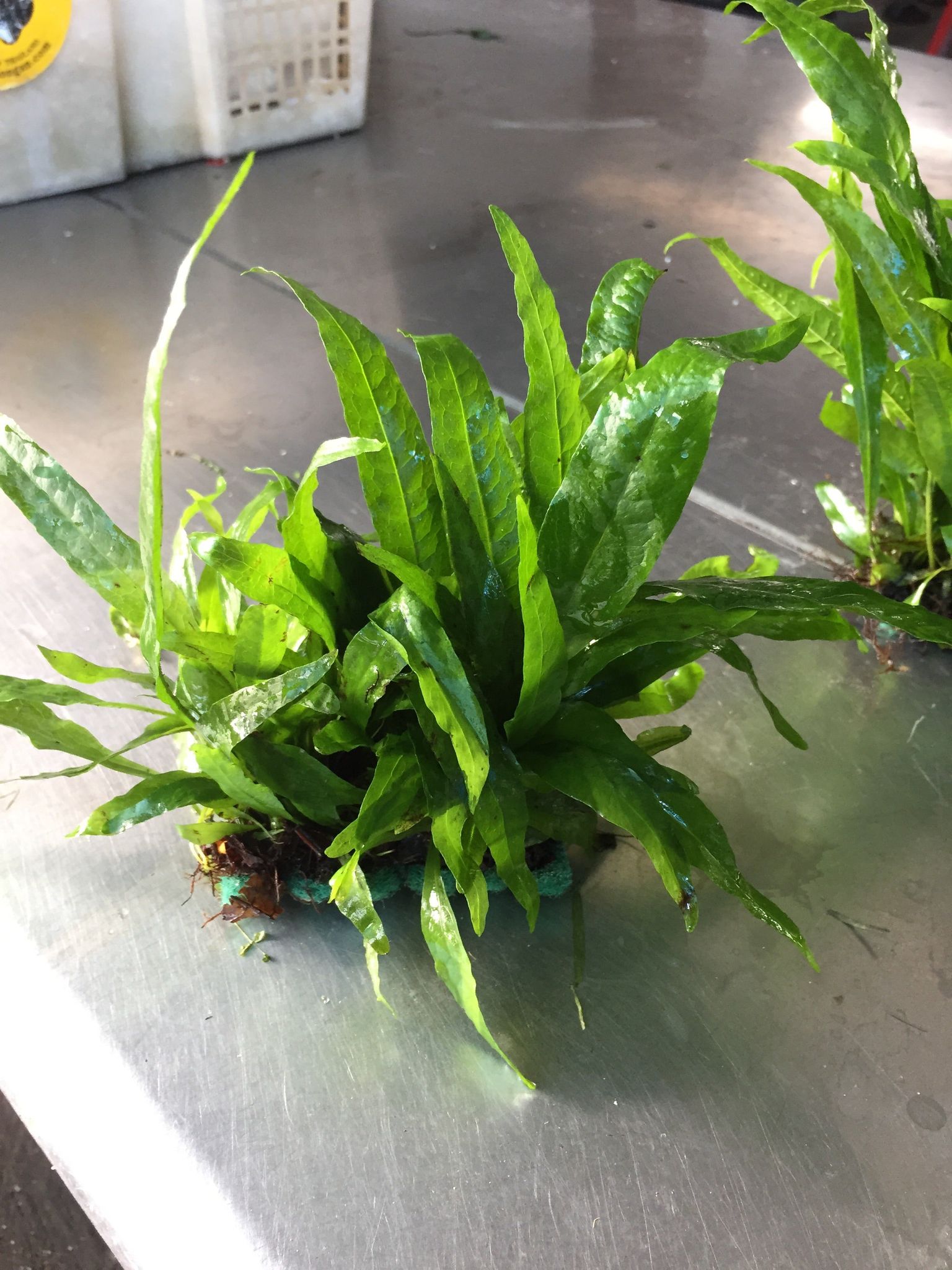
Best Tank Mates and Aquascaping Uses for Java Fern
Java fern earns its reputation as the plant you can put almost anywhere, with almost anything. Its tough, bitter leaves survive fish that shred softer greenery, and because it attaches to hardscape instead of rooting in substrate, it works in tanks where digging or rearranging would rip out a normal planted stem. This guide covers exactly which tank mates suit it and how to use it as a structural element in an aquascape, not just a background filler.
What Java Fern Actually Is (Quick Basics)
Java fern (Microsorum pteropus, sometimes labeled Leptochilum pteropus) is native to Southeast Asia and grows as an epiphyte — a plant that clings to wood or rock rather than rooting in soil or gravel. That single trait explains almost everything about how it's used in tank-mate planning and aquascape design.
Care basics, briefly:
| Parameter | Range |
|---|---|
| Temperature | 68–82°F (20–28°C) |
| pH | 6.0–8.0 |
| Hardness | Soft to hard/alkaline; tolerates light brackish |
| Light | Low to medium |
| CO2 | Not required |
| Growth rate | Slow to moderate |
It's forgiving on water chemistry, which is part of why it turns up in setups as different as soft blackwater community tanks and hard, alkaline African cichlid systems.
The Non-Negotiable Rule: Never Bury the Rhizome
Before tank mates or layout, one rule decides whether Java fern survives at all: the rhizome (the thick horizontal stem the leaves and roots grow from) must never be buried in substrate. A buried rhizome typically rots or "melts" within 1–2 weeks because it can't get enough oxygen underground.
Reliable attachment methods:
- Cyanoacrylate gel ("aquarium-safe" superglue gel): run a thin bead onto wood or rock, press the rhizome on for about 30 seconds, and it bonds almost instantly.
- Thread, fishing line, or a rubber band: tie the rhizome to hardscape and remove the tie once new roots have gripped, usually in 2–4 weeks.
- Free-floating: it can simply drift, though this makes it harder to keep in a fixed spot.
A few sources show Java fern resting loosely on top of gravel as acceptable. That's a lower-risk fallback at best — it works only as long as the rhizome itself stays uncovered and doesn't get nudged under the substrate by fish or flow. Attaching to hardscape is still the dependable method.
Best Tank Mates for Java Fern
Because the leaves are tough and taste bad to most herbivores, Java fern tolerates a wider range of tank mates than almost any other common aquarium plant — including species that would otherwise shred a planted tank.
Fish and Invertebrates That Leave It Alone
- Community and nano fish: tetras, rasboras, danios, guppies, mollies, dwarf gouramis
- Bottom dwellers: corydoras, most loaches
- Bettas: consistently a top recommendation (see below)
- Dwarf shrimp: cherry shrimp and similar species use the leaves and root mass as grazing surface for biofilm, plus cover
- Snails: graze the leaf surface without damaging it
Plant-Eaters and Diggers It Can Survive
This is where Java fern becomes genuinely useful rather than just decorative. Fish that will eat or uproot most other plants generally leave it alone because of the tough, bitter leaf tissue:
- African cichlids (mbuna and similar) — heavy diggers and grazers
- Goldfish — notorious for eating and uprooting soft plants
- Silver dollars — will strip most stem plants bare
- Larger barbs — known for shredding delicate leaves
The key with all of these is attachment, not planting. Since the rhizome sits on rock or wood rather than in the substrate, digging and rearranging fish can't uproot it the way they would a substrate-rooted plant.
Java Fern for Betta Tanks
Java fern is one of the most frequently recommended plants for bettas, for a simple structural reason: its broad, resting leaves near the surface give bettas a natural place to perch, which matters because bettas often rest near the top of the water column. It also tolerates the low light and no-CO2 conditions typical of basic betta setups. A common combination is Java fern for structure, anubias for additional mid-tank cover, and a floating plant like frogbit for surface security. Avoid pairing it with CO2-dependent carpeting plants in a basic betta tank — they need conditions a simple betta setup usually can't provide.
Java Fern for African Cichlid Tanks
African cichlids dig, rearrange substrate, and graze on anything soft, which rules out most conventional aquascaping. Java fern, along with anubias, bolbitis (African water fern), java moss, and vallisneria, survives because none of them depend on rooting in the substrate or on leaf tissue being palatable. Attach these species to rock piles rather than resting them on the bottom, since cichlids will rearrange loose substrate constantly. Higher pH and hardness tolerance also matters here — Java fern's range comfortably covers the alkaline water many African cichlids need. You can browse suitable species in FishyHub's African Cichlids selection.
Ready-Made Stocking Combos
A few pairings work particularly well together in a Java-fern-anchored tank:
- Cherry shrimp + otocinclus: shrimp graze biofilm off the leaves while otocinclus keep algae off the broader leaf surfaces
- Dwarf gouramis + Java fern + floating plants: gouramis appreciate the same low-light, resting-leaf structure that bettas do
- Corydoras + Java fern + driftwood: corydoras stay near the bottom while Java fern occupies the wood above them, dividing the tank into clear zones
Light, CO2, and Fertilizer Needs
Java fern is a genuine low-light plant. It thrives under low to moderate light and can scorch or bleach under high-intensity lighting meant for carpeting plants. If sources disagree — and some care sheets do claim it handles medium-high light fine — treat low-to-moderate as the safe range and watch for browning if you push it brighter.
CO2 injection isn't required. Growth is slow to moderate either way, but light dosing of a comprehensive liquid fertilizer, or root tabs pressed near (never on) the rhizome, will speed things up and help avoid nutrient-deficiency symptoms. This is optional rather than essential — fish waste alone is enough for many tanks — but it becomes more worthwhile in heavily stocked or higher-light setups. Potassium deficiency typically shows up as browning or holes in the leaves; calcium deficiency shows as curled tips.
Aquascaping Roles: Where and How to Use Java Fern
Placement by Growth Zone
Because Java fern isn't substrate-rooted, it isn't locked into one placement zone the way carpeting or rooted stem plants are. Depending on the variety's mature size, it can sit anywhere from midground to background:
- Bare-bottom tanks: works as the sole planting, attached to any hardscape present
- Hardscape-heavy layouts: softens the edges of rock and wood piles
- Tanks with digging or burrowing fish: the only reliable planted element, since it can't be uprooted from the bottom
Water Flow by Leaf Type
One thing rarely discussed: different Java fern varieties tolerate flow differently. Narrow-leaf and needle-leaf types generally handle higher flow near filter outputs without much stress, while broad "lettuce"-leaf types do better in calmer areas where they won't be constantly battered. Position broader varieties away from direct filter or powerhead output, and use narrower types in higher-flow zones.
Using Varieties for Texture Layering
Java fern comes in several distinct leaf shapes, and using more than one variety in a single tank is an underused way to add visual texture without adding a different genus of plant:
| Variety | Leaf character | Best placement |
|---|---|---|
| Needle-leaf / Petite | Very narrow, fine | Nano tanks, foreground |
| Narrow-leaf | Slim, elongated | Foreground to midground |
| Windelov (lace) | Frilled, ruffled tips | Midground focal points |
| Trident | Deeply forked | Midground, textural contrast |
| Regular | Standard broad blade | Midground to background |
| Philippine | Broad, upright | Background |
| Lettuce (latifolia) | Wide, wavy | Background, larger tanks |
Grouping two or three varieties on the same piece of driftwood, at different heights, creates depth that a single-variety planting can't. This is a genuinely simple way to make a layout look intentional rather than generic.
Building a Nature Aquarium-Style Layout
In Nature Aquarium-style scapes, Java fern is commonly used to create a "jungle" or forest look, cover equipment like heaters or filter intakes, and form a canopy over the midground. A few composition principles carry it well:
- Position the main hardscape piece off-center, roughly along a rule-of-thirds or golden-ratio line, rather than centered
- Layer plants by height: shorter/finer plants in front, Java fern and similar mid-height plants in the middle, taller background planting behind
- Let Java fern blur the line between hardscape and background planting by draping it partway down a rock or wood piece rather than confining it to the very top
Hardscape Basics for Attachment Points
Java fern needs something to attach to, so the hardscape itself matters:
- Use varied rock sizes and textures rather than one large uniform piece
- Favor odd numbers and asymmetry over symmetric, evenly spaced arrangements
- Leave open space in the layout — filling every gap creates a flat, "squat" look
- Place larger hardscape toward the back and smaller pieces toward the front for a sense of depth
Java Fern Among Other Beginner Aquascaping Plants
For context, here's where Java fern sits relative to other low-maintenance staples:
| Plant | Root style | Light need | Trim frequency |
|---|---|---|---|
| Java fern | Attaches to hardscape | Low–moderate | Very low (1–2x/year) |
| Anubias | Attaches to hardscape | Low | Very low |
| Java moss | Attaches to hardscape | Low | Low |
| Crypts | Substrate-rooted | Low–moderate | Low |
| Dwarf hairgrass / pygmy chain sword | Substrate-rooted (carpeting) | Moderate–high, often CO2 | High (regular trimming) |
Java fern and anubias are frequently recommended as a pair precisely because both are epiphytes with the same low-light, low-CO2, no-fuss requirements — a reliable base layer for a first aquascape before adding anything more demanding. Neither competes with true carpeting plants like Monte Carlo or dwarf hairgrass, which need brighter light and often CO2 to fill in.
Simple Decoration Ideas Using Java Fern
Java fern pairs naturally with driftwood, rock, and caves — attach it directly to these elements rather than leaving decor bare. Thematic pieces like a small shipwreck or treasure chest can double as hiding spots and look fine alongside it, but they work best as an accent rather than a replacement for actual planting. For a first scape in the 10–20 gallon (38–76 L) range, a full-spectrum LED run 8–10 hours a day and either an iwagumi (rock-focused) or nature-style (wood-and-plant-focused) layout are the two most approachable starting points.
Common Mistakes and Fixes
| Mistake | Consequence | Fix |
|---|---|---|
| Burying the rhizome in substrate | Rot/melt within 1–2 weeks | Unbury and reattach to hardscape |
| Using high-intensity light meant for carpeting plants | Leaf browning, burn, algae growth | Shade under taller plants or reduce photoperiod/intensity |
| Removing leaves with small black dots | Losing healthy tissue unnecessarily | Leave them — they're sori (spores), a sign of a mature, healthy plant |
| Ignoring holes, browning, or curled tips | Ongoing nutrient deficiency | Dose a comprehensive liquid fertilizer or remineralize water |
| Expecting fast carpet-style coverage | Disappointment with growth speed | Plan around its slow-to-moderate pace from the start |
| Placing it in the foreground or fully hiding it behind tall plants | Blocks sightlines or wastes a mature specimen | Match placement to variety size — small types front, larger types mid/background |
Algae on the leaves usually points to excess light, excess fertilizer, or poor flow. Reducing the photoperiod, improving circulation, adding an algae-eating cleanup crew, or floating the affected leaves separately to regrow all help.
Propagation and Long-Term Maintenance
Java fern spreads in two ways:
- Rhizome division: cut the rhizome into sections at least 2 inches (5 cm) long, each with several leaves and roots attached, then reattach each piece to new hardscape.
- Plantlets: small new plants often form on leaf tips or edges. Once these have a few roots of their own, clip them off and attach them separately.
Because growth is slow, trimming needs are minimal — often just 1–2 trims a year, mostly to remove old or damaged leaves. Over several years a rhizome mat can become dense and tangled; when that happens, thin it by dividing off outer sections rather than letting the whole mass keep expanding indefinitely.
One practical step worth adding before introducing new Java fern to an established tank: quarantine and inspect it, and consider a brief dip to remove snail eggs or hitchhiking pests before it goes in with existing stock.
Frequently Asked Questions
Will Java fern get eaten by my fish?
Almost never. The tough, bitter-tasting leaves deter most species, including plant-eaters like goldfish and mbuna cichlids. Exceptions exist only among unusually determined herbivores.
Can Java fern live with aggressive or digging fish?
Yes. Because it attaches to hardscape rather than rooting in substrate, digging and rearranging fish can't uproot it the way they would a substrate-planted species.
Does Java fern need CO2 or special substrate?
No. It grows without CO2 injection and without any substrate at all — it can be glued to decor in a bare-bottom tank or one with plain gravel.
What's the best way to attach Java fern?
Cyanoacrylate ("aquarium-safe") superglue gel is the fastest method; thread, fishing line, or a rubber band also works until roots grip the surface. Never plant the rhizome in substrate.
Is Java fern good for a betta tank?
Yes — it's frequently the top plant recommendation for bettas because of its broad, surface-adjacent resting leaves and tolerance for low light and no-CO2 setups. It pairs well with anubias and floating plants.
Why are my Java fern's leaves turning black or transparent?
This is usually old-leaf dieback, light burn, or a nutrient swing rather than disease. Trim the affected leaves and stabilize lighting and dosing rather than treating it as an infection.
How fast does Java fern grow and how do I propagate it?
Growth is slow to moderate. Propagate by dividing the rhizome into 2+ inch (5+ cm) sections with leaves and roots attached, or by clipping plantlets that form on leaf tips and reattaching them to new hardscape.
Can Java fern go in a shrimp tank?
Yes. The leaves and root mass provide a grazing surface for biofilm and cover for molting shrimp, and shrimp won't damage the plant.
Ready to build out a Java-fern-anchored aquascape? Browse compatible species in FishyHub's Small Community Fishes category to find tank mates suited to your setup.

