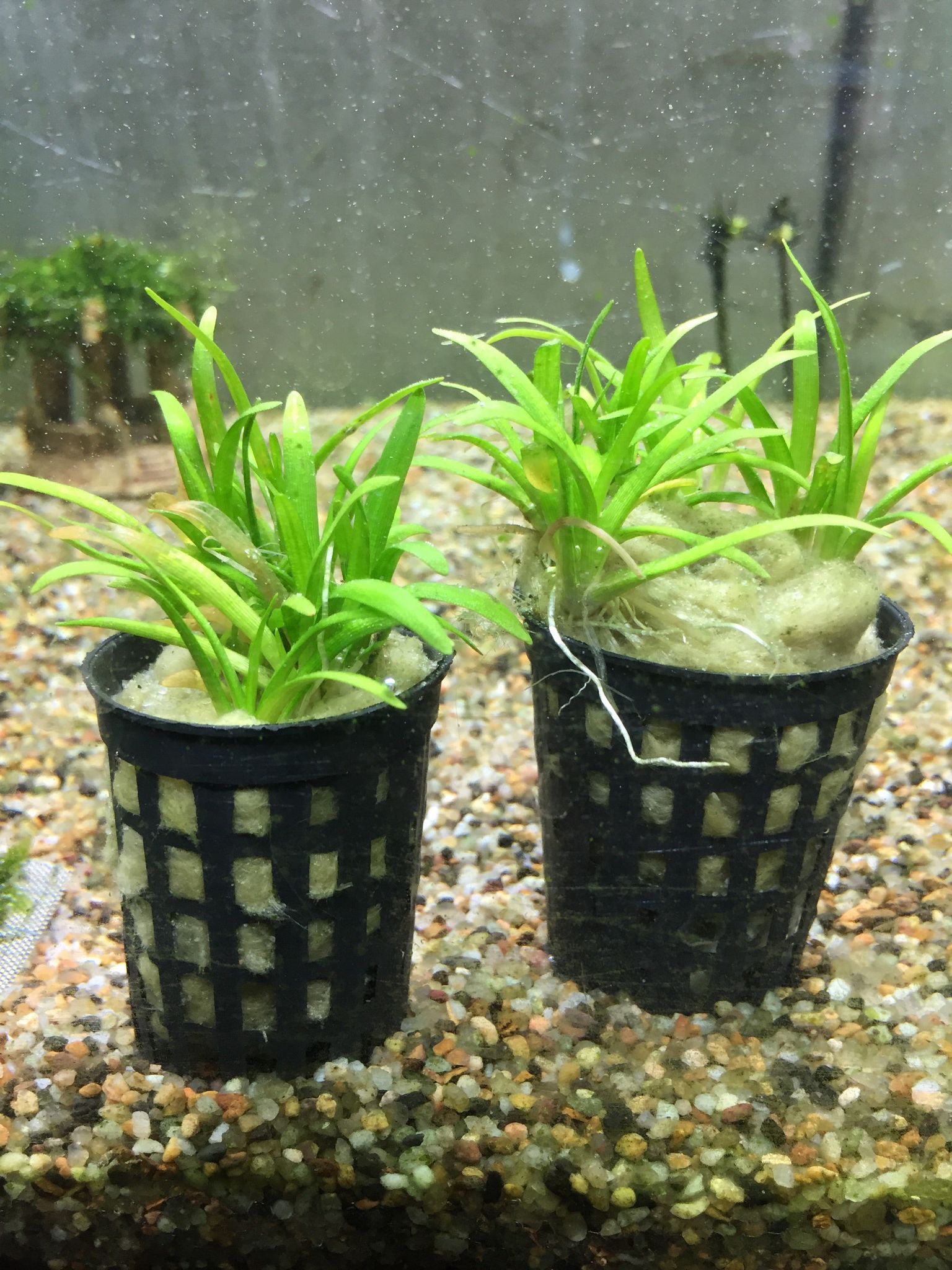
Best Tank Mates and Aquascaping Uses for Dwarf Sagittaria
Dwarf sagittaria (Sagittaria subulata) is a hardy, grass-like plant that works as either a trimmed foreground carpet or a taller ornamental meadow, but picking the wrong tank mates can undo months of runner growth in a weekend. This guide covers which fish and invertebrates pair well with it, which ones to keep out, and how to actually build a layout around it.
Species Snapshot
Dwarf sagittaria is a true aquatic plant, meaning it's grown fully submerged rather than raised emersed and converted to underwater form. It produces narrow, grass-like blades and spreads by sending out horizontal runners that root and sprout new plantlets, gradually forming a connected lawn or meadow.
The dwarf cultivar typically reaches 2–6 inches (5–15 cm) in height, which is what makes it useful up front in a tank. The straight species of Sagittaria can grow 12–20 inches (30–51 cm) tall, so double-check that any plant labeled simply "sagittaria" is the dwarf form before planning a foreground layout around it.
Core care parameters (useful context, though this article focuses on stocking and layout):
- Temperature: 68–82°F (20–28°C)
- pH: 6.0–8.0
- GH: 2–15 dGH
- Feeding: primarily a root feeder — benefits from a nutrient-rich substrate or root tabs, plus supplemental iron
- Light: moderate light keeps growth low and dense; low light produces taller, sparser blades; high light without adequate CO2 and nutrients can trigger algae on the leaf surfaces
Choosing Tank Mates: What to Look For
Before picking species, apply a simple filter: peaceful, non-digging, and not prone to grazing on soft leaves. Sagittaria's blades are tender enough that determined herbivores or diggers can shred them or uproot the runner mat before it anchors.
Fish That Do Well With Dwarf Sagittaria
- Small schooling fish: neon, ember, and cardinal tetras; various rasboras
- Livebearers: guppies, platies, and mollies
- Dwarf gouramis
- Bottom dwellers: corydoras and similar peaceful substrate fish that don't dig aggressively
- Otocinclus: graze algae off the blades without damaging the leaf tissue
These fish also benefit from the plant directly — a dense sagittaria mat is a favorite spot for tetras and rasboras to scatter eggs, since the fine blades hide eggs from view and slow down predation.
Invertebrates That Do Well With Dwarf Sagittaria
- Neocaridina and caridina shrimp (cherry shrimp and similar): graze biofilm off the runners and use the mat as cover
- Nerite snails and mystery snails: help control algae without eating healthy plant tissue
A runner mat that has had time to establish makes excellent nursery habitat — shrimplets and fry can disappear into the base of a sagittaria lawn where larger tank mates can't easily reach them.
Species to Avoid
| Species/group | Why it's a problem |
|---|---|
| Goldfish | Root around in substrate and graze on soft plant tissue |
| Large cichlids (oscars, most Central American cichlids) | Dig extensively and treat soft-leaved plants as food |
| Silver dollars and other plant-eating fish | Will strip blades directly |
| Crayfish | Clip runners and shred leaves while foraging |
| Larger crabs | Similar mechanical damage to runners and crowns |
| Aggressive substrate-sifting loaches (in numbers) | Can uproot a young, unestablished carpet before roots anchor |
If you already keep any of the species above, treat dwarf sagittaria as a poor match for that tank rather than trying to "protect" it with hardscape barriers — a determined digger or grazer will usually find a way in.
Sample Stocking Ideas by Tank Size
These are starting points, not hard rules — always check final adult size and adjust for filtration and existing stock.
| Tank size | Suggested stocking with a sagittaria layout |
|---|---|
| 5–10 gal (19–38 L) | A small group of ember tetras or a betta, plus 5–10 cherry shrimp and a nerite snail |
| 20 gal (76 L) | A school of 8–10 neon or cardinal tetras, 4–6 corydoras, and a mixed shrimp colony |
| 40 gal (151 L)+ | Multiple schooling species, dwarf gouramis, corydoras, and otocinclus together, with room for the sagittaria meadow to spread without immediately crowding out other plants |
Shrimp keepers browsing tank mates can compare current stock in the shrimp category, and community-tank builders can check availability of small community fishes like tetras and rasboras before finalizing a stocking list.
Aquascaping Roles: Carpet, Meadow, or Both
One point of confusion is whether dwarf sagittaria is a true low carpet plant (like dwarf hairgrass) or a taller background grass. The honest answer is both, depending on light and trimming. Unlike a fixed-height carpeter such as Monte Carlo, dwarf sagittaria is a flexible-height plant:
- Moderate-to-high light + regular trimming → dense, low carpet suitable for the foreground
- Low light + minimal trimming → taller, sparser growth that reads as an ornamental grass patch, better suited to midground or background
Foreground Carpet
Kept short through consistent trimming and moderate-to-high light, dwarf sagittaria forms a dense lawn similar in function to dwarf hairgrass, though generally with a coarser blade texture.
Midground or Background Meadow
In lower light, or in tanks where the foreground is reserved for a different carpet plant, letting sagittaria grow taller and untrimmed produces a "grassy meadow" effect that works well as a background feature, especially in larger tanks.
Textural Accent
Even a small clump of sagittaria placed among broad-leaf plants like Anubias or crypts, or tucked against hardscape, adds contrast — fine blades against wide leaves or hard rock edges.
Four Layout Recipes to Try
- Dutch/jungle-style meadow — Let sagittaria fill gaps between stones or driftwood pieces, mixing lightly trimmed patches with denser clusters for a naturalistic, layered look.
- Nature-aquarium foreground carpet — Trim sagittaria low up front and pair it with taller stem plants in the back third of the tank for classic depth and contrast.
- Biotope-style grass flat — Mimic a slow river or pond edge by letting sagittaria dominate as a loosely trimmed grass bed, paired with sand or fine gravel substrate.
- Breeding or fry tank cover — Use dense, untrimmed runners as refuge cover; the tangled base gives fry and shrimplets places to hide from adult tank mates.
Dwarf Sagittaria in Iwagumi-Style Layouts
Iwagumi is a minimalist Japanese aquascaping style built around an odd number of stones — commonly three — arranged asymmetrically, paired with a single, very low-growing carpet plant and a restrained overall plant palette.
Classic iwagumi carpeters are dwarf hairgrass and Monte Carlo. Dwarf sagittaria isn't the traditional choice, but it works as a hardier, lower-maintenance substitute for hobbyists who want the grassy-lawn look without the more exacting light and CO2 demands of true carpet species. The trade-off: sagittaria spreads more aggressively than hairgrass or Monte Carlo, so keeping clean iwagumi lines requires more frequent trimming and runner control than the traditional plants demand.
Dwarf Sagittaria vs. Other Carpeting and Grass Plants
| Plant | Difficulty | Light needs | Best use case |
|---|---|---|---|
| Dwarf sagittaria | Easy | Low–high (flexible) | Foreground carpet or midground meadow, low-maintenance layouts |
| Dwarf hairgrass | Moderate | Moderate–high | True low carpet, classic iwagumi |
| Monte Carlo | Moderate–hard | Moderate–high, usually CO2 | Very tight, low carpet with round leaves |
| Chain sword | Easy–moderate | Low–moderate | Midground clumps or looser carpet |
Building the Layout: Hardscape First
Successful layouts start with hardscape placement, not planting. Position rock or driftwood first, using a rule-of-thirds or focal-point composition rather than centering everything. Add substrate and plants afterward, treating the layout as something that develops over weeks to months — periodic trimming and minor rescaping are part of the normal process, not signs something went wrong.
Planting and Propagation
- Plant individual plantlets 1–2 inches (2.5–5 cm) apart, keeping the crown at the substrate surface — burying it too deep invites rot.
- Trim runners regularly to control spread and density rather than letting the plant fill in unsupervised.
- Propagate by separating rooted plantlets from established runners and replanting them elsewhere in the tank.
- A practical trimming cadence: check for stray runners weekly, and do a full thinning pass monthly once the mat is established — this keeps growth dense rather than letting it turn leggy.
- Expect several weeks to a couple of months for a visible, connected carpet to form in a low-tech setup; CO2-injected tanks with good light typically fill in faster and stay denser.
Pairing With Other Plants and Hardscape
Dwarf sagittaria works as a "filler" that softens the hard edges of rock and driftwood. It also pairs well with:
- Taller background plants like vallisneria and hygrophila, which occupy different vertical space
- Epiphytes attached to wood or rock — anubias, java fern, and buce — which don't compete for the same substrate
Choosing a Tank Background
Background choice affects how much a sagittaria layout stands out. A solid dark background — black, navy, or dark blue vinyl film — makes green foliage pop and hides equipment and cords behind the tank. 3D or textured backgrounds can mimic rock walls convincingly but cost more and reduce usable tank volume. Whatever you choose, it should complement the plant palette and light color temperature rather than compete with it visually.
Adding Botanicals for a Naturalistic Look
Leaf litter (such as Indian almond leaves), seed pods, cones, and bark release tannins that soften and slightly acidify water while also providing biofilm and microfauna for shrimp and fry to graze on. Combined with a sagittaria meadow, botanicals create a naturalistic, foraging-rich habitat — particularly effective in shrimp tanks or biotope builds.
One caveat: tannins will tint the water a tea-brown color. Some keepers value this blackwater aesthetic; others prefer to run activated carbon to keep water clear. Neither approach is wrong — it comes down to the look you're after.
DIY Aquascape Decor on a Budget
Building an affordable layout around dwarf sagittaria doesn't require expensive materials:
- Source driftwood, rocks, and shells, then prepare them by boiling or soaking (or sun/UV sterilizing larger pieces) to avoid leaching chemicals or shifting pH and hardness.
- Grow some plants emersed before submerging them, which can produce sturdier starting stock.
- Build a simple photo-based background rather than buying a manufactured one.
- Prioritize planning and composition over budget — a well-thought-out layout with modest materials will outperform an expensive one assembled without a plan.
Common Mistakes and Troubleshooting
- Planting too close or too deep: Crowded plantlets or a buried crown leads to rot. Space plantlets adequately and keep the crown at the substrate line.
- Insufficient root nutrition: Yellowing or pale new growth usually points to an iron or root-tab deficiency, since sagittaria is a heavy root feeder rather than a water-column feeder.
- Letting it run wild: Unchecked runners will overtake the foreground or midground and shade out neighboring plants. Trim and thin regularly, and remove any runners crossing into zones you want kept clear.
- Wrong light/CO2 combination: High light without adequate CO2 or nutrients invites algae on the blades; low light paired with excess nutrients can cause leggy, weak growth instead.
- Mixing with rooting or digging tank mates: Goldfish, larger cichlids, crayfish, and aggressive substrate-sifters will uproot young, unestablished plantlets before the runners have a chance to anchor.
- Skipping prep on natural materials: Unprepped driftwood, rocks, or botanicals can introduce pests, fungus, or unwanted pH and hardness swings.
Frequently Asked Questions
Will dwarf sagittaria spread and take over my tank?
Yes. It spreads via runners and is a fast, resilient grower, so it needs routine trimming and thinning to stay within the area you want it in.
Can I use dwarf sagittaria in an iwagumi layout?
It's not the traditional choice, but it works as a hardier, easier-to-grow substitute for classic hairgrass or Monte Carlo carpets, provided you're willing to trim more frequently to maintain clean lines.
Does it need CO2 injection?
No — it grows fine without CO2, but injected CO2 combined with good light produces a denser, shorter carpet more quickly than a low-tech setup.
What fish will eat or damage dwarf sagittaria?
Large cichlids, goldfish, silver dollars, some plant-eating catfish or loaches, crayfish, and crabs pose the main risks. Typical peaceful community fish generally leave it alone.
Is dwarf sagittaria good for shrimp tanks?
Yes. The fine blades and root mat provide grazing surface, biofilm, and hiding cover for shrimp and their young, making it one of the more shrimp-friendly plants available.
How do I keep it low instead of tall?
Increase light moderately, trim tips regularly, and plant densely. Lower light combined with infrequent trimming is what allows it to grow tall and sparse instead.
Can it grow in low light with no fertilizer?
It will survive, but expect sparser, taller growth, and pale or yellow leaves are more likely without root fertilization since it depends heavily on root-delivered nutrients.
Does it work in a background or decor role, or only foreground?
Both. Dense, trimmed clusters up front create a carpet look, while less-trimmed growth in the midground or background reads as an ornamental grass patch.
Ready to plan your stocking list? Browse freshwater livestock on FishyHub to find peaceful tank mates suited to a planted, sagittaria-based layout.

