Best Tank Mates and Aquascaping Uses for Christmas Moss
Christmas moss is easy to grow, but figuring out what to put with it — and what to actually do with it in a layout — is where most hobbyists get stuck. This guide breaks down compatible fish and invertebrates by tank role, plus the attachment techniques and step-by-step aquascaping uses that turn a bag of moss into a finished feature.
Quick ID: Christmas Moss vs. Java Moss
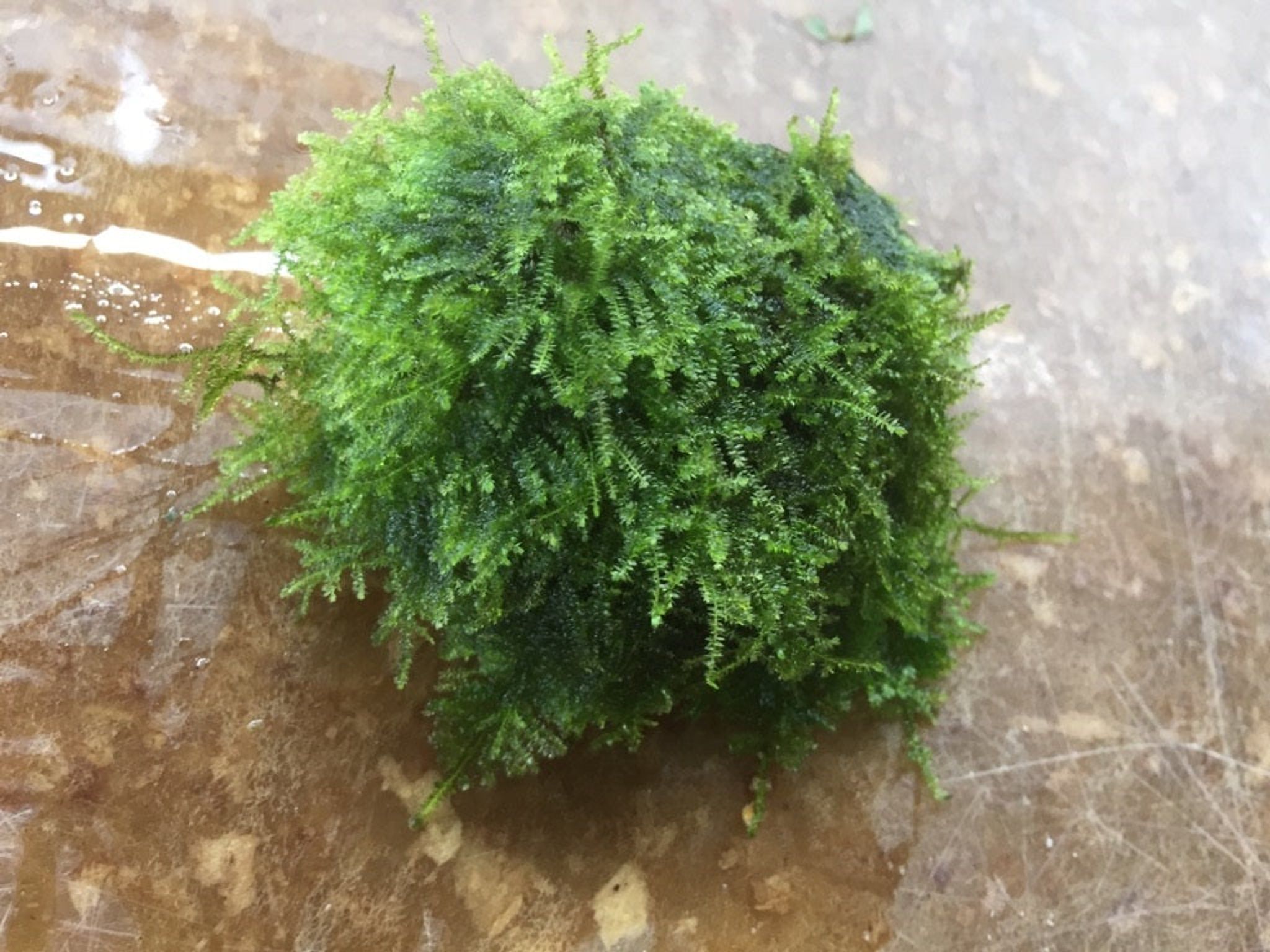
Christmas moss is a Vesicularia species from Southeast Asia, named for its tightly branched, fern-like fronds that resemble tiny pine sprigs. It's frequently confused with Java moss (a different, more irregular-growing Vesicularia species) and with unnamed "Xmas moss" cultivar variants sold under similar labels. The practical difference: Christmas moss branches more symmetrically and holds a tighter shape, which is why it's the preferred choice for moss trees and walls, while Java moss grows in looser, less uniform clumps.
Core Care at a Glance
Before getting into compatibility and layout use, here are the parameters that make Christmas moss behave well in a scape:
| Parameter | Range |
|---|---|
| Temperature | 68–82°F (20–28°C); best growth around 72–78°F (22–26°C) |
| pH | 5.5–7.5 |
| Water hardness | Soft to moderately hard, roughly 3–15 dGH |
| Lighting | Low to moderate |
| Bioload tolerance | Low |
| Growth rate | Slow to moderate |
| CO2 / fertilizer | Not required, but improves density |
Lighting is a style choice, not a strict requirement. Christmas moss survives under low light, but tends to grow long and stringy rather than compact there. Moderate light produces the tight, dark-green, "Christmas tree" branching the plant is named for — plan for moderate light if the goal is a dense moss tree or wall.
On CO2 and fertilizer: the moss grows fine without either, but a light liquid fertilizer and optional CO2 noticeably speed up growth and thicken the branching. It trims easily with regular scissors and propagates by fragmentation — clippings tied or glued to a new surface will root and form an independent patch.
A Framework for Choosing Tank Mates
Rather than memorizing a species list, judge any potential tank mate against four criteria:
- Won't uproot or shred it. Heavy diggers and large cichlids tear moss mats apart.
- Won't overgraze it to bare stems. Most fish only pick at surface biofilm; a few strip the moss itself.
- Uses it as intended cover. Species that shelter in or graze on moss get real benefit from it.
- Is safe around fry and shrimp, if the moss doubles as a nursery plant.
This framework matters more than the list below — it lets you evaluate species not explicitly named here.
Recommended Fish Tank Mates
- Nano tetras and rasboras — neon, ember, chili tetras, and similar small schoolers use moss for cover without damaging it.
- Livebearers — guppies and endlers pick at biofilm on the moss and don't dig.
- Killifish — often use dense moss as an egg-scattering substrate.
- Small gouramis — sparkling and pygmy gourami are calm enough not to disturb a moss mat.
- Corydoras and other gentle bottom feeders — browse the corydoras selection for species that won't dig up attached moss.
- Bettas — moss provides resting spots and visual breaks that can reduce fin-nipping stress; see the current betta stock.
- Otocinclus — grazes biofilm off moss fronds without stripping the moss itself.
Recommended Invertebrates — the Standout Pairing
This is where Christmas moss earns its reputation as a must-have plant. Shrimp (cherry, crystal, Amano, and other neocaridina or caridina species) treat it as a three-in-one resource: a grazing surface for biofilm, a hiding spot, and — most importantly — a fry refuge. Baby shrimp are vulnerable to filter intakes and to being eaten by adults; the dense branching gives them somewhere to disappear into until they're large enough to fend for themselves. This is the single biggest reason moss shows up in nearly every dedicated shrimp tank. Check the shrimp category for species suited to a moss-heavy setup.
Nerite and mystery snails are compatible tank mates that help keep algae and biofilm on the moss in check.
Species and Combinations to Avoid
- Large or digging cichlids — will tear moss mats loose and shred them.
- Goldfish — treat moss as a snack and uproot anything not firmly attached.
- Crayfish — frequently cut and eat moss rather than coexist with it.
- Large, messy eaters — even species that leave moss alone physically can bury it in detritus if they produce a lot of waste, which then needs more frequent rinsing.
Aquascaping Uses for Christmas Moss
This is the part most care sheets skip. Here's what you can actually build with it.
Foreground and Midground Carpets
Tie or glue moss to mesh, a flat rock, or a thin slate and let it spread into a low, textured green carpet. This works especially well in low-to-moderate light nano tanks where true carpeting plants would struggle. Expect it to look sparse at first — full, even coverage typically takes two to three months, not weeks.
Attaching to Wood and Rock
Two methods work, depending on whether the hardscape is permanent:
- Thread or fine fishing line — reversible and gentle; the right choice for wood or rock you might rearrange later.
- Plant-safe cyanoacrylate (superglue) gel — faster and permanent; better for a fixed hardscape feature.
Either way, the moss's rhizoids (root-like structures) grip the surface on their own within roughly 3 to 6 weeks, after which ties or excess glue can be removed.
Moss Walls
Attaching moss to a sheet of plastic or stainless mesh creates a solid green backdrop. This is a common way to hide equipment — heaters, filter intakes, cords — behind a living wall of texture, especially in nano and aquascaped tanks where equipment is hard to disguise otherwise.
Moss Trees — Step by Step
The moss tree is the signature technique for this species, because its symmetrical branching pattern reads convincingly as a miniature tree canopy. A basic approach:
- Choose aquarium-safe wire — plastic-coated or stainless steel wire, moderate gauge: heavy enough to hold a shape, thin enough to bend by hand.
- Shape the trunk and branches first, before attaching any moss — bending a fully mossed frame tears clumps loose.
- Wrap thin, even layers of moss around the frame with thread or fishing line, working from the trunk outward.
- Anchor the base into substrate, a rock crevice, or a weighted pot.
- Trim and wait — new growth fills gaps over several weeks, and light trims after that maintain the canopy shape.
Breeding and Nursery Tanks
Dense moss mats are standard breeder equipment. Killifish and some tetras scatter eggs directly into moss, and fry and shrimplets use the same cover to hide from adults in a shared tank — a low-cost way to improve survival rates without a separate breeding setup.
Paludariums and Emersed Growth
Christmas moss isn't limited to submerged tanks. It also grows well emersed — out of water, in humid air — making it a natural fit for the land or transition sections of a paludarium or riparium.
Why Moss Trees and Walls Exist
Planted tanks started out simple — a few stem plants in gravel — until the Nature Aquarium style, popularized in Japan in the 1990s, introduced deliberate composition: naturalistic, asymmetric rock and wood placement meant to echo landscapes rather than formal rows of plants. Dutch-style aquascaping (structured, color-graded plant rows) and biotope setups (replicating a specific habitat) developed alongside it. Moss trees and walls are direct descendants of that Nature Aquarium approach to using plants as sculptural elements, and Christmas moss's symmetrical branching habit maps naturally onto it.
Live Moss vs. Artificial and Silk Plants
Artificial plastic plants and softer, more realistic-moving silk plants share the same trade-off: no light, CO2, or fertilizer needed, and they can't die. What they can't do is grow biofilm or provide the fry-shelter benefits live Christmas moss gives shrimp and fish. For tank-mate compatibility, live moss wins despite the extra upkeep — which is why it stays a staple even in tanks that otherwise use artificial decor.
Working Moss Into Existing Decor and Nano Tanks
Christmas moss softens hardscape that would otherwise look stark — wrapping it around driftwood, rock piles, caves, or plastic ornaments blends angular decor into a more natural-looking scape, the same principle behind moss trees and walls. Because it doesn't need substrate, tolerates lower light, and grows slowly, it's also one of the more space-efficient plants for small and nano tanks, where it won't outgrow a small footprint the way many rooted stem or true carpet plants can.
Maintenance and Common Mistakes
Aim for roughly 8 hours of light per day to balance growth against algae, and rinse or squeeze moss during water changes to flush out trapped detritus, food, and shed shrimp skins. Beyond that, most problems trace back to one of these habits:
| Mistake | What happens | Fix |
|---|---|---|
| Tying moss too thick | Interior goes dark, rots at the base | Spread thin, even layers |
| Never trimming | Mat shades itself out over time | Light trims on a regular schedule |
| Skipping the rinse | Detritus and shed skins foul the water | Rinse during water changes |
| Wrong tank mates | Goldfish, large barbs, or crayfish shred/eat it | Match mates against the compatibility criteria above |
| Expecting fast carpeting | Coverage takes weeks to months, not days | Be patient; trim clippings to fill gaps faster |
| Using too much superglue | Excess cyanoacrylate can harm shrimp or fry | Use a thin bead of aquascaping-safe gel only |
| Low light, high expectations | Long, sparse strands instead of tight branching | Bump to moderate light for dense, "Christmas tree" growth |
Trimmings aren't waste — save them. Clippings from routine trims can be tied or glued to a new surface to start another mat, wall, or tree elsewhere in the same tank or a different one.
Frequently Asked Questions
Is Christmas moss safe for shrimp and shrimp fry?
Yes. It's one of the best plants for shrimp tanks, providing a grazing surface, hiding cover, and a dedicated refuge for shrimp fry away from adults and filter intakes.
Will Christmas moss host baby fish (fry)?
Yes. Dense moss mats are commonly used in breeding tanks specifically to shelter fry from adult fish in the same tank.
Can Christmas moss grow attached to plastic decorations, not just wood or rock?
Yes. It attaches to most rough or porous, aquarium-safe surfaces, including mesh and plastic decor, not just natural wood and rock.
How long does it take Christmas moss to attach to driftwood?
Typically 3 to 6 weeks for the rhizoids to grip the surface firmly enough that ties or thread can be removed.
Does Christmas moss need a substrate?
No. It doesn't root in gravel or soil — it attaches to hardscape surfaces or can be left to mat freely without any substrate at all.
Can Christmas moss live emersed, out of water?
Yes. It adapts well to humid, above-water conditions, which is why it works on the land or transition zones of paludariums and terrariums, not just fully submerged tanks.
Why is my Christmas moss turning brown or dying at the base?
Usually low light or poor flow reaching the interior of a thick mat, or trapped detritus. Thin out the mat and rinse it during your next water change.
Ready to build out a moss-friendly tank? Browse small community fish on FishyHub for nano and community species that pair well with a well-established Christmas moss scape.

