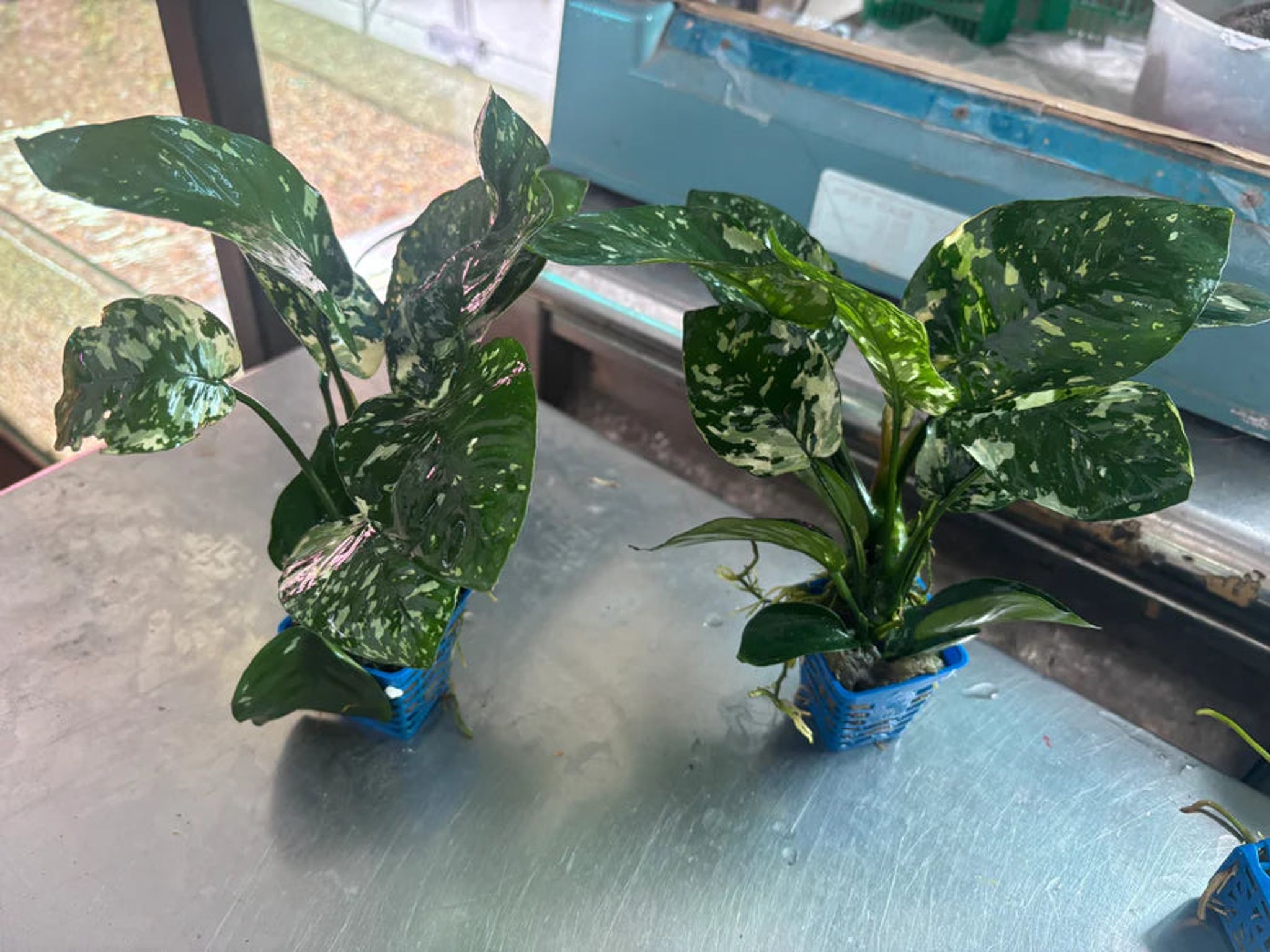
Best Tank Mates and Aquascaping Uses for Anubias
Anubias works with almost any freshwater community because its thick, leathery leaves stand up to fish that shred softer plants. The best Anubias tank mates range from shrimp, bettas, and small tetras to the plant-wrecking crowd — cichlids, goldfish, and many plecos — that most stem plants will not survive. Below you will find which fish pair well, which to be careful with, and how to use Anubias in a layout so it looks deliberate rather than tucked in wherever it fit.
Why Anubias Fits So Many Tanks
Anubias is a slow-growing rhizome plant native to rivers and streams in West and Central Africa. A few traits explain why it gets along with so many fish:
- Tough foliage. The leaves are thick and waxy, so most fish that nibble plants give up quickly.
- No roots in the substrate required. It grows attached to rock or wood, so digging fish cannot uproot it the way they uproot sword plants.
- Low light and low nutrient needs. It does well under basic hood lighting with no CO2 injection, so it suits tanks set up around the fish, not the plants.
- Wide water tolerance. It handles the range most tropical community fish need.
| Parameter | Widely accepted range |
|---|---|
| Temperature | 72–82°F (22–28°C) |
| pH | 6.0–7.5 (many keepers report success up to around 8.0) |
| Hardness | Soft to moderately hard; not fussy |
| Light | Low to moderate; shade reduces algae on leaves |
| CO2 | Not required |
| Growth rate | Slow — often one new leaf every few weeks |
The one firm rule: never bury the rhizome. The thick horizontal stem rots when covered by gravel or sand. Tie or glue it to hardscape, wedge it between stones, or let the roots (not the rhizome) touch the substrate.
Best Tank Mates for Anubias
Shrimp and Snails
Dwarf shrimp such as cherry, amano, and Caridina species are a natural match. They graze the biofilm and soft algae that collect on Anubias leaves, and the broad leaves double as feeding platforms and hiding spots for molting shrimp. Nerite and mystery snails also clean leaf surfaces without eating healthy tissue. If you are stocking an invert-focused tank, the freshwater shrimp selection on FishyHub pairs well with an Anubias-and-driftwood layout.
Small Community Fish
Tetras, rasboras, danios, and livebearers do not damage Anubias, and they look best swimming over darker green foliage. A school of neon or ember tetras against a stand of Anubias nana is one of the easiest good-looking combinations in the hobby. Browse small community fishes if you want mid-water color to contrast with slow, static plants.
Bettas and Gouramis
Bettas use the wide leaves as resting spots near the surface — position an Anubias on a piece of wood so a leaf sits an inch or two (2.5–5 cm) below the waterline. Honey, dwarf, and pearl gouramis also appreciate the cover, and none of these fish eat the plant.
Corydoras and Bottom Dwellers
Corydoras, kuhli loaches, and other sifters constantly disturb the substrate. Rooted plants struggle in those conditions, but an Anubias attached to rock is unaffected. It also gives nervous bottom fish shaded cover.
Cichlids
This is where Anubias earns its reputation. Angelfish, rams, and many Central and South American cichlids dig and pick at plants, and Anubias usually survives both. Even in African cichlid tanks, Anubias is one of the few plants keepers commonly succeed with, because many mbuna ignore its tough leaves. Results vary by species and individual fish, though: heavily herbivorous mbuna may still chew it, and hard, alkaline Rift Lake water is at the upper edge of its comfort zone.
Goldfish
Goldfish eat or uproot most plants. Anubias tolerates them better than almost anything else because of its texture and because it can be anchored to decor. There is a temperature trade-off: goldfish prefer cooler water, and Anubias growth slows noticeably in the upper 60s°F (around 20°C) and below. Many keepers still find it hangs on well at room temperature, but expect very slow growth.
Tank Mates to Watch Carefully
| Fish or invertebrate | Risk to Anubias | Notes |
|---|---|---|
| Silver dollars | High | Dedicated plant eaters; often strip even tough leaves |
| Large plecos (common, sailfin) | Moderate | Rasping can scar or hole leaves; smaller bristlenose plecos are usually fine |
| Herbivorous mbuna | Moderate | Some individuals graze it; others ignore it |
| Oscars and large cichlids | Moderate | Rarely eat it, but may rip it off decor while rearranging the tank |
| Crayfish | High | Cut and eat most plants, including rhizomes |
| Buenos Aires tetras | Moderate | Known plant nibblers, though Anubias resists better than most plants |
If you do keep a rasping pleco, offer blanched vegetables and sinking algae wafers so the plant is not its main food source. For bottom-dweller options that tend to leave Anubias alone, look at plecos, corys and bottom dwellers and favor bristlenose and corydoras over large common plecos.
Aquascaping Uses for Anubias
Attached to Driftwood
The classic use. Tie a rhizome to a branch with cotton thread or fishing line, or use a small dab of cyanoacrylate gel glue (the gel is widely used in aquariums once cured). Roots grip the wood within several weeks. Placing plants at different heights along a branch creates depth without crowding the substrate.
Rock Crevices and Hardscape Gaps
Wedge small varieties like Anubias nana petite into cracks between stones. This hides the join between rocks and makes the scape look naturally overgrown. It is especially useful in cichlid tanks where loose plants would not last.
Foreground and Midground Accents
Nana and nana petite stay compact — often under 3–4 inches (7–10 cm) tall — and work as foreground or midground plants in nano tanks of 5–20 gallons (19–76 liters). Their dark green reads as a strong focal point against lighter carpets or sand.
Background Mass
Larger varieties such as Anubias barteri, A. heterophylla, and A. gigantea can reach 10–16 inches (25–40 cm) or more and fill the rear of a 40-gallon (150-liter) or larger tank. Because they grow slowly, they give a background that stays in shape for months without trimming.
Shade Plant Under Taller Growth
Anubias is ideal for the shaded zones under floating plants, wood canopies, or tall stems. Strong light on its leaves often leads to green spot algae, so shade is an advantage rather than a compromise.
Paludariums and Emersed Setups
Anubias grows well emersed (leaves out of water) in humid conditions, which makes it useful at the waterline of paludariums and riparium planters. Emersed leaves are often a lighter green and a bit larger.
Choosing a Variety for Your Layout
| Variety | Typical size | Best placement |
|---|---|---|
| Nana petite | 1–3 in (2.5–7.5 cm) | Rock crevices, nano foreground |
| Nana | 2–6 in (5–15 cm) | Wood, midground |
| Coffeefolia | 4–8 in (10–20 cm) | Midground accent; textured, rippled leaves with reddish new growth |
| Barteri | 6–12 in (15–30 cm) | Midground to background |
| Heterophylla / gigantea | 10–16+ in (25–40+ cm) | Background, large tanks |
Sizes vary with light, nutrients, and whether the plant is grown submersed or emersed.
Care Tips That Keep Anubias Looking Clean
- Fertilize lightly. A liquid fertilizer or root tab near the roots helps, but heavy dosing mostly feeds algae on slow-growing leaves.
- Trim old leaves at the base rather than cutting new ones.
- Propagate by dividing the rhizome with a clean blade; each piece should keep several leaves.
- Watch for rhizome rot, a mushy, foul-smelling section. Cut it away to healthy tissue.
Frequently Asked Questions
Can goldfish live with Anubias?
Yes, Anubias is one of the most reliable plants for goldfish tanks because its leaves are too tough for most goldfish to eat. Anchor it firmly to rock or wood so it cannot be pulled loose. Expect slow growth if the tank runs on the cool side.
Do African cichlids eat Anubias?
Many African cichlids leave it alone, which is why it is a common choice for mbuna and peacock tanks. Strongly herbivorous species may still graze it, so results depend on the fish. Wedging plants into rockwork protects them from being uprooted.
Why does my Anubias have black or green spots?
Spots on the leaves are usually algae that settle on slow-growing foliage, often green spot or black beard algae. Reducing direct light on the plant, keeping fertilizer and phosphate in balance, and adding algae grazers such as nerite snails and amano shrimp all help.
Can I plant Anubias in the substrate?
You can let the roots go into the gravel or sand, but keep the rhizome above it. A buried rhizome tends to rot and the plant slowly dies. Attaching it to hardscape is the simplest way to avoid the problem.
Is Anubias good for a betta tank?
Very. Bettas rest on the broad leaves, and the plant thrives under the modest lighting common in betta setups. Nana and nana petite fit well in tanks of 5 gallons (19 liters) and up.
Build Your Anubias Community
Anubias gives you a planted look with almost no risk from the fish you choose, from delicate shrimp to rough-and-tumble cichlids. Pick your variety by the space it needs to fill, keep the rhizome above the substrate, and give it some shade. Then add livestock that fits both your water and your layout — browse small community fishes on FishyHub to find a school that looks right swimming over those dark green leaves.

