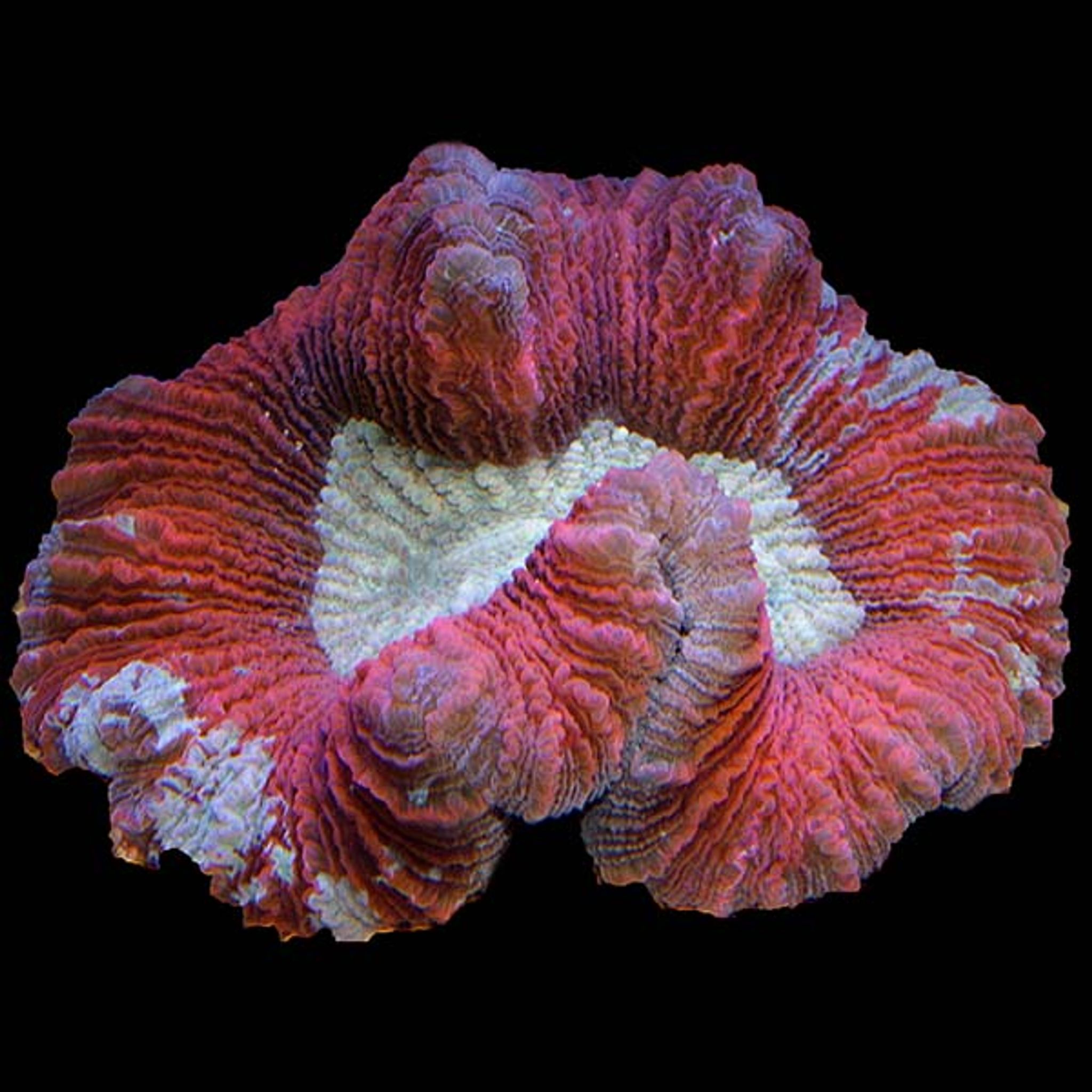
Best Placement for Trachyphyllia: PAR, Flow and Space Requirements
Trachyphyllia (the open brain coral) fails more often from bad placement than from bad water. This guide gives concrete PAR numbers, flow targets, and spacing rules by tank and light type so you can pick a spot with confidence instead of guessing at "low to medium."
What Trachyphyllia Needs From Its Spot
Trachyphyllia is a large-polyp stony (LPS) coral sold as single-head or multi-head "wellso" specimens. Its fleshy tissue inflates over a stony skeleton and can balloon to 2-3 times the skeleton's footprint when happy. That inflated tissue is soft, easily torn, and has no tolerance for touching rock, rubble, or a neighboring coral — which is why placement matters more for this species than for most SPS or encrusting LPS.
The three variables that make or break a spot are:
- Light (PAR): enough to sustain the coral's photosynthetic partners without triggering bleaching or retraction.
- Flow: enough motion to prevent debris from collecting on or under the tissue, but never a direct jet.
- Space: enough open real estate in every direction for full inflation and safe distance from stinging neighbors.
Sand Bed vs. Rock: Where to Actually Set It
The safest default is a bare, open patch of sand bed, not wedged into rockwork. Placing the skeleton directly in an open sand pocket lets tissue expand in all directions without abrasion.
A smooth, flat rock or frag plug set low in the tank, close to the sand, is an acceptable alternative — but only if the surface is genuinely smooth (no coralline ridges or sharp edges) and flow at that spot is calm enough that the coral won't rock or grind against the rock. If you're newer to LPS, default to sand; save the rock-ledge option for a tank where you can verify calm, indirect flow at that exact point.
Never wedge Trachyphyllia between rocks "to hold it in place." Contact points on inflated tissue tear easily, and torn tissue is a common entry point for brown jelly infections.
Substrate Depth and Stability
Give the sand bed enough depth that the skeleton sits stable and doesn't list to one side — a tipped coral rubs its own tissue against the substrate. Also scan the spot for detritus fall lines and heavy snail or hermit crab traffic; a coral sitting where debris constantly rains down or where crabs regularly climb over it will show more irritation and slower growth than one in a quieter corner.
PAR and Lighting: Numbers by Fixture Type
Trachyphyllia does best in low-to-moderate light, roughly 50-100 PAR at the coral's exact position, with some acclimated specimens tolerating up to about 150 PAR. Treat this as a moderate band (50-120 PAR for planning purposes) rather than one "correct" number — morph, origin, and acclimation history all shift individual tolerance. Indo-Pacific and Australian specimens in particular can show slightly different light tolerance, so use tissue color and inflation, not a single target reading, as your ongoing guide.
| Light type | Typical placement | Approximate PAR at coral |
|---|---|---|
| LED fixture | Sand bed under partial shade of rockwork, or low-to-mid intensity setting | 50-100 PAR |
| T5 fluorescent | Substrate, positioned farthest from the bulbs | 50-100 PAR |
| Metal halide | Bottom of tank, with added height/shade from rock overhangs | 50-90 PAR (lower end recommended) |
As a placement guide, most mixed reef tanks put Trachyphyllia in the bottom third to middle of the water column, ideally under a shaded shelf or overhang rather than in open, unobstructed light.
Measuring the Spot Before You Commit
Don't estimate PAR by eye. A dedicated PAR meter gives an exact reading at the candidate spot; if you don't have one, a phone light-meter app can serve as a rough proxy to compare relative brightness between two placement options, even though it won't give a true PAR value. Either way, measure at the coral's actual future position — light intensity can vary dramatically between a sand patch in full view of the fixture and one shaded by an overhang just a few inches away.
If your tank runs brighter fixtures overall, start Trachyphyllia at the lowest practical spot and increase exposure gradually — never move it into stronger light all at once. Watch tissue color and inflation over the following one to two weeks before deciding whether to adjust again.
Flow: Low, Indirect, and Random
Trachyphyllia wants low-to-medium, indirect or random flow — never a direct, high-velocity current. Constant direct flow keeps the coral contracted, can abrade or tear the fleshy mantle, and prevents its feeding tentacles from extending.
At the same time, flow can't be zero. Enough gentle, intermittent movement is needed to keep detritus and fine sand from settling on or under the tissue, which otherwise causes localized irritation and recession.
How to Test Flow at a Candidate Spot
Before placing the coral, watch how a pinch of fine sand or a small piece of food drifts near the target spot:
- Gentle random drift that settles slowly and changes direction — good.
- A steady stream that shoots the particle across the tank — too direct; move the spot or redirect the pump.
- Particles that just sit and pile up with no movement — too stagnant; expect detritus buildup under the coral.
Intermittent, pulsing flow from a wavemaker or the interaction of two or more powerheads tends to produce this "random" quality better than a single, strong laminar jet aimed straight at the rockwork.
Flow and Turnover Rate, Explained
"Turnover rate" is the whole-tank metric hobbyists use to size pumps: for a mixed reef, a commonly cited target is roughly 20-40 times the total tank volume per hour, combining the return pump with additional powerheads or wavemakers.
That number describes the tank as a whole — it says nothing about flow at any one specific spot. A tank running a high overall turnover rate can still have a calm "dead spot" pocket near the sand bed, created by rockwork blocking direct flow from that area. That dead spot is exactly what Trachyphyllia wants: you don't need to lower your whole system's flow, just find (or create, with rock placement) one calm pocket within a tank that otherwise runs plenty of flow for everything else.
Multiple smaller powerheads running randomized or alternating patterns generally create gentler, more varied flow than one strong pump — making it easier to locate a calm LPS pocket while still moving enough water for SPS elsewhere in the same system.
Spacing: Give It Room to Inflate
Leave 4-6 inches (10-15 cm) of clearance on all sides of the skeleton so inflated tissue never touches rock, sand rubble, or another coral. Since inflated tissue can reach 2-3 times the skeleton's size, that clearance needs to account for the expanded footprint, not the resting one.
Stay well clear of corals known for sweeper tentacles or strong stinging — torch, hammer, and other euphyllia, as well as some mushroom corals. Keep at least 6-8 inches between Trachyphyllia and these neighbors, increasing that distance as either coral grows. Inadequate spacing causes two-way damage: neighbors can sting the Trachyphyllia, or its own expanding tissue can smother something planted too close.
Multi-head "wellso" colonies need proportionally more open sand footprint as they grow and split into additional heads — plan the initial spot with future growth in mind.
Repositioning an Established Coral
If you need to move a settled Trachyphyllia, shift it in small increments over 1-2 weeks rather than relocating it in one jump, watching tissue color and inflation between each move. A coral thriving in one PAR/flow combination can bleach or retract if suddenly dropped into a different environment, even a supposedly "better" one.
Reef hobbyists comparing LPS options for a mixed system can browse current stock in LPS hard corals alongside fixtures in LED lighting sized for a low-to-moderate PAR setup.
Feeding Once It's Placed
Trachyphyllia is photosynthetic but grows better and holds color longer with target feeding of meaty foods — mysis, brine shrimp, or chopped seafood — 1-3 times per week. Many specimens extend feeding tentacles at night in the wild, though tank-kept corals often adapt to daytime feeding if you're consistent about timing.
Turn off or redirect flow briefly during target feeding sessions. Even the gentle random flow that's ideal for day-to-day health will blow food away before the coral's tentacles can capture it.
Water Parameters to Support Good Placement
Placement does most of the work, but stable parameters keep the coral resilient to normal fluctuations:
| Parameter | Target range |
|---|---|
| Temperature | 76-80°F (24-27°C) |
| Specific gravity | 1.025-1.026 |
| Alkalinity | 8-10 dKH |
| Calcium | 400-450 ppm |
| Magnesium | 1250-1350 ppm |
| Nitrate/Phosphate | Low and stable; a little detectable nutrient is fine and often supports LPS color and growth better than ultra-low nutrients |
Common Placement Mistakes
- Placing too high or too close to lights "for color." This is the single most common cause of bleaching, tissue shrinkage, and a pinched or gaping mouth.
- Setting it in a powerhead's direct output. The coral stays contracted and tissue can fray or develop necrotic patches from constant abrasion.
- Wedging it into rockwork instead of open sand. Contact points tear and become entry points for brown jelly infections.
- Skimping on spacing. Leads to stings from neighbors or the Trachyphyllia's own tissue smothering something planted too close.
- Too little flow, letting sand or detritus collect under the coral. Causes localized irritation and tissue recession; the fix is slightly more indirect flow or periodically checking underneath the coral.
- Sudden light or flow changes right after purchase. Skipping acclimation is a leading cause of post-purchase bleaching and recession, even in tanks with otherwise solid long-term parameters.
- Mistaking normal nighttime tentacle extension or temporary deflation for a dying coral. This daily cycle is normal; a gaping mouth or genuinely receding tissue are the real warning signs to act on.
Is Trachyphyllia a Good Beginner Coral?
Once the light and flow basics above are respected, Trachyphyllia is considered a relatively hardy, forgiving LPS — a reasonable "stepping stone" for hobbyists moving from soft corals toward more demanding LPS and SPS species. The forgiveness comes with a caveat: most failures trace back to placement (too much light, direct flow, or no spacing), not to water chemistry.
Frequently Asked Questions
Can Trachyphyllia go directly on the sand?
Yes. A sand bed is the preferred and most common placement, since it gives the coral full room to inflate in every direction without touching anything.
How much PAR does Trachyphyllia need?
Roughly 50-120 PAR in most tanks. Start on the lower end of that range and acclimate gradually before increasing light, using tissue color and inflation as your guide rather than a single fixed number.
Does Trachyphyllia need high flow like SPS corals?
No. Low-to-medium, indirect or random flow is correct. High or direct flow keeps the coral contracted and can abrade or tear its fleshy tissue.
Why is my Trachyphyllia's mouth open or gaping?
A gaping mouth usually signals stress from light, flow, water quality, or a pest issue such as flatworms. Check placement and water parameters first, since sudden changes right after purchase are a common trigger.
Can I place Trachyphyllia near other LPS corals?
Only with generous spacing of 6-8 inches or more, since both it and its neighbors can sting or physically overlap once tissue is fully inflated.
How often should I feed Trachyphyllia?
About 1-3 times a week with meaty foods like mysis or chopped seafood. Turn off or redirect flow briefly during feeding so food isn't swept away before the coral can capture it.
Is Trachyphyllia a good coral for beginners?
Yes, generally. It's considered hardy and forgiving once basic light and flow placement rules are followed, making it a reasonable step up from softies before moving into more demanding LPS or SPS.
What causes bleaching in Trachyphyllia?
Most commonly, excess light intensity or a sudden increase in light without acclimation. Prolonged stress from poor or unstable water quality can also contribute.
For hobbyists building out or refreshing a mixed reef, current stock across marine livestock corals is worth browsing when planning tankmates and spacing around a new Trachyphyllia.

