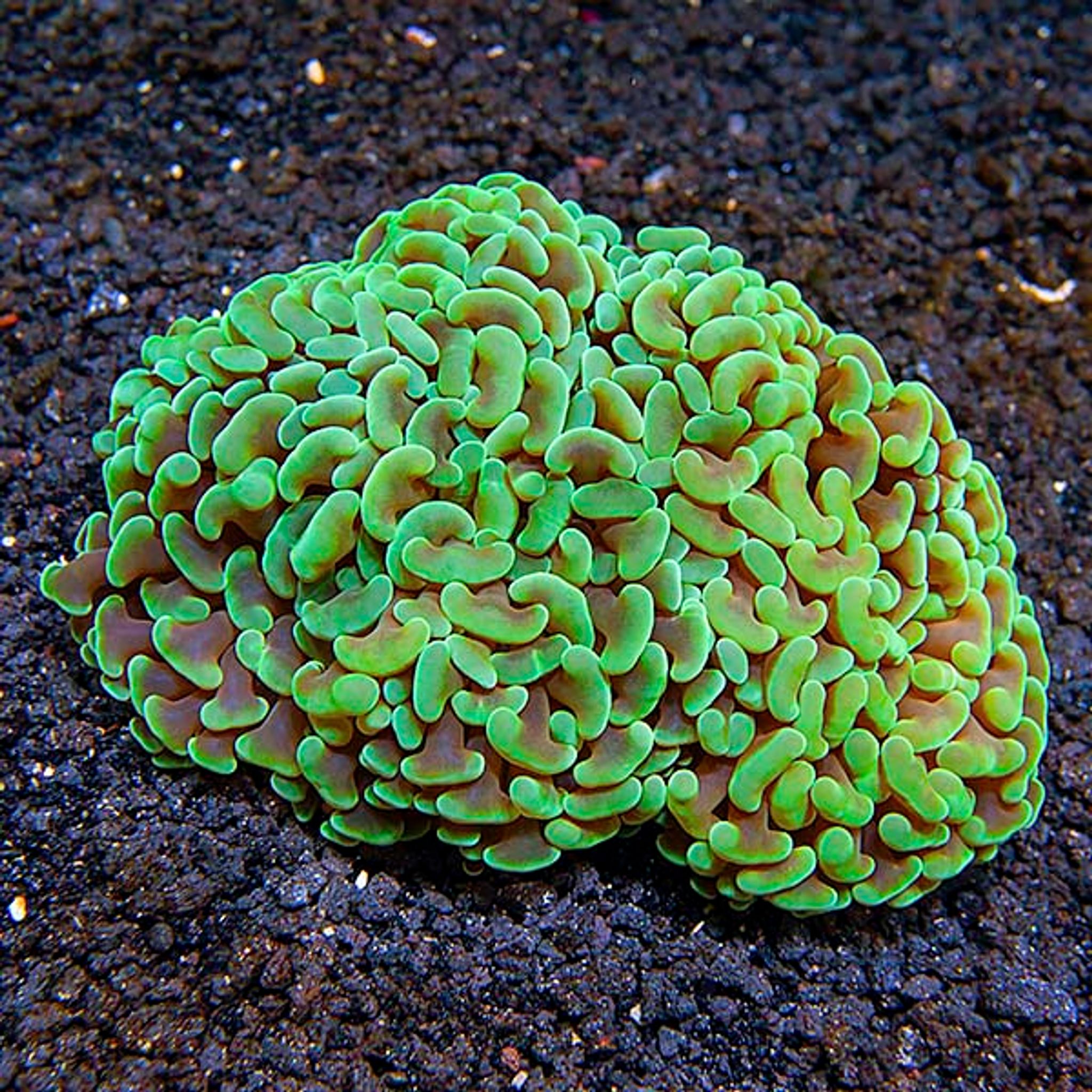
Best Placement for Hammer Coral: PAR, Flow and Space Requirements
Hammer coral (Euphyllia ancora) rewards a specific but forgiving setup: moderate light, gentle turbulent flow, and generous breathing room from tankmates. This guide gives you concrete PAR numbers, a way to judge flow by eye, and spacing rules scaled to common US tank sizes, so you can place a new frag with confidence instead of guessing.
What Is Hammer Coral, Briefly
Hammer coral is a branching large-polyp stony (LPS) coral closely related to torch and frogspawn corals. It grows a hard branching skeleton topped with fleshy polyps, each tipped in tentacles shaped like small anchors or hammerheads. Those fleshy polyps expand and contract in response to light, flow, and water chemistry, which is exactly why placement matters so much for this species.
PAR: How Much Light Does Hammer Coral Need
PAR (Photosynthetically Active Radiation) measures the light intensity available for coral photosynthesis. Sources disagree somewhat on the ideal number for hammer coral, but they converge on a workable range.
- Safe starting zone: 75–150 PAR. This is the reliable range most home reef tanks can hit without special equipment.
- Lower bound: around 50 PAR is often cited as sufficient for survival under standard LED or T5 output, though growth and color will be modest.
- Upper bound: colonies can acclimate up to roughly 200+ PAR, and some vendors report success as high as 150–250 PAR for well-adjusted specimens.
For a new frag or colony, start at the low-to-middle end (75–125 PAR) and increase gradually rather than aiming for the top of the range immediately.
Vertical Placement in the Tank
In most tanks, the lower-to-middle third of the rock structure is the sensible default under standard reef LED or T5 lighting. This roughly mimics a moderate reef depth and avoids the most intense light near the water's surface.
That said, treat this as a starting point, not a fixed rule. General LPS guidance leans toward lower rockwork, but some hobbyists find that placing a hammer higher on the aquascape — where light and flow are both stronger — actually improves polyp extension for that particular specimen. The right zone depends on your specific light unit, aquascape, and the coral itself, so tie your final placement to observed PAR and flow at that exact spot, not a rule that ignores your tank.
Color vs. Extension: A Trade-off, Not a Rule
Hammer corals often extend their polyps further and look puffier under lower light. Under stronger light, polyps may retract slightly during peak intensity, but color saturation typically improves. Neither outcome is wrong — it's a placement choice based on whether you prioritize a fully "fluffy" look or richer color.
Acclimating to Brighter Light
If you want to move a hammer to a brighter spot, do it gradually over 1–3 weeks:
- Shift the coral a few inches closer to the light every few days rather than all at once.
- Alternatively, temporarily reduce photoperiod length or light intensity at the new spot, then ramp back up.
- Watch for paling or bleaching signs and back off immediately if you see them.
Skipping acclimation and placing a new frag directly under full-intensity light on day one is one of the most common mistakes with this coral.
Measuring PAR Without a Meter
Not every hobbyist owns a PAR meter. Two practical workarounds:
- Check your light fixture's published PAR-by-distance chart (most reef LED manufacturers provide one) and measure the actual distance from the light to the coral's spot on your rockwork.
- Consider an affordable PAR meter if you place corals often — even a basic model removes most of the guesswork compared to eyeballing brightness.
Photoperiod Matters Too
PAR intensity alone doesn't tell the whole story. A coral under moderate PAR with a long photoperiod (say, 10–12 hours) receives a meaningfully different total light dose than the same PAR run for only 6–7 hours. When troubleshooting a placement that "should" be fine on paper, check photoperiod length alongside PAR — the two interact.
Flow: Moderate and Turbulent, Not Direct
Flow is where sources disagree most. Most guidance calls for "moderate to strong" movement, while at least one source claims hammers prefer low, indirect flow. The practical reconciliation: moderate, turbulent, randomized flow — never a strong, direct laminar jet, and never stagnant water either.
Why Flow Matters for This Coral
Flow isn't just about looks. It:
- Delivers planktonic food particles to the coral's polyps
- Supports photosynthesis and calcification efficiency
- Sweeps detritus and waste off the coral's tissue, preventing infection
- Prevents stagnant "dead zones" that invite nuisance algae
How to Judge Flow by Eye
| Observation | What it means |
|---|---|
| Tentacles wave gently and continuously | Flow is well-tuned |
| Tentacles stay collapsed, retracted, or point stiffly in one direction | Flow is too strong |
| Polyps look flaccid or deflated, visible detritus settles on the coral | Flow is too weak |
| Tissue looks pinned flat against the skeleton | Direct jet is hitting the coral — reposition or redirect |
Too little flow allows thin mucus buildup and detritus accumulation, raising the risk of tissue infection or recession. Too much flow flattens the polyp against the skeleton, preventing extension, and can tear tissue over time if sustained.
Fix for a direct jet: redirect a powerhead angle, add a wavemaker with a randomized or pulsing mode, or physically reposition the coral out of the jet's direct path rather than fighting the flow where it sits.
Physical Placement and Orientation
Mounting
Secure a frag or colony on rock using cement, coral putty, or by wedging a frag plug into a stable crevice. A coral that can tip, roll, or slide into a neighbor is a common cause of stinging incidents that have nothing to do with light or flow.
Orientation Angle
Many hobbyists find that angling the coral roughly 45 degrees rather than pointing it straight up improves polyp extension — the polyp's own weight is less likely to collapse on itself at an angle. Since individual specimens respond differently even under textbook-ideal conditions, plan to nudge the coral to a few different spots or angles over the first 1–2 weeks until you see it open fully.
Space From Neighbors
Hammer corals extend sweeper tentacles loaded with stinging cells (nematocysts), which is why spacing matters more here than with many other corals.
- Minimum baseline: 6–8 inches (15–20 cm) of clearance from any other coral.
- Give more room in taller aquascapes or slow-current tanks, since sweepers have been documented reaching roughly a foot in some Euphyllia species.
- Plan for mature size, not frag size. A small frag today can branch out into a colony that closes that gap within a year or two.
A Practical Spacing Rule by Tank Size
Most sources skip a tank-size-relative rule, so here's a working baseline scaled to common US setups:
| Tank type | Minimum clearance to neighbors |
|---|---|
| Nano tank (10–20 gal / 38–75 L) | ~6 inches (15 cm), and consider limiting neighboring LPS/soft corals nearby |
| Standard/display tank (40+ gal / 150+ L) | 8–10+ inches (20–25+ cm), scaled up further for tall rockwork |
Check at Night
Sweeper tentacles get longer and more active after lights-out. Daytime spacing that looks perfectly safe can still allow contact once the lights go dim. Do an evening check within the first week of any new placement, and periodically afterward as the colony grows.
Coral Aggression and Compatibility
Reef tanks are competitive environments, and hammer coral placement should account for how corals defend and attack:
- Sweeper tentacles — stinging cells that extend to sting neighbors, most active at night (covered above).
- Mesenterial filament expulsion — some corals, particularly brain-type LPS, expel digestive filaments onto neighbors, often at night, to digest their tissue.
- Mucus-coat toxicity — varies by species; some corals coat neighbors in irritant mucus.
- Chemical (allelopathic) warfare — soft corals like leathers release chemical compounds into the water that can stress or damage nearby stony corals, even without direct contact.
Practical takeaway: never let hammer branches grow into contact with neighbors, keep leather and other soft corals a clear distance away, and if you see recession or unusual mucus suggesting chemical stress, consider running carbon or doing extra water changes.
Compatibility Notes
- Avoid placing soft corals like leathers or xenia directly upstream of or adjacent to LPS corals.
- Some pairings are specifically risky — for example, frogspawn can damage candy cane coral on direct contact, and xenia can harm Montipora capricornis.
- Euphyllia species (torch, frogspawn, hammer) generally tolerate touching each other better than they tolerate other genera — but "better" isn't "safe." Still plan spacing between different Euphyllia colonies rather than relying on that tolerance.
You can browse a range of options in LPS hard corals if you're planning a compatible LPS grouping, or check soft corals separately to keep them at a safer distance in your layout.
Water Chemistry: The Foundation Placement Can't Replace
No placement strategy compensates for unstable water. Hold these ranges regardless of where the coral sits:
- Calcium: ~380–450 ppm
- Alkalinity: ~8–11 dKH
- Magnesium: ~1250–1350 ppm
- Nitrate: keep under roughly 30 ppm, ideally lower
Elevated nitrate and unstable alkalinity/calcium are common causes of tissue recession (sometimes described as brown jelly-type symptoms) that get mistaken for a placement problem. If a coral is struggling, check chemistry before you keep moving it around the tank.
More broadly, a stable, mature reef tank — established rock, consistent dosing, steady parameters — is a prerequisite for any placement strategy to work. Placement is step two; stability is step one.
Feeding: A Secondary Factor
Hammer corals benefit from occasional target feeding with meaty foods or coral pellets, but they're less aggressive feeders than many other LPS species. Feeding is worth doing, but it comes after you've dialed in light and flow — a well-placed hammer with no supplemental feeding will generally outperform a poorly placed one that's fed regularly.
Before You Place It: Dip and Inspect
New frags should be dipped and visually inspected before final placement, to catch pests or hitchhikers before they establish in the tank. This is a simple step that's easy to skip when you're excited to get a new coral into position, but it saves trouble later.
A Practical Tip: Adjustable Light Mounting
A stable, height-adjustable light mount — whether a DIY LED arm or a sump-light rig — makes it much easier to fine-tune PAR at a hammer's exact spot without re-aquascaping the whole tank. If you find yourself constantly moving rockwork to chase the right light level, adjusting the light source itself is often the simpler fix.
Common Mistakes and Troubleshooting
- Full-intensity light on day one: causes bleaching or paling. Always acclimate gradually over 1–3 weeks.
- Direct laminar flow jet: polyp stays retracted and looks unhealthy. Redirect flow via wavemaker settings or reposition the powerhead.
- Underestimating adult size: placing too close to neighbors based on frag size leads to stinging as branches mature. Always plan for mature spread.
- Skipping the night check: sweepers that look harmless by day can reach and sting after lights-out. Check within the first week of any new placement.
- Coral won't open despite "correct" numbers: individual specimens respond differently even under textbook-ideal conditions. Try a different physical spot before assuming something is fundamentally wrong.
- Blaming placement for a chemistry problem: recession, bleaching, or failure to extend can stem from unstable alkalinity, calcium, or high nitrate rather than light or flow location. Test water before repeatedly repositioning the coral.
Frequently Asked Questions
What PAR does a hammer coral need?
Aim for a 75–150 PAR safe working range, starting new frags at the lower end. Acclimated colonies can tolerate up to roughly 200+ PAR if the increase is gradual and you're aiming for better color.
How much flow does hammer coral need?
Moderate, indirect, turbulent flow — enough that polyps and tentacles sway gently and continuously. Avoid a direct, focused jet, which pins the polyp flat and prevents extension.
How far apart should hammer corals be from other corals?
A minimum of 6–8 inches (15–20 cm), with more clearance in taller aquascapes or slower-flow tanks. Always plan for the coral's mature branching spread rather than its current frag size, and check spacing again at night when sweeper tentacles extend further.
Can hammer coral be placed near the top of the tank (high light)?
Yes, if acclimated gradually over 1–3 weeks. Some specimens color up better under higher light near the top, while others extend their polyps more fully under moderate light lower in the tank — observe your specimen's response rather than assuming one is universally correct.
Why is my hammer coral not opening or extending?
Usually one of: flow too strong or too weak, light too intense for where it's placed, unstable water parameters, or the specimen simply preferring a different physical spot. Rule out chemistry first, then try repositioning before assuming something is wrong with the coral.
Do hammer corals sting other corals?
Yes, through sweeper tentacles containing nematocysts (stinging cells), which extend further and become more active at night. This is the main reason spacing matters more for hammer coral than for many other corals.
Can hammer coral touch other Euphyllia species like torch or frogspawn?
Euphyllia species generally tolerate touching each other better than they tolerate other coral genera, but it's not risk-free. Still give separate Euphyllia colonies spacing rather than relying on that tolerance long-term.
What happens if flow is too strong for a hammer coral?
The polyp stays retracted or flattened against the skeleton instead of extending, and sustained strong direct flow can tear tissue over time. Redirect or reduce flow at that spot rather than accepting a permanently closed coral.
Ready to add a hammer coral to your reef? Browse current LPS options in LPS hard corals on FishyHub, or explore the full corals category to plan compatible tankmates before you place your next frag.

