Best Peaceful Community Fish
A peaceful community tank only works when every fish you add tolerates mixed company, similar water, and shared space without bullying its neighbors. This guide organizes the best peaceful community fish by water-column zone and tank size, then gives you a compatibility framework — not just a list — so you can build a stocking plan that actually holds together.
What Makes a Fish "Peaceful"?
A true community fish is non-territorial, tolerates a range of tankmates, and doesn't chase, nip fins, or guard space aggressively. Peaceful species generally:
- Ignore other fish outside of normal schooling or feeding behavior
- Accept similar temperature and pH ranges to their tankmates
- Stay a manageable adult size relative to the tank
- Don't require a species-only setup to stay calm
This is different from semi-aggressive fish (nippy in small numbers, territorial as adults) and aggressive fish (predatory, combative, or both), which don't belong in a strictly peaceful setup even if they're popular and colorful.
Stocking by Water-Column Zone
A balanced community uses all three zones of the tank rather than crowding one level and leaving the rest empty.
Top Dwellers
Surface-oriented fish with upturned mouths that feed near the top:
- Hatchetfish (marbled, silver) — need tight schools of 6 or more
- Pencilfish
- Some peaceful killifish
Mid-Water Dwellers
The backbone of most community tanks — active, colorful, and available in dozens of sizes and color forms:
- Tetras: neon, cardinal, ember, and "blue tetra" color morphs
- Rasboras: harlequin rasbora
- Danios: zebra danio
- White cloud mountain minnows
- Livebearers: platy, swordtail, molly, guppy
- Cherry barb and gold barb
- Gouramis: dwarf gourami, honey gourami
You can browse many of these directly under small community fish when planning a stocking list.
Bottom Dwellers
Cleanup crew and substrate specialists that rarely interact with mid-water fish:
- Corydoras catfish — always kept in groups
- Otocinclus catfish
- Kuhli loach
- Bristlenose pleco
Corydoras in particular are a near-universal peaceful pick and are worth browsing under corydoras for the specific pattern and size you want.
Invertebrates for Extra Activity
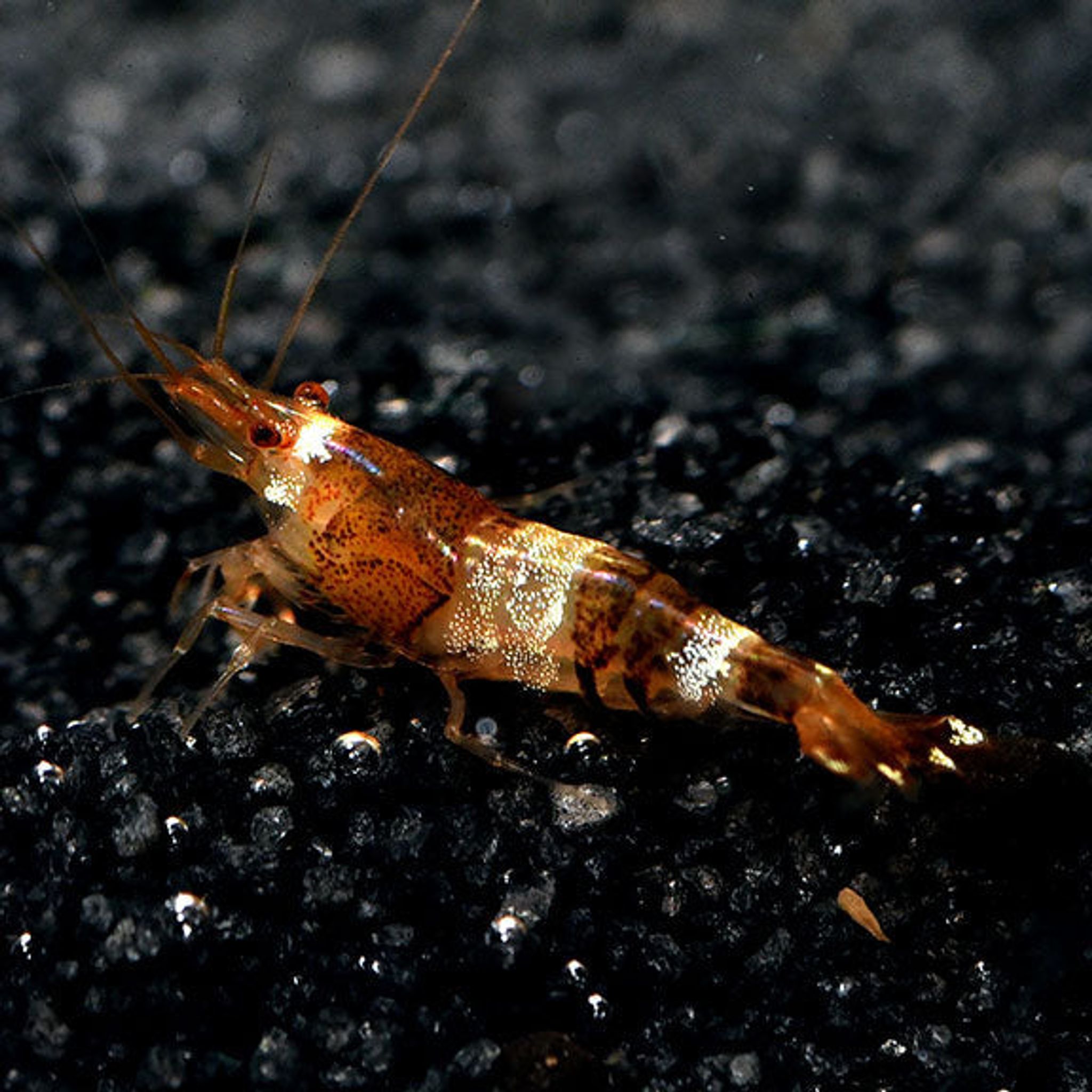
- Cherry shrimp
- Nerite snails and mystery snails
These work with genuinely peaceful fish but should be avoided with species known to eat shrimp or snails.
Stocking by Tank Size
| Tank size | Good picks | Notes |
|---|---|---|
| 10 gal (38 L) nano | Platies, neon or cardinal tetras, cherry barbs, dwarf gourami, corydoras | One centerpiece fish plus one school; avoid multiple males of the same labyrinth species |
| 20 gal (76 L) | Add swordtails, Congo tetras, rainbowfish, scissortail rasbora, larger schools | Room for two schooling groups plus bottom dwellers |
| 29–40 gal (110–150 L) | Multiple schools, a pair of dwarf cichlids (rams or kribensis), more dither fish | Enough swimming space to dilute aggression across a bigger group |
A sample 20-gallon (76 L) starter combo: 8 neon tetras, 6 corydoras, 4 platies, and 6 cherry shrimp — three zones covered, no single-fish loneliness, and a manageable bioload.
Why the 6+ Schooling Rule Exists
Schooling isn't just a stocking guideline — it's predator-avoidance instinct hardwired into tetras, danios, rasboras, and hatchetfish. In the wild, numbers dilute an individual's odds of being picked off. In a tank, a fish kept alone or in twos or threes doesn't feel that safety in numbers, so it produces elevated stress hormones, hides constantly, or — counterintuitively — becomes a fin-nipper itself as pent-up energy gets redirected at tankmates.
Group size recommendations vary between 5 and 8 in different sources; 6 to 10 fish is a safe middle ground, and larger tanks should lean toward the higher end.
Water Parameters for a Mixed Community
Most tropical community fish share a comfortable overlap:
- Temperature: 72–78°F (22–26°C)
- pH: 6.5–7.5
- Hardness: moderate
Some species — hatchetfish, cardinal tetras, and several rasboras — come from soft, slightly acidic Amazonian or Southeast Asian waters and do best on the lower end of that pH range. If your local tap water runs harder (common in much of the central and western US), lean your stocking choices toward livebearers and barbs, which tolerate harder water better than soft-water specialists.
Bioload Matters More Than Length
The old "inch per gallon" rule ignores body shape. A slim-bodied tetra produces far less waste than a deep-bodied fish of the same length, so two fish of identical size can have very different filtration demands. When planning stock, weigh:
- Adult body depth and shape, not just length
- Your filter's rated turnover for the actual tank volume
- How many individual fish (not just inches) are sharing that filtration
The Dither Fish Concept
Dither fish are confident, active mid- or upper-column swimmers — livebearers, tetras, rasboras, danios, rainbowfish, hatchetfish, and pencilfish — that signal "it's safe" to shyer tankmates through their relaxed, out-in-the-open behavior. A tank with only shy or bottom-dwelling species can end up with fish that never leave cover. Adding a school of dither fish:
- Coaxes timid species into open swimming
- Diffuses attention from semi-aggressive tankmates by giving them more targets to watch
- Helps protect fry by keeping potential predators distracted
One Male Per Tank: Bettas and Labyrinth Fish
Male bettas and several gourami species will fight if housed together. The safe rule is one male per tank for these labyrinth fish. A single male betta can join a peaceful community as long as tankmates are calm and non-nippy — long fins are a target for known fin-nippers, so pair bettas with corydoras, snails, or slow-moving tetras rather than barbs known for nipping.
Plants, Substrate, and Lid
- Heavy planting and floating plants give shy fish cover and break sightlines that fuel aggression.
- Sand substrate protects the sensitive barbels of corydoras and kuhli loaches from abrasion that gravel can cause.
- A tight-fitting lid is mandatory for hatchetfish, which are strong jumpers, and is good insurance for danios and other surface-active species.
Spotlight: Hatchetfish
Hatchetfish deserve special attention because their care needs differ from typical mid-water fish. They're strictly surface dwellers with upward-facing mouths built to snatch food and insects off the water's surface. They need:
- Tight schools of 6 or more — they're skittish alone
- A secure lid, since they're among the most effective jumpers in the hobby
- Calm tankmates that won't compete aggressively at the surface
Marbled and silver hatchetfish are the most commonly available peaceful choices.
Unusual Peaceful Picks
For hobbyists who want something beyond the standard list:
- Upside-down catfish (Synodontis nigriventris) — a genuine novelty that swims inverted and can join peaceful communities as long as tankmates aren't aggressive competitors at feeding time.
- Headstanders — an oddball group that swims at a nose-down angle, foraging along the substrate; peaceful and well suited to larger, well-planted tanks as a mid-to-bottom novelty.
- Black tiger badis — a small, semi-shy micro-predator that can work in quiet, heavily planted nano communities, but only with slow-moving food competitors; fast eaters will outcompete it every time.
Budget-Friendly Schooling Fish
For a first school on a tight budget, three options are consistently cheap, hardy, and widely available:
- Zebra danios
- White cloud mountain minnows
- X-ray/neon tetras
All three tolerate a beginner's early water-quality mistakes better than more delicate species, making them a forgiving entry point.
Compatibility Chart
Cross-reference temperament, zone, and adult size before combining any two species.
| Species | Temperament | Zone | Adult size |
|---|---|---|---|
| Neon/cardinal tetra | Peaceful | Mid | 1–1.5 in (2.5–4 cm) |
| Harlequin rasbora | Peaceful | Mid | 1.5–2 in (4–5 cm) |
| Zebra danio | Peaceful | Mid-top | 2 in (5 cm) |
| Corydoras | Peaceful | Bottom | 2–3 in (5–7.5 cm) |
| Guppy/platy/molly | Peaceful | Mid | 2–3 in (5–7.5 cm) |
| Dwarf gourami | Peaceful (one male) | Mid-top | 3.5 in (9 cm) |
| Cherry barb | Peaceful | Mid | 2 in (5 cm) |
| Marbled hatchetfish | Peaceful | Top | 1.5–2 in (4–5 cm) |
| Cherry shrimp | Peaceful | Bottom | 1 in (2.5 cm) |
| Cherry/gold barb | Peaceful | Mid | 2 in (5 cm) |
| Tiger barb | Conditional — nippy in small groups | Mid | 2.5–3 in (6–7.5 cm) |
| Serpae tetra | Conditional — nippy in small groups | Mid | 1.75 in (4.5 cm) |
| Red-tail shark | Semi-aggressive/territorial | Bottom | 6 in (15 cm) |
| Male betta (with another male) | Aggressive to own species | Mid-top | 2.5–3 in (6–7.5 cm) |
| Most cichlids | Aggressive/territorial | Varies | Varies |
Fish to Exclude From a Strictly Peaceful List
- Most cichlids, with a few carefully-kept exceptions like dwarf rams and kribensis
- Tiger barbs in small numbers — only workable in large groups of their own kind, and best skipped for a strictly peaceful build
- Multiple male bettas together
- Red-tail sharks, which turn territorial as they mature
Sources disagree on how uniformly to treat barbs: some call cherry and tiger barbs equally peaceful, while others flag tiger barbs as nippy. The safer read is to treat cherry and gold barbs as genuinely peaceful and file tiger barbs under "conditional" or skip them entirely.
Common Compatibility Mistakes
- Buying single specimens of schooling fish — always buy 6 or more at once for tetras, danios, rasboras, and hatchetfish.
- Overstocking with deep-bodied, waste-heavy fish using inch-per-gallon math instead of real bioload and filtration capacity.
- Mixing fin-nippers with long-finned fish like bettas and fancy guppies.
- Ignoring adult size and ending up with an outgrown centerpiece fish in too small a tank.
- Mismatching pH or temperature needs between soft-water and hard-water species.
- Adding "just one" aggressive species, assuming it will behave in a peaceful tank.
- Skipping quarantine — new arrivals can carry disease or parasites that stress an entire established community; quarantine for 2 to 4 weeks before adding fish to the main tank.
Introducing New Fish Without Triggering Aggression
Adding fish to an already-settled community can spark territorial flare-ups if it's done carelessly. Reduce the risk by:
- Quarantining new arrivals for 2–4 weeks first
- Rearranging decor slightly right before introduction so existing fish have to re-establish territory rather than defend a fixed spot
- Adding new fish in the evening or with lights dimmed to reduce initial stress
- Introducing in small batches rather than one fish at a time, so no single newcomer becomes a lone target
Troubleshooting: When Peace Breaks Down
- Fish disappearing overnight — check for gaps in the lid; hatchetfish and danios are common jumpers.
- Sudden aggression — often traced to too few hiding spots, not enough dither fish, or a single male of a territorial species being outnumbered by rivals. Add plants and decor, adjust male-to-female ratios, or rehome the aggressor.
- New tank syndrome mistaken for incompatibility — verify water parameters and confirm the tank is fully cycled before blaming fish behavior.
- Pale or stressed-looking tetras — usually insufficient group size, poor water quality, or a hidden bully; check numbers and run a water test before assuming disease.
Longevity and Cost Planning
Most small community fish (tetras, rasboras, danios) live 3–5 years with stable care, while corydoras and some livebearers can live longer under good conditions. Planning around realistic lifespans — rather than assuming constant turnover — helps you build a stable, low-maintenance community instead of repeatedly restocking and disrupting established hierarchies.
Frequently Asked Questions
How many fish can I put in a 10-gallon (or 20-gallon) community tank?
Base it on bioload and filtration, not just inch-per-gallon math. A 10-gallon (38 L) tank comfortably holds one school of 6–8 small tetras plus a few corydoras or a pair of platies; a 20-gallon (76 L) tank can support two schools plus a small bottom-dweller group, such as 8 neon tetras, 6 corydoras, and 4 platies.
Can I keep a betta in a community tank?
Yes, as long as tankmates are calm and non-nippy and there's enough space that the betta isn't cornered constantly. Keep only one male betta per tank — never house two males together, and avoid pairing with known fin-nippers.
What's the best beginner community fish?
Neon tetras, platies, corydoras, and guppies are consistently the easiest and most peaceful choices for a first tank. They tolerate a range of water conditions, stay small, and rarely show aggression.
Do community fish need a heater?
Yes — most tropical community species need a stable 72–78°F (22–26°C) range, which an unheated tank in most US homes won't reliably hold. If you want to skip a heater, your species choices narrow to coldwater options like white cloud minnows and some danios.
How do I know if two species are compatible?
Match temperament tier (peaceful vs. semi-aggressive vs. aggressive), adult size, water parameter needs, and activity level or zone before combining any two species. The compatibility chart above is a quick way to cross-check before buying.
Why do my tetras look stressed or pale?
The most common causes are an undersized school, poor water quality, or a bully in the tank. Check that you have at least 6 individuals, run a water test, and watch for chasing behavior before assuming illness.
Can shrimp and snails live with community fish?
Yes, with genuinely peaceful fish that don't hunt invertebrates. Avoid species known to eat shrimp or snails, and give shrimp plenty of plant cover to molt and hide safely.
How often should I add new fish to an established community?
Add gradually and quarantine every new fish for 2–4 weeks first. Introducing too many fish at once can overload the biofilter and spike ammonia, even if the fish themselves are compatible.
Ready to build your stocking list? Browse the full range of freshwater livestock on FishyHub to compare species, sizes, and availability before you buy.

