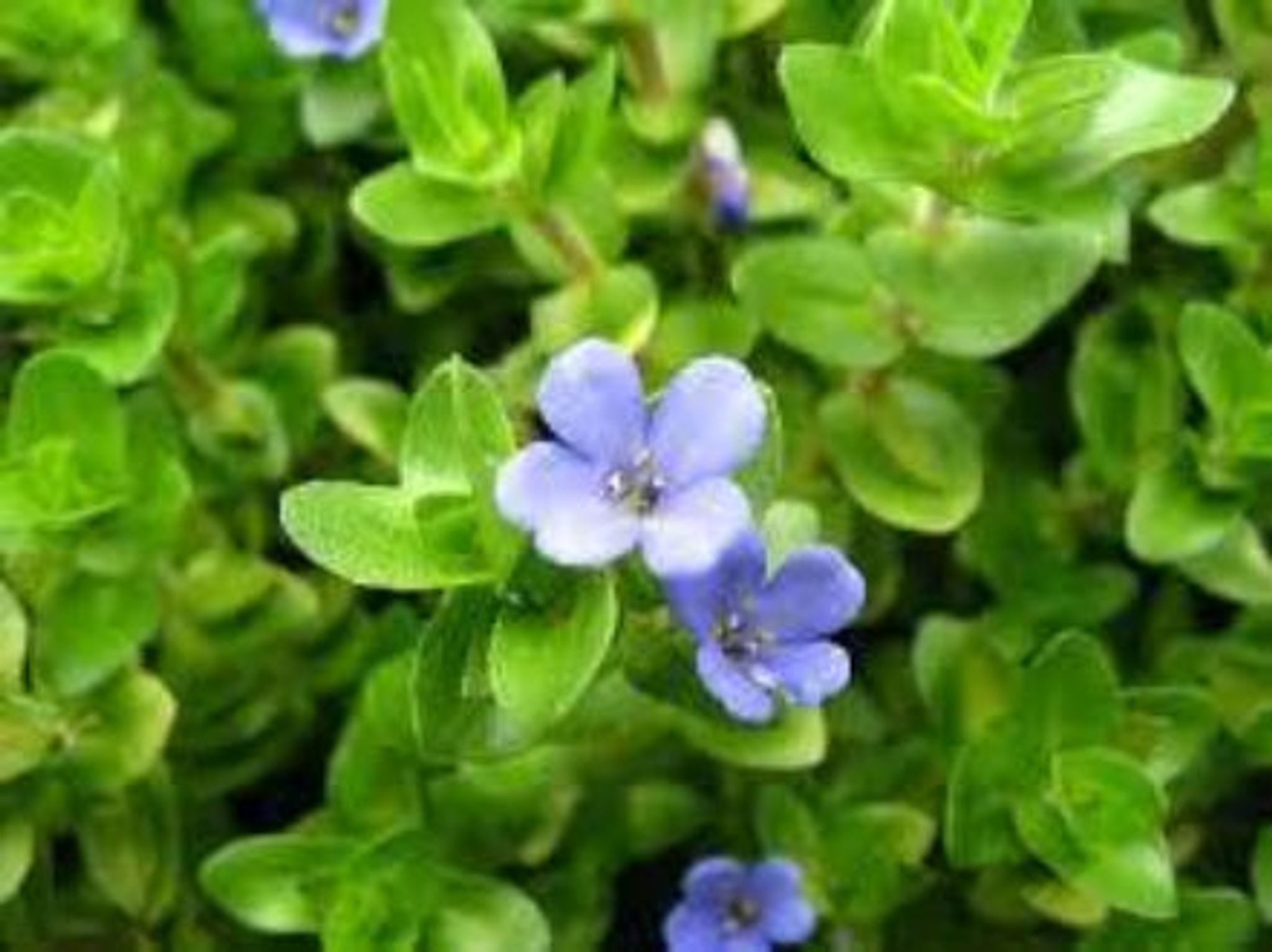
Bacopa Care Guide: Light, CO2, Substrate and Growth Tips
Bacopa is one of the most forgiving stem plants in the freshwater hobby, but "easy" doesn't mean foolproof — leggy stems, melted leaves after purchase, and confusion over which bacopa you actually bought trip up a lot of new growers. This guide breaks down the light, CO2, substrate, and water-parameter ranges that keep bacopa bushy, plus the trimming and propagation habits that turn a few stems into a full background hedge.
Which "Bacopa" Did You Buy?
The US aquarium trade sells two different plants under the bacopa name, and mixing up their care sheets is the root of a lot of frustration.
- Bacopa caroliniana: rounder, slightly cupped leaves that smell faintly aromatic when crushed between your fingers. New growth often takes on a reddish or bronze tint under strong light. This is usually what specialty aquatic plant sellers mean when they list plain "bacopa."
- Bacopa monnieri (moneywort): smaller, more tightly rounded leaves and a lower, denser growth habit. It's also sold outside the hobby as a terrestrial medicinal herb, which is why big-box pet stores and general garden centers sometimes label it simply "moneywort" without mentioning bacopa at all.
Both are easy stem plants with overlapping care needs, but their leaf shape, mature height, and ideal light/photoperiod differ enough that following one species' care sheet for the other can leave you second-guessing why your results don't match what you read. If your plant arrived without a species label, check for the aromatic crush-test leaf smell and reddish tips — that points to B. caroliniana.
Light Requirements
Bacopa survives under low light, but "survives" and "thrives" are not the same thing here.
- Low light: the plant will live, but stems stretch and space their leaves farther apart as they reach toward the surface, producing a thin, sparse look.
- Medium-to-high light (roughly 2–3 watts per gallon equivalent on older fixtures, or moderate-to-high PAR on modern LEDs): produces dense, compact growth with tightly packed leaves — the look most people picture when they buy bacopa.
For photoperiod, run the light 8–10 hours a day as a safe default. That window matches most planted-tank timer schedules and keeps algae risk in check. Extending to 12 hours is fine if your tank isn't prone to algae, but there's no growth benefit that outweighs the added algae risk for most home setups.
If you want the reddish/bronze new-growth tips that make B. caroliniana attractive, pair bright light with iron dosing. Under lower light, even a well-fed plant tends to stay plain green.
Quick fixture translation: on a common all-in-one LED unit, running it at 70–100% intensity (rather than the dim default many ship with) for 8–10 hours is usually enough to push bacopa from "surviving" to "thriving" without needing a dedicated high-output fixture.
Does Bacopa Need CO2?
No. Both Bacopa caroliniana and B. monnieri grow acceptably in a low-tech tank with no supplemental carbon at all. That said, adding CO2 — pressurized or liquid carbon — noticeably speeds growth and thickens the stems, which is why bacopa is often recommended as a good "test plant" for hobbyists who are CO2-curious but not ready to commit their whole tank to it.
Decision guide:
- Already running low-tech? Skip CO2. Focus on light and occasional liquid fertilizer instead — you'll still get a full, healthy plant.
- Adding CO2 for other plants anyway? Bacopa will happily take advantage of it — expect faster growth and thicker stems, not a requirement it was missing before.
Substrate: What Actually Matters
Substrate choice is genuinely flexible for bacopa, because the roots mainly anchor the stem rather than serve as its primary feeding route.
| Substrate type | Growth result | Best for |
|---|---|---|
| Plain sand or gravel | Normal growth, plant feeds mostly from the water column | Beginners, low-tech tanks, mixed hardscape |
| Nutrient-rich planted substrate (aqua soil) | Visibly faster growth, richer color | Growers who want maximum density/color |
| Inert substrate + root tabs | Growth boost similar to aqua soil, without a full substrate swap | Existing tanks that already have sand/gravel down |
You can browse substrate options, including gravel and sand or nutrient-rich soil, to match whichever route fits your current setup.
Water Parameters at a Glance
Both bacopa species are genuinely easy on water chemistry, which is part of why they show up in so many beginner planted tanks.
| Parameter | Range |
|---|---|
| Temperature | 68–82°F (20–28°C) |
| pH | 6.0–8.0 (closer to neutral is ideal) |
| General hardness (GH) | 2–20 |
| Light | Low to medium-high; medium-high for best form |
| Growth rate | Moderate — roughly 1 inch/month under average light, faster with strong light/CO2/ferts |
Fertilization
Fertilizer isn't mandatory for bacopa in a lightly stocked tank — fish waste alone usually supplies enough nutrients to keep it alive. But if you notice growth stalling or colors fading even in a tank that "shouldn't need ferts," that's usually the gap. A light dose of a liquid all-in-one fertilizer with iron and potassium improves leaf size, color intensity, and stem thickness, especially once you've bumped the light up to medium-high. This is one of the most common mistakes: assuming a low-maintenance plant needs zero inputs, then wondering why it looks thin and pale months later.
Planting and Placement
Plant bacopa as stem cuttings pushed directly into the substrate, spacing individual stems roughly 2 inches apart so they have room to bush out as they grow. Because the stems are naturally buoyant, freshly planted cuttings tend to float free before they root — push them deep enough to stay anchored, or use a plant weight for the first week or two until roots take hold.
Placement-wise, bacopa works best as a background or mid-ground stem plant in most tank layouts, since it grows upward over time. It can also be kept as a low, trimmed hedge along the back glass, or even maintained as a loose, low mat with frequent trimming — though it isn't a true carpeting plant by nature.
There's no strict minimum tank size, but because it grows tall, bacopa reads best in 10-gallon tanks and larger where it has vertical room to fill in as a backdrop. In nano tanks, it can still work if you commit to trimming it low and often.
Trimming and Propagation
Trimming
Pinch or cut the tops regularly — roughly every two weeks in a well-lit, fast-growing tank — to keep the plant bushy rather than tall and sparse. Left unchecked, stems will reach the surface and mat over the water, shading out everything below. Trim before that happens, not after.
Trimming also solves a related problem: once the crown of a stem gets tall enough to shade its own lower leaves, those lower leaves yellow and drop while the top stays green and healthy. The fix is to cut the top off and replant it, letting the leggy bare lower stem either regrow from the base or get removed and replaced with the fresh cutting.
Propagation
Bacopa propagates readily from stem cuttings:
- Cut a healthy side shoot or stem section, roughly 1–6 inches long.
- Strip the leaves off the bottom inch or two of the cutting.
- Push the stripped end directly into the substrate.
New cuttings typically root within a few days to two weeks. The parent plant also throws its own side shoots and runners that root on their own over time, so a single starter bunch can fill out a background row without buying additional stems.
Common Mistakes and Troubleshooting
- Planting cuttings too shallow. Stems float loose before they root. Push deeper or weight them down for the first one to two weeks.
- Leaving it in low light and expecting compact growth. Low light produces thin, widely spaced leaves reaching for the surface. Increase intensity/duration or move the plant closer to the light source.
- Letting stems reach the surface and mat over. This blocks light to everything underneath. Trim on a schedule — about every 2 weeks in a fast-growing tank — rather than waiting until it's a problem.
- New plants "melting" after purchase. Leaves going soft, translucent, or dropping shortly after planting is an acclimation response to the shift from emersed nursery growth (or a big water-parameter change), not disease. Trim off the melted portions, keep the healthy base and roots, and stable water quality should bring new growth within 1–2 weeks.
- Lower leaves yellowing while the top looks fine. Usually the crown is shading the lower stem. Trim the top, replant it, and let the base either regrow or get discarded.
- Skipping fertilizer entirely. "Doesn't need ferts" isn't the same as "never benefits from them." A light dose of liquid fertilizer with iron fixes stalled growth and faded color without needing CO2.
- Treating B. caroliniana and B. monnieri as interchangeable. Leaf shape, mature height, and ideal light/photoperiod differ enough that care advice for one doesn't perfectly map onto the other.
Bacopa and Tank Mates
Bacopa's firm, slightly fibrous leaves make it a low-risk choice around most community fish. It generally holds up well with bettas and small community tetras, and it's compatible with shrimp and snails, which will graze biofilm off the leaves without damaging them. It's not a plant known for getting shredded by nippy fish, though very large or heavily herbivorous species may still test any soft new growth. If you're stocking a new planted community tank, bacopa is a reasonable first stem plant to pair with peaceful fish.
A Note on Emersed and Paludarium Use
Bacopa monnieri in particular is sold outside the aquarium hobby as a terrestrial/medicinal herb, and it grows just fine emersed — rooted in damp substrate with its leaves in open air rather than fully submerged. That makes it a workable choice for paludariums, riparium setups, or the moist margins of a terrarium, not just fully underwater tanks. If you buy loose stems online, don't assume they need to go straight underwater; they'll often ship and root just as easily in an emersed setup.
A Legal/Disposal Note
Bacopa caroliniana is native to parts of the southeastern US but can behave as an invasive or regulated species in waterways in some states outside its native range. Never release aquarium plant trimmings into natural ponds, streams, or storm drains — dispose of cuttings in household trash (sealed, if you're being cautious) or compost instead. Check your state's aquatic plant regulations if you're unsure whether bacopa is restricted where you live.
Similar Easy Stem Plants to Consider
If you like bacopa's low-maintenance profile, a couple of other stem plants scratch a similar itch:
Creeping jenny (Lysimachia nummularia): prefers moderate-to-high light but tolerates lower light with slower growth. CO2 is optional but speeds things up. Substrate is flexible. It handles temperatures of roughly 59–86°F (15–30°C), pH 6–8, and GH 4–16, with moderate-to-fast growth. It propagates from stem cuttings or runners and needs regular trimming and fertilizing to avoid tangling into a surface mat.
Brazilian pennywort: also moderate-to-high light preferred but tolerant of dimmer conditions. CO2 is optional but boosts vigor. It feeds mainly through its leaves, so substrate choice barely matters. It likes 72–82°F (22–28°C) and pH 6–8, GH 4–18, and it's a fast grower that can reach roughly 24 inches tall and 6 inches wide. Propagation is simple — cuttings root readily whether floated or planted.
Both make sensible companions or substitutes if you want variety in a background row without adding a genuinely demanding plant to the mix.
Choosing the Right Plant for Your Tank
Bacopa is a useful reference point for a broader rule: match the plant to your tank's size, light, and intended placement.
- Tall, upright growers (like bacopa) work as background plants.
- Medium-height, bushier plants fill the midground.
- Low, spreading plants work in the foreground.
Plants also split broadly into substrate-rooted feeders (like bacopa, which benefit from root tabs) and hardscape-attached types that get tied to wood or rock instead of planted. Low-light beginner plants generally need only modest PAR, while higher-light aquascape styles demand more intense fixtures and, often, CO2 to keep pace. Whether you're building a natural-style layout or a tighter, more manicured Dutch-style row of stem plants, bacopa slots in comfortably as a background, substrate-rooted, low-to-medium-light option — and substrate should be refreshed or supplemented with fertilizer periodically regardless of which style you choose, since even "doesn't need much" plants draw down nutrients over months.
Frequently Asked Questions
Is bacopa and moneywort the same plant?
Related but not identical. "Moneywort" commonly refers to Bacopa monnieri, while "bacopa" alone in the US aquarium trade usually means Bacopa caroliniana. Both are easy stem plants with similar but not fully identical care needs.
Does bacopa need CO2?
No. It grows fine in a low-tech tank without any supplemental carbon. CO2 simply speeds up growth and produces thicker stems if you choose to add it.
What substrate is best for bacopa?
Any inert sand or gravel works fine since the roots mainly anchor rather than feed. Nutrient-rich substrate or root tabs are optional upgrades that speed growth and improve color, not requirements.
How much light does bacopa need?
It survives under low light but looks its best — compact and colorful — under medium-to-high light run for 8–10 hours a day.
Why is my bacopa melting after I planted it?
This is normal acclimation shock from the shift between emersed nursery growth and submerged tank conditions, or a large water-chemistry change. Trim off the dead tissue, keep the healthy base and roots, and give it a couple of weeks to push new growth.
How do I propagate bacopa?
Cut a healthy stem section 1–6 inches long, strip the bottom inch or two of leaves, and push the stripped end into the substrate. Side shoots that develop their own roots can also be cut and replanted.
How often should I trim bacopa?
Roughly every two weeks in a well-lit tank, or whenever stems start approaching the surface, to keep the plant bushy and prevent the lower stem from dropping leaves.
Can bacopa grow as a foreground carpet?
Not naturally — it's a stem plant that grows upward rather than spreading low. Frequent, aggressive trimming can keep it short and bushy enough for a mid- or foreground look, but it won't form a true low-growing carpet on its own.
Ready to start a bacopa background row or round out a planted community tank? Browse freshwater livestock on FishyHub to find tank mates like shrimp, tetras, and bettas that pair well with an easy stem plant setup.

