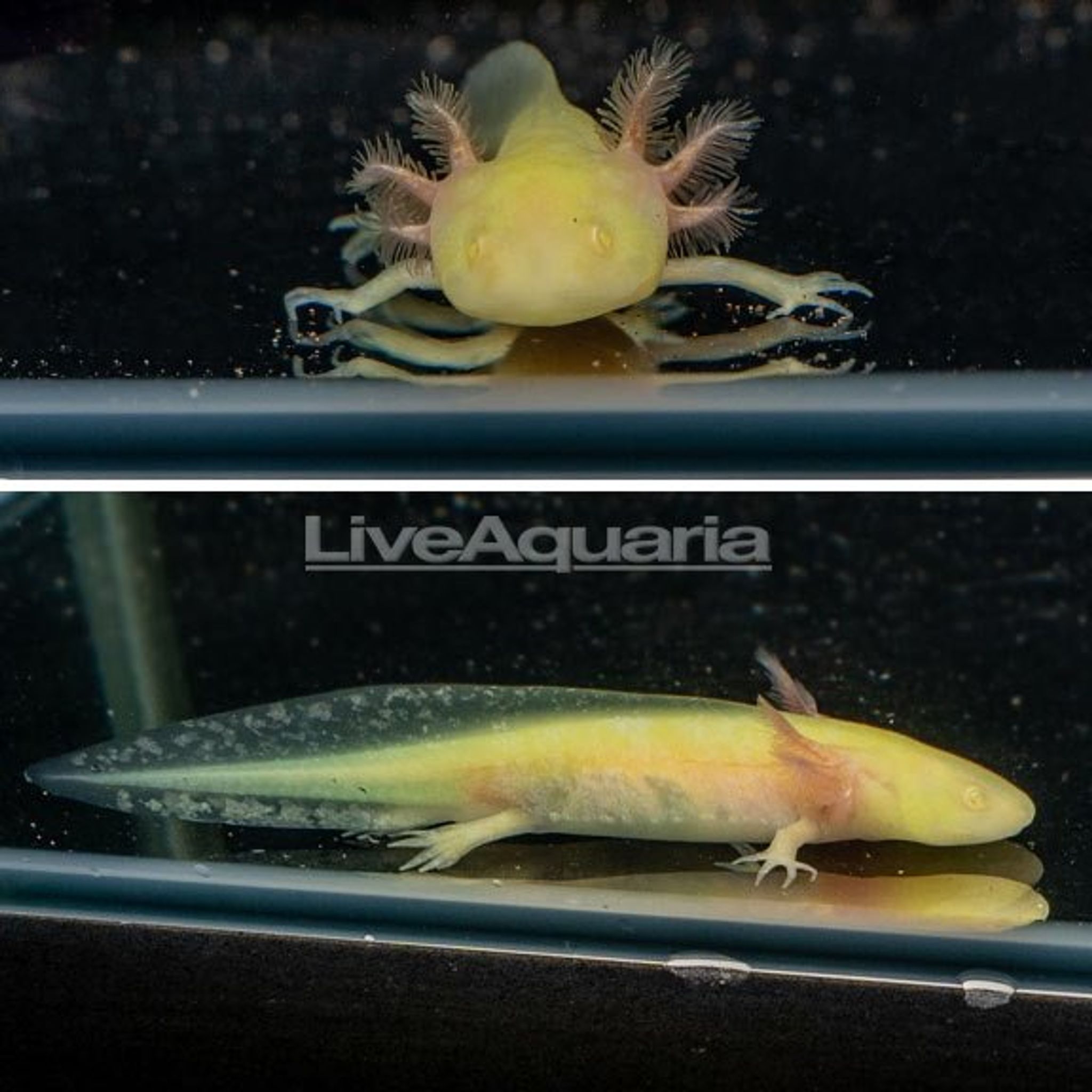
Axolotl Care Guide: Tank Size, Diet, Water Parameters and Temperament
Axolotls are not fish, and treating them like one is the fastest way to lose one in the first month. They are fully aquatic salamanders that need cool, gentle, well-cycled water rather than a heater and a filter borrowed from a tropical tank. This guide covers the tank size, water parameters, diet, and behavior every US keeper needs before bringing one home.
What exactly is an axolotl?
The axolotl (Ambystoma mexicanum) is a neotenic salamander — an amphibian that keeps its larval, gill-bearing, fully aquatic body for its entire life instead of metamorphosing onto land. That single trait explains almost every care rule in this guide: gills exposed to the water column, permeable skin, and a cartilage-based skeleton rather than a fish's scales and fins.
In the wild, axolotls exist only in the canals of Lake Xochimilco near Mexico City and are critically endangered due to habitat loss and invasive fish species. Every axolotl in the US pet trade is captive-bred; none are wild-collected. They're also famous in research circles for regenerating limbs, gills, and even parts of the spinal cord and organs.
Before you buy: axolotls are restricted or banned as pets in a handful of states, including California. Check your state and local regulations before purchasing one.
Tank size and setup
How big of a tank does an axolotl need?
A 20-gallon long (76 L) tank is the real starting point for one adult axolotl. Some sources list 10 gallons (38 L) as an acceptable minimum for a juvenile, but that's a bare floor, not a comfortable long-term home — plan on 20-gallon long from the start and add roughly 10 gallons for each additional axolotl.
Footprint matters far more than height because axolotls are bottom-dwellers that rarely climb. A long, wide "long" style tank gives more usable floor space than a taller tank of the same volume. Adults typically reach 9–12 inches (23–30 cm) nose to tail.
A tight-fitting lid is mandatory — axolotls can and do climb or jump out of open-top tanks.
Beginner setup checklist
| Item | Why it matters |
|---|---|
| 20-gallon long tank (or larger) | Floor space for a bottom-dwelling animal |
| Tight-fitting lid | Prevents escape/jumping |
| Sponge filter or baffled canister/HOB filter | Gentle flow; strong currents stress axolotls |
| Bare bottom or fine sand substrate | Avoids fatal impaction from swallowed gravel |
| Thermometer | Tracks the critical cool-water range |
| Chiller, or a cooling plan (fans, frozen bottles, cool room) | No heater is used — the goal is staying cool |
| Smooth hides and driftwood | Shelter for a light-averse, delicate-skinned animal |
| Water conditioner and liquid test kit | Dechlorination and ongoing ammonia/nitrite/nitrate checks |
| Feeding tongs and a soft net | Safe feeding and handling during maintenance |
Cycling before you buy the animal
Axolotls carry a heavy bioload for their size, and their skin absorbs toxins readily, so the tank must complete a full fishless nitrogen cycle before the animal goes in. Test ammonia, nitrite, and nitrate through the cycle and don't add the axolotl until ammonia and nitrite both read zero consistently.
Water parameters
Stable, cool, and clean water is the single biggest factor in axolotl health — more than any decor choice.
Temperature: the most important number
Axolotls need 60–68°F (16–20°C), with roughly 60–64°F (16–18°C) considered ideal. Sources disagree on the exact ceiling, so use this simple traffic-light approach:
| Zone | Temperature | Action |
|---|---|---|
| Safe | 60–68°F (16–20°C) | Normal daily range |
| Caution | 69–73°F (21–23°C) | Start active cooling now |
| Danger | 74°F (23°C) and above | Emergency cooling required immediately |
Sustained warmth causes heat stress, gill "melting," appetite loss, stunted growth, and stress marks (pale patches sometimes mistaken for a fungal infection). No aquarium heater is used for axolotls — the challenge in most US homes is keeping the tank cool, not warm.
Keeping the tank cool in summer:
- An aquarium chiller is the most reliable fix for consistently warm rooms.
- Frozen water bottles rotated in the tank or sump provide short-term cooling.
- A fan blowing across the open water surface increases evaporative cooling.
- Placing the tank in the coolest room in the house, or lowering room temperature generally, helps year-round.
pH, hardness, and ammonia
Aim for a pH of 6.5–7.6, leaning toward neutral-to-slightly-alkaline (about 7.4–7.6), with stable hardness around 5–8 dKH/dGH. The exact number matters less than stability — swings stress axolotls more than a pH that's a little off-center. Avoid soft, acidic, or fluctuating water.
Ammonia and nitrite must read zero at all times. Axolotls' permeable skin makes them far more sensitive to these toxins than most fish. Keep nitrate under 40 ppm, tolerating up to about 60 ppm only briefly — lower is always better.
Filtration and water changes
Use a sponge filter or a canister/hang-on-back filter with its output baffled or run through a spray bar. Axolotls dislike and are visibly stressed by strong current — look for curled gills, hiding, or refusing food as signs the flow is too strong. Even with solid biological filtration, do weekly 20–30% water changes to keep nitrate and organic waste low.
Substrate and decor
Bare-bottom vs. sand vs. gravel
| Substrate | Verdict |
|---|---|
| Bare-bottom | Safest and easiest to clean; no impaction risk |
| Fine sand | Natural look; safe if the grain is fine enough to pass through the digestive tract |
| Gravel or pebbles | Never use — commonly swallowed while hunting and causes fatal impaction |
Impaction from gravel is one of the most common reasons axolotls end up needing emergency veterinary care. Symptoms include bloating, lethargy, appetite loss, and a dragging abdomen — if you see these, switch substrate immediately and consult an exotic-animal vet.
If you prefer a rockier look, large, smooth stones or tile pieces too big to swallow are a safe alternative to sand.
Decor and hides
Choose smooth driftwood, caves, and hides with no sharp edges — an axolotl's skin is delicate and its skeleton is cartilage-based, so rough decor can cause real injury. Provide multiple hides, since axolotls are mostly nocturnal and light-averse and will hide constantly without shelter.
Lighting
Keep lighting dim and indirect. Bright light stresses axolotls and drives them into hiding around the clock. If live plants need more light, use a low-intensity LED and keep shaded zones and floating plants available as cover.
Axolotl-safe plants
Live plants tolerate cool water, survive low light, and help polish water quality. Good choices include:
- Java fern
- Anubias
- Java moss
- Marimo moss balls
- Water wisteria
- Hornwort
- Floating plants (for shade and cover)
Avoid delicate stem plants, which get uprooted by a bottom-dwelling animal that bumps into everything as it forages.
Diet and feeding
Axolotls are strict carnivores. Build the diet around:
- Earthworms (nightcrawlers — unwaxed, pesticide-free)
- Frozen bloodworms
- Frozen brine shrimp
- Frozen mysis shrimp
- Chopped shrimp
- Sinking salamander/axolotl pellets
Avoid feeder fish and feeder mice as regular food — both carry meaningful parasite and disease risk and can create fatty, nutritionally unbalanced diets. Save them, if at all, for rare occasions.
Feeding frequency by age
| Life stage | Frequency | Food type |
|---|---|---|
| Juvenile | Daily | Live foods: baby brine shrimp, blackworms, small earthworm pieces |
| Adult | Every 2–3 days (2–3x/week) | Earthworms, frozen bloodworms, brine shrimp, pellets |
Portion each feeding to roughly the size of the axolotl's head, and use feeding tongs to place food directly in front of the animal rather than dropping it onto the substrate — this avoids accidental substrate ingestion.
If your axolotl stops eating, check tank temperature first (most common cause), then water quality, then recent stress or handling before assuming illness.
Temperament and tankmates
Axolotls are solitary animals. They aren't aggressive toward people, but they should not be handled routinely — permeable skin, a protective slime coat, and a cartilage skeleton make handling genuinely risky for the animal. When handling is necessary (moving them for tank maintenance), wet your hands or use a soft net, support the whole body, never lift by a limb, gill, or the tail, and keep out-of-water time under a minute.
Tankmates are essentially never recommended. Axolotls will eat small fish, and fast or nippy fish will bite axolotl gills; most freshwater fish also need warmer water than axolotls can tolerate. Housing one axolotl per tank is the standard, safe approach.
Axolotls can also be territorial and cannibalistic toward each other, biting off gills or limbs of tankmates — especially similarly sized ones. These injuries regenerate but risk infection. If you keep more than one, only combine carefully size-matched juveniles, monitor closely, and have a spare tank ready to separate them the moment nipping starts.
Axolotl morphs
Color morphs are a genetic trait, not a different species, and pricing varies by morph and rarity:
- Wild-type — mottled brown/olive, the natural coloring
- Leucistic — pale pink-white body with dark eyes
- Albino — golden or white body with pink eyes
- Melanoid (black) — solid dark coloring with no gold flecks or eye shine; often priced higher than standard morphs
- Copper — warm copper-toned body
- GFP — carries a genetic marker that glows under blacklight
Once your setup is cycled and ready, you can browse freshwater livestock on FishyHub to compare what's currently available.
Baby axolotl care
Juveniles need a scaled-down version of the adult setup, not a smaller copy of the same routine:
- A smaller, shallower rearing container is easier for young axolotls to navigate and easier to keep clean.
- More frequent water changes and feedings than adults need.
- Live or small foods: baby brine shrimp and chopped blackworms.
- Keep siblings separated, or watch them closely — juveniles nip limbs and gills just as readily as adults.
Axolotl breeding (advanced, optional)
Breeding is possible in a home aquarium when a mature, size-matched male and female are conditioned and given a slight temperature drop to trigger spawning. A single female can lay hundreds to over a thousand eggs in one event, which is physically demanding on her body.
Parents will eat their own eggs, so separate them immediately after spawning. Raising the resulting larvae is a serious commitment — frequent live-food feedings and frequent water changes for weeks — and most experienced keepers advise against casual or repeated breeding unless you have a real plan for the eggs and larvae in advance.
Common mistakes and troubleshooting
| Mistake | Consequence | Fix |
|---|---|---|
| Gravel substrate | Impaction: bloating, lethargy, not eating | Switch to sand or bare-bottom; see a vet if symptoms persist |
| Tank running too warm | Stress, gill "melting," appetite loss, white fuzzy patches | Cool the tank immediately, improve water quality |
| Skipping the nitrogen cycle | Ammonia/nitrite spikes that burn gills and skin | Fully cycle before adding the animal; test regularly |
| Strong filter flow | Curled gills, hiding, refusing food | Baffle the outflow or switch to a sponge filter |
| Mixing unmatched axolotls | Nipped gills/limbs, infection risk | Separate at the first sign of nipping |
| Feeder fish/mice as staples | Parasites, nutritional imbalance | Use only as rare treats, or avoid entirely |
| Overhandling | Skin damage, infection, stress | Limit handling to necessary maintenance |
| Skipping water testing | Undetected ammonia/nitrite creep | Test weekly — axolotls hide illness until it's advanced |
Before adding a new axolotl to an established tank, quarantine it separately for a couple of weeks and check for clear eyes, intact gills, no red streaking on the skin, and an active feeding response. When transporting a new arrival home, acclimate slowly with a drip method and avoid sudden temperature changes between the bag and the tank.
Frequently Asked Questions
Can axolotls live with fish?
Not recommended. Axolotls will eat small fish, fast or nippy fish will bite axolotl gills, and most freshwater fish need warmer water than axolotls can safely tolerate.
Do axolotls need a heater?
No. Axolotls need to stay cool, and in most US homes a chiller or another cooling method is far more likely to be needed than a heater.
Can you hold an axolotl?
Only briefly and with wet hands when it's necessary, such as during tank cleaning. Routine handling stresses them and risks skin and slime-coat damage, so it should be kept to a minimum.
Do axolotls lay eggs?
Yes. Females lay eggs, often in large clutches attached to plants or decor, rather than giving birth to live young.
Is an axolotl a fish or an amphibian?
An amphibian. It's a neotenic salamander that keeps its aquatic, gilled larval form for its entire life instead of metamorphosing.
How big of a tank does an axolotl need?
A 20-gallon long tank minimum for one adult, with roughly 10 more gallons per additional axolotl, prioritizing floor space over tank height.
What do axolotls eat?
Primarily earthworms, frozen bloodworms, frozen brine shrimp, and sinking salamander pellets, fed daily as juveniles and every 2–3 days as adults.
Why is my axolotl not eating?
Check water temperature first — anything above the 60–68°F safe range is a common cause — then water quality, recent handling or stress, and finally rule out a health issue if parameters look fine.
Once your tank is cycled, cool, and ready, you can browse current axolotls and other freshwater livestock on FishyHub, along with substrate and filters suited to a gentle-flow, sand-or-bare-bottom setup.

