Assassin Snail Care Guide: Setup, Feeding, Water Parameters and Breeding
Assassin snails are one of the few truly reliable biological fixes for a pest snail explosion, but they're predators in their own right and will happily eat other snails you actually wanted to keep. This guide covers the setup, water chemistry, feeding, and breeding basics you need, plus how to size a cleanup crew correctly so you're not disappointed by the timeline.
What Is an Assassin Snail?
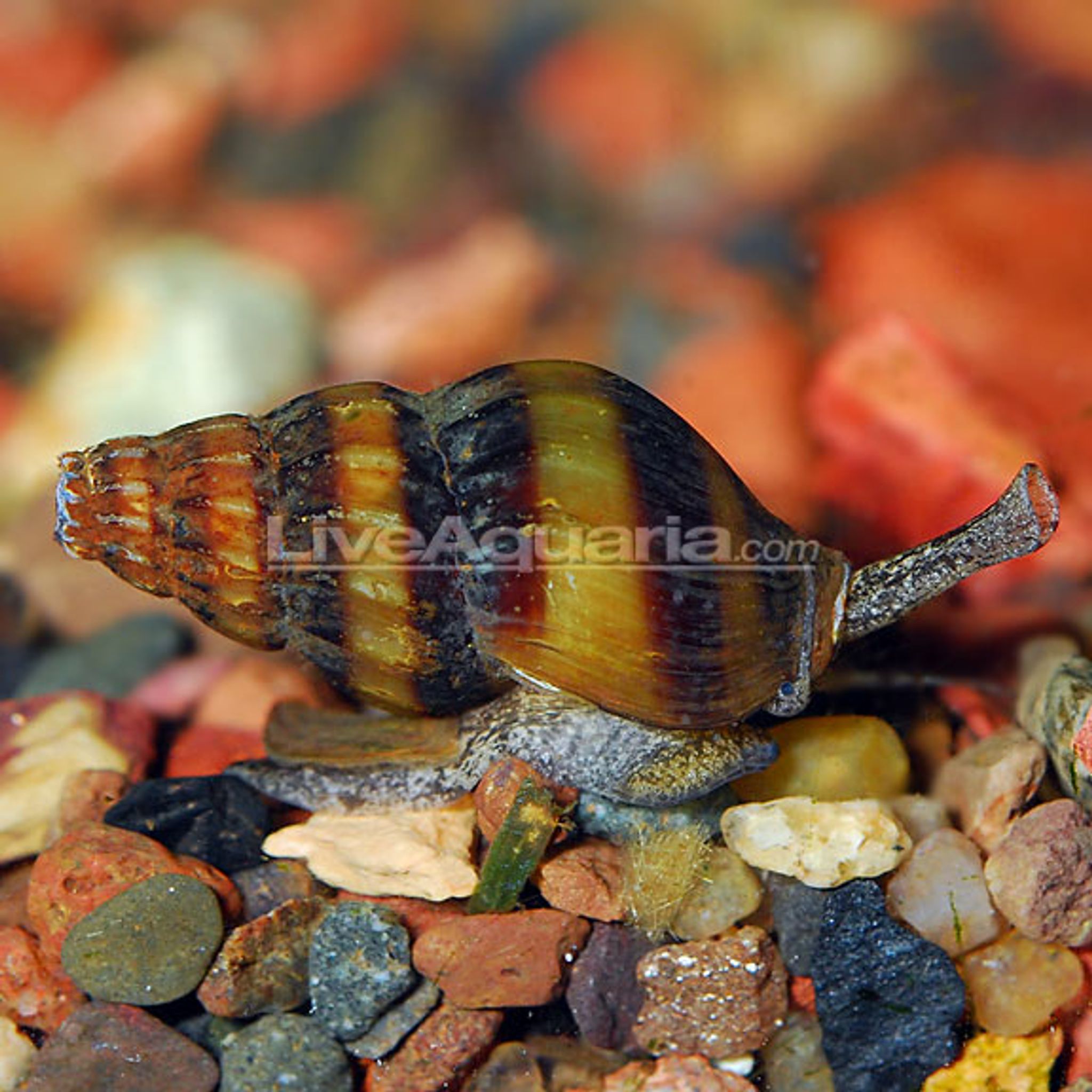
The assassin snail (Clea helena), sometimes sold as the "bumblebee snail," is easy to identify: a yellow-and-brown spiral-striped shell on an elongated, tube-shaped body, with a retractable proboscis it uses to sense and drill into prey. Adults typically reach 0.8–1 inch (2–2.5 cm) in shell length, though older or wild-caught individuals occasionally hit 1.5 inches.
Unlike the pest snails they're famous for eating, assassins are obligate carnivores — they won't touch algae or plant matter, so they're not a substitute for an algae-eating crew.
Tank Setup
Tank Size
A single assassin snail, or a short-term pest cleanup crew, can get by in a 5-gallon tank. For a permanent group, 10 gallons is the more practical baseline — more snails means more bioload from prey shells and waste, and a larger footprint also gives snails more territory to spread out while hunting. Add extra volume for each additional snail beyond a small starting group.
Substrate
Substrate is the one setup detail that's easy to get wrong. Assassin snails are largely nocturnal and crepuscular, spending daylight hours burrowed in the substrate and emerging to hunt as light fades. They need soft sand or fine, rounded gravel at least 2–3 inches deep. Sharp or coarse gravel blocks natural burrowing and can injure the foot, which leads to a stressed, inactive snail that rarely surfaces to feed.
Filtration and Flow
Assassins do best with low-to-moderate current. Cover intakes with a sponge pre-filter or fine mesh — juvenile snails and small pest snails alike can otherwise get pulled into an uncovered intake.
Water Parameters
Invertebrates are less forgiving of chemistry swings than most fish, and assassin snail shells are largely calcium carbonate, so mineral content matters as much as temperature.
| Parameter | Target Range |
|---|---|
| Temperature | 70–82°F (21–28°C) |
| pH | 7.0–8.0 (tolerable to 6.5–8.5) |
| General hardness (GH) | Moderate-to-hard, roughly 8–20 dGH |
| Carbonate hardness (KH) | 5–15 |
| Ammonia | 0 ppm, always |
| Nitrite | 0 ppm, always |
| Nitrate | Under 20 ppm ideal; 40 ppm as an absolute outer limit |
Why Nitrogen Levels Matter More for Invertebrates
Ammonia and nitrite are produced as fish and snail waste breaks down; beneficial bacteria in an established filter convert ammonia to nitrite and then to nitrate, which is far less toxic but still needs to be diluted with water changes. Fish can tolerate brief nitrite spikes that would stress a snail badly — invertebrates lack the same physiological buffers, so ammonia and nitrite need to read zero at all times, not just "low." Treat the nitrate ceiling the same way: under 20 ppm is a genuine target for health and breeding, and 40 ppm is a limit to avoid crossing, not a comfortable norm to live at.
Calcium and Shell Health
Low-GH water starves shells of the calcium carbonate they're built from, leading to pitting, thinning, or outright cracking over time. In soft-water setups, supplement with crushed coral, a cuttlebone, or a liquid calcium additive. Add calcium gradually — dosing too aggressively can spike GH and pH abruptly, which is its own source of stress. Small, incremental additions with monitoring between doses are safer than one large correction.
Acclimating and Quarantining New Snails
Assassin snails are sensitive to sudden shifts in salinity and pH, which can happen during shipping. A slow drip acclimation over 30–60 minutes, rather than simply floating the bag and dumping the water, reduces shock. It's also worth quarantining new snails for a couple of weeks in a separate container before adding them to an established tank, since snails can carry parasites or hitchhiking pests picked up during transport.
Feeding
Assassin snails are obligate carnivores. Their primary food source is live pest snails — ramshorn, bladder, and Malaysian trumpet snails. When natural prey is scarce, supplement with:
- Frozen or live bloodworms
- Brine shrimp or mysis shrimp
- Sinking carnivore or shrimp pellets
- Occasional bits of fish or shrimp meat as a protein treat
Feeding frequency should scale to how much natural prey is available. With an active pest outbreak, don't feed prepared foods at all — let the snails hunt. Once pest numbers drop, supplement every 2–3 days; feeding daily or overfeeding prepared foods makes assassins lazy hunters and fouls the water unnecessarily.
Using Assassin Snails for Pest Control
A commonly cited ratio for ongoing maintenance is 1–2 assassin snails per 10 gallons. For an active infestation, more snails will speed things along, but even a well-stocked group tends to clear things at a rate of roughly one prey snail per assassin every couple of days. That means real cleanup takes several weeks, not days — and as the pest population dies off, decaying shells and tissue can cause a temporary bioload spike, so plan on extra water changes during that stretch.
Buying a single snail expecting it to breed or single-handedly clear an infestation is the most common mistake — you need a group and patience.
Removing Pest Snails: The Bigger Picture
Assassin snails are one tool, not a magic fix. Pair them with:
- Manual removal — picking visible snails out by hand or with tweezers during water changes
- Traps — a piece of blanched vegetable (zucchini, lettuce) left overnight draws snails you can then remove in bulk
- Feeding discipline — pest snail booms are almost always fueled by overfeeding and leftover detritus, so cutting back food and vacuuming substrate reduces the food supply that let the population explode in the first place
- Quarantining new plants — snail eggs frequently hitchhike in on live plants, so a quarantine or dip before adding new greenery prevents reintroducing the problem later
Fish That Also Eat Snails
Some fish will eat snails too, and can complement (or substitute for) an assassin snail crew: clown, yoyo, and zebra loaches, certain gouramis, pufferfish, and even goldfish will all pick off snails. The catch is that several of these — loaches and puffers especially — will also eat assassin snails themselves, so decide on one approach or the other rather than combining them in the same tank. Loaches from FishyHub's stock can be browsed on the loach category page if you're weighing that route instead.
A Note on Predatory Land Snails
Don't confuse assassin snails with terrestrial predatory snails like the rosy wolfsnail, sometimes marketed as a "wolf snail" for controlling other land snails. These are land or semi-aquatic species, not aquarium inhabitants, and the rosy wolfsnail in particular is a notorious invasive species — it's illegal to keep or transport in a number of US states because of the ecological damage it has caused when released (Hawaii being a well-documented case). This guide covers the true aquatic assassin snail (Clea helena) only; never release any snail species into local waterways.
Tank Mates
Generally Safe
Peaceful community fish do well alongside assassin snails: tetras, rasboras, corydoras, livebearers like guppies and platies, gouramis, dwarf cichlids, and killifish. Community species already popular in a snail-cleanup tank can be browsed in FishyHub's small community fish category.
Do Assassin Snails Eat Shrimp?
The honest answer is conditional, not a flat yes or no. Healthy, fast, adult shrimp — bamboo, vampire, and ghost shrimp among the safer choices — generally evade assassin snails without issue in a well-fed tank. But assassins are opportunistic, and weak, sick, freshly molted shrimp, and shrimplets are at real risk. Large, robust shrimp colonies tend to coexist fine long-term; smaller or premium Caridina lines carry more risk and deserve more caution. Anyone stocking a shrimp colony can browse options on FishyHub's shrimp category page before deciding whether to add assassins to that tank.
Avoid or Use Caution
Loaches, larger cichlids, puffers, crayfish, and crabs will eat assassin snails outright — if numbers keep mysteriously dropping, this is the likely cause. Assassins will also attack and kill other snail species, including "decorative" ones like nerites and mystery snails, regardless of size — don't expect peaceful coexistence there.
Breeding
Assassin snails are gonochoristic, meaning individuals are either male or female — unlike most pest snails, which are hermaphroditic. Since the sexes can't be told apart visually, buy a group of 5–6 or more to reasonably guarantee both sexes are represented.
Females lay small clusters of individual, translucent-to-yellowish egg capsules on hard surfaces like glass, driftwood, or rock. Incubation runs roughly 3–8 weeks, faster near 80°F. Hatchlings emerge only a few millimeters long, burrow immediately, and typically stay hidden for 2–3 months before you'll spot them on the surface. Sexual maturity arrives around 6 months.
Reproduction is naturally slow compared to the pest snails assassins are meant to control, so an established colony is very unlikely to become a pest problem itself. If you're deciding whether to keep a permanent maintenance crew versus a temporary treatment, keep in mind that pest snail populations can rebound quickly once assassins are removed — a small standing group is often more practical than repeatedly rehoming and reintroducing snails each time numbers creep back up.
Common Problems
Preventing Bad Tank Odor
Odor in an invertebrate tank almost always traces back to overfeeding, decaying prey shells or dead snails left in the substrate, infrequent water changes, or a dirty substrate bed. Better feeding discipline and regular gravel vacuuming address the root cause directly rather than masking the symptom.
Fixing Cloudy Water
Cloudiness has two common causes that call for different fixes. A bacterial bloom — often triggered during initial cycling or after overfeeding, and sometimes set off by a wave of pest-snail die-off during cleanup — usually clears on its own within days once you cut back feeding, do a water change, and let the bacterial colony stabilize. Mineral or haze clouding looks different (a persistent fine haze rather than a white bloom) and is better addressed by checking filter media and source water rather than waiting it out.
Snail Not Moving or Withdrawn
A snail that stays sealed in its shell is usually reacting to poor water quality, low calcium, or cold temperatures. Check ammonia and nitrite immediately — both should read zero — then verify calcium and GH levels before assuming the worst.
Medications and Snails
Never use copper-based medications in a tank housing assassin snails or any other invertebrate. Copper, common in many ich and parasite treatments, is lethal to snails and shrimp. Remove all invertebrates before treating fish with a copper-based product.
Frequently Asked Questions
Do assassin snails eat shrimp?
Generally they leave healthy, fast adult shrimp alone, but they will take weak, sick, or freshly molted individuals, along with shrimplets. A large, well-fed colony of robust shrimp is considerably safer than a small or high-value colony.
How many assassin snails do I need to clear a pest snail infestation?
Roughly 1–2 assassin snails per 10 gallons works as an ongoing maintenance dose; heavier infestations benefit from more. Expect real results to take several weeks, not days, since assassins hunt at a modest pace.
Will assassin snails eat my mystery or nerite snails?
Yes. Despite occasional claims that certain species are safe, assassin snails will eventually attack other snail species regardless of size, including decorative ones like mystery and nerite snails.
Do assassin snails need a male and female to breed?
Yes — they're gonochoristic with separate sexes, unlike most freshwater pest snails, which are hermaphroditic. Since males and females look identical, keep a group of at least 5–6 to improve the odds of having both sexes present.
What do assassin snails eat once pest snails are gone?
Switch to frozen bloodworms, brine or mysis shrimp, sinking carnivore or shrimp pellets, and occasional protein treats like small bits of fish or shrimp meat. Feed every 2–3 days rather than daily to avoid fouling the water.
Are assassin snails hard to keep alive, and what is their lifespan?
They're considered an easy invertebrate for beginners as long as water quality and calcium levels stay stable. Typical lifespan runs 2–5 years with consistent parameters and calcium supplementation.
Ready to build out a snail-cleanup tank or round out your invertebrate lineup? Browse FishyHub's full freshwater livestock selection for compatible tank mates and stock.

