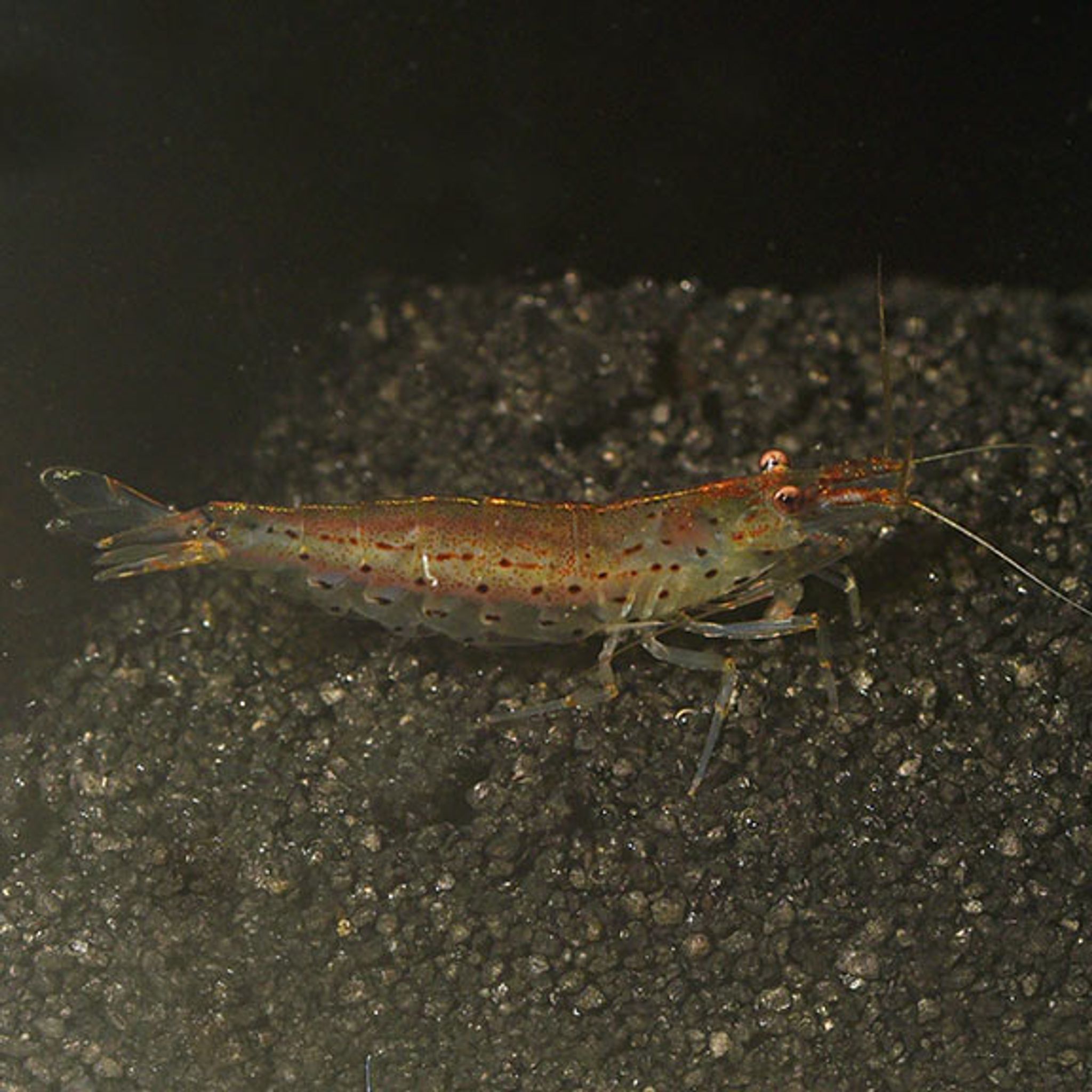
Amano Shrimp Care Guide: Setup, Feeding, Water Parameters and Breeding
Amano shrimp are among the hardiest, most useful invertebrates you can add to a freshwater tank, but most care advice repeats the same vague "great algae eater" line without explaining what that actually means. This guide covers real water parameters, tank setup, feeding, molting, and compatibility, plus a straight answer on breeding: it doesn't happen in a normal home aquarium, and here's why.
Identity and Lifespan
The Amano shrimp (Caridina multidentata), also sold as the Yamato shrimp, is native to freshwater streams in Japan, Taiwan, and Korea. It's noticeably larger than dwarf shrimp species like cherry shrimp, typically reaching 1.5–2 inches (4–5 cm), with large females occasionally hitting 2.5 inches (6 cm). Wild-type coloring is translucent grayish-brown with a broken, dotted or dashed line running along each side.
With stable water and consistent feeding, Amano shrimp typically live 2–3 years in captivity.
Sexing Amano Shrimp
Telling males from females becomes easy once you know what to look for:
- Females: larger overall, with a rounded underbelly (the "saddle" area where eggs develop) and a broken or stretched dash-line pattern along the side.
- Males: slimmer, with a continuous line of evenly spaced dots or dashes rather than broken marks.
Water Parameters
Amano shrimp are more sensitive to water quality and heavy metals than most community fish, so stability matters more than chasing an exact number. Sources vary slightly on the acceptable pH range and tank size, so the table below presents a safe target range alongside the wider tolerance.
| Parameter | Safe Target Range | Wider Tolerance |
|---|---|---|
| Temperature | 72–78°F (22–26°C) | 65–80°F (18–27°C) |
| pH | 6.5–7.5 | 6.0–8.0 (with gradual changes) |
| GH (general hardness) | 6–8 dGH | Moderate to hard |
| KH (carbonate hardness) | 0–4 dKH | — |
| TDS | 180–240 ppm | — |
| Ammonia / Nitrite | 0 ppm | 0 ppm (non-negotiable) |
| Nitrate | Under 20 ppm long-term | Under 40 ppm short-term |
GH, KH, and TDS in plain terms: GH measures dissolved calcium and magnesium, which shrimp need for a strong shell after each molt. KH measures carbonate buffering capacity, which keeps pH from swinging. TDS (total dissolved solids) is a combined reading of everything dissolved in the water — a rough stability check rather than a target to obsess over.
Never use copper in a shrimp tank. Copper-based medications, some liquid fertilizers, and even tap water passed through old copper piping can be lethal to Amano shrimp and other invertebrates in trace amounts that fish tolerate without issue.
Tank Setup
Recommendations for minimum tank size range from 10 to 20 gallons. A 10-gallon (38 L) tank can comfortably support a small group of 3–4 shrimp, but a 20-gallon (76 L) or larger tank is the safer choice for a full group of 6 or more, since larger volumes of water hold parameters more stable — something shrimp depend on.
Key setup requirements:
- A tight-fitting lid. Amano shrimp are strong climbers and jumpers and will escape through any gap, often ending up dried out on the floor.
- Dense planting: java moss, cabomba, and anubias give shrimp grazing surfaces and cover.
- Driftwood, rocks, and dedicated shrimp tubes or caves, especially important during molting when shrimp are vulnerable.
- Gentle filtration: a sponge filter or a hang-on-back filter with reduced flow works better than a powerful canister. Always secure intakes so shrimp aren't pulled in.
- A mature, established tank. Add Amano shrimp only after the tank has been running for 1–3+ months and has developed biofilm and light algae growth — their natural food base. Dropping them into a brand-new, uncycled tank means they arrive hungry with nothing to forage.
Group Size and Bioload
Amano shrimp should be kept in groups of at least 4–6. Solitary or paired shrimp tend to show more dominance and competitive behavior at feeding time, while larger groups spread that behavior out. Bioload per shrimp is low, so a well-planted tank can support a decent group without straining the filter.
A simple stocking rule of thumb is roughly one Amano shrimp per 2–3 gallons of water, kept in a 10–20 gallon or larger tank as a group.
Feeding Amano Shrimp
Amano shrimp are true omnivores and scavengers, not algae-only grazers. In addition to algae, biofilm, and decaying plant matter, they need supplemental feeding to stay healthy:
- Sinking shrimp pellets and algae wafers
- Blanched vegetables — zucchini, cucumber, spinach, and squash
- Occasional protein: frozen bloodworms or brine shrimp
- Calcium-rich foods to support shell development after molting
Blanching vegetables: lightly boil or steam cucumber, zucchini, squash, or spinach for 1–3 minutes to soften them before offering. This makes the vegetable easier for shrimp (and snails or fish) to graze on. Remove uneaten portions within 2–4 hours — a practical middle ground between letting shrimp graze and preventing the leftovers from fouling the water.
Leave shed exoskeletons in the tank. Shrimp eat their own molt for the minerals it contains, and removing it wastes a free calcium source.
A feeding dish or small plate placed on the substrate helps target food to one spot, makes it easier to monitor how much is actually being eaten, and cuts down on scattered waste in the substrate. You can browse sinking pellets, algae wafers, and other prepared foods in FishyHub's Food & Supplements category.
Avoid overfeeding protein and pellets. If shrimp are consistently full of prepared food, they stop foraging for algae and biofilm — which undermines the main reason most people keep them in the first place. Some keepers lightly reduce feeding for a couple of days to encourage more active grazing.
Molting
Amano shrimp molt roughly once a month, cycling through four phases: intermolt (normal activity), premolt (preparing to shed), ecdysis (the actual shedding), and postmolt (recovery). During postmolt, the shrimp is soft-shelled and highly vulnerable, so it needs hiding spots and stable calcium/GH levels to harden its new shell quickly.
A simple habit worth adopting: jot down the date of each shrimp's last visible molt. Tracking this over a couple of cycles makes it much easier to tell a normal monthly molt from a shrimp that's stuck or in distress.
Don't panic over a "dead" shrimp that turns out to be a shed exoskeleton — a molt can look eerily like a whole, motionless shrimp. Always check for the live animal itself before assuming a loss.
Amano Shrimp for Algae Control
This is where expectations need the most correction. Amano shrimp are genuinely effective against hair, thread, and string algae — soft, filamentous types they can easily grip and pull apart. They are unreliable to poor against black beard algae (BBA) and rarely touch flat or spot algae on glass at all.
Treat them as a supplement to manual cleanup and better tank maintenance — not a substitute for it. Reducing feeding slightly for a day or two can encourage more active foraging when an algae bloom needs attention.
Algae Types at a Glance
| Algae Type | Appearance | Best Cleanup Approach |
|---|---|---|
| Hair / thread / string algae | Fine, thin strands, often green | Amano shrimp graze this well |
| Black beard algae (BBA) | Dark, bristly tufts on leaves/hardscape | Manual removal, spot treatment, improved flow/CO2 |
| Staghorn algage | Branching, dark gray-green clusters | Manual removal; shrimp offer minor help |
| Green spot / film algae | Hard flat dots or haze on glass | Nerite or mystery snails, algae scraper |
Shrimp vs. Snails as Clean-Up Crew
Amano shrimp are more mobile and better suited to hair/thread algae and leftover food in tight corners of the substrate. Snails, particularly nerite and mystery snails, are more effective on flat glass and film algae and don't compete as heavily for prepared foods. Many well-balanced tanks use both — shrimp for texture and debris, snails for glass film.
For BBA specifically, a cleanup crew alone rarely solves it. Manual removal combined with more consistent CO2 or flow, and sometimes targeted spot dosing, addresses the root cause more reliably than adding more grazers.
Breeding and Life Cycle
Here's the answer most hobbyists actually need: Amano shrimp cannot complete their life cycle in a standard freshwater tank. Females carry 1,000–3,000 eggs for roughly 4–6 weeks, and it's completely normal to see a "berried" female in a home aquarium. The problem comes after hatching.
Larvae emerge as free-swimming zoea that require brackish to near-marine water (around 1.024 specific gravity) to survive their larval stages. Only after passing through this saltwater phase do they settle into the freshwater juvenile form recognizable as a young Amano shrimp. Because of this, nearly all Amano shrimp sold commercially are either wild-caught or raised by specialists running dedicated, multi-stage larval-rearing setups — not something replicated in a typical home tank.
Don't mistake an egg-carrying female for an easy home breeding project. Without a brackish-water larval stage, the zoea will not survive, no matter how well the main tank is maintained.
Sourcing note: since most Amano shrimp available for sale are wild-caught, treat newly arrived shrimp the way you would any wild-collected livestock — quarantine where possible and expect a period of shipping stress. Acclimate slowly rather than assuming they'll tolerate a quick drop-in.
Drip Acclimation for New Shrimp
Amano shrimp are more sensitive to sudden temperature and pH shifts than most freshwater fish, so a slow drip acclimation is worth the extra time:
- Float the sealed bag for 15–20 minutes to match temperature.
- Open the bag and add a small cup of tank water every 5–10 minutes.
- Continue until the bag volume has roughly doubled (typically 45–60 minutes total).
- Net the shrimp into the tank rather than pouring in the bag water.
Sudden parameter swings during routine water changes are also a common stress point — keep water change volumes moderate and match temperature closely.
Color Variants: Snow and Sun/Fire Amano
Standard Amano shrimp are translucent grayish-brown, but selectively bred color variants exist within the same species. The near-white "snow" variant and the orange-red "sun" or "fire" variant are line-bred for unusual coloration and typically sold at a premium. They are the same species as wild-type Amano shrimp, generally rarer and somewhat less hardy or available, but their care requirements are identical.
Compatibility
Amano shrimp are peaceful and generally safe with:
- Small, peaceful community fish: tetras, corydoras, otocinclus, kuhli loaches, bristlenose plecos, rasboras
- Other peaceful shrimp, including cherry shrimp and other neocaridina/caridina species (note the size difference)
- Snails
Avoid or use caution with: bettas (hit-or-miss — some ignore shrimp entirely, others hunt them, especially smaller or freshly molted individuals), larger or aggressive cichlids, goldfish, barbs, crayfish, and any fish large enough to eat a 2-inch shrimp.
Amano shrimp generally leave healthy dwarf shrimp alone but will opportunistically scavenge sick, dying, or freshly molted (soft-shelled) tankmates. This is scavenging behavior, not active predation on healthy animals — the size gap can still mean occasional bullying at feeding time, so provide ample hiding spots and consistent feeding to reduce competition.
Amano vs. Cherry Shrimp
| Trait | Amano Shrimp | Cherry Shrimp |
|---|---|---|
| Size | 1.5–2.5 in (4–6 cm) | ~1 in (2.5 cm) |
| Color | Translucent gray-brown | Vivid red (selectively bred) |
| Freshwater breeding | Essentially impossible at home | Breeds readily |
| Algae grazing | Strong on hair/thread algae | Moderate |
| Best use case | Supplemental algae/detritus cleanup | Colorful, self-sustaining display colony |
Common Mistakes to Avoid
- Adding shrimp to a brand-new tank with no biofilm or algae to forage
- Leaving the tank uncovered, letting shrimp climb or jump out
- Using copper-based medications or fertilizers
- Expecting shrimp to fully solve an existing algae outbreak without manual cleanup
- Mistaking a shed exoskeleton for a dead shrimp
- Skipping drip acclimation and causing pH/temperature shock
- Assuming a berried female means easy home breeding
- Overfeeding pellets and protein until shrimp stop foraging naturally
Frequently Asked Questions
Can Amano shrimp breed in a freshwater tank?
No. Females regularly carry eggs and berried females are completely normal, but the larvae (zoea) require brackish to near-marine water to survive their larval stage. In a standard freshwater tank, larvae will not survive to become juveniles.
Do Amano shrimp eat black beard algae?
Inconsistently at best. They're strong grazers on hair and thread algae but generally unreliable against black beard algae, which usually needs manual removal and improved flow or CO2 consistency instead.
How many Amano shrimp per gallon or tank?
A useful rule of thumb is about one Amano shrimp per 2–3 gallons, kept in groups of at least 4–6, in a tank of 10–20 gallons or larger.
Are Amano shrimp safe with betta fish?
It's genuinely case-by-case. Some bettas ignore Amano shrimp entirely, while others will hunt and kill them, particularly smaller or freshly molted shrimp. Treat any betta-shrimp combination as a risk rather than a guaranteed pairing.
Will Amano shrimp eat my fish or other shrimp?
No — they're peaceful scavengers, not predators. They may opportunistically eat weak, dying, or freshly molted tankmates, but they don't hunt or attack healthy fish or shrimp.
How long do Amano shrimp live?
Typically 2–3 years with stable water parameters and consistent nutrition.
What's the difference between Amano and cherry shrimp?
Amano shrimp are larger, translucent gray-brown, essentially unbreedable in freshwater, and stronger algae grazers. Cherry shrimp are smaller, bright red, and breed readily in a standard freshwater tank.
Why is my Amano shrimp turning pale or not moving?
This is often a normal premolt phase or a temporarily stuck molt. It can also point to poor water quality or old age, so check your parameters and compare against the shrimp's usual molt frequency before assuming the worst.
Ready to add Amano shrimp to your setup? Browse available stock and other freshwater invertebrates in FishyHub's Shrimps category.

