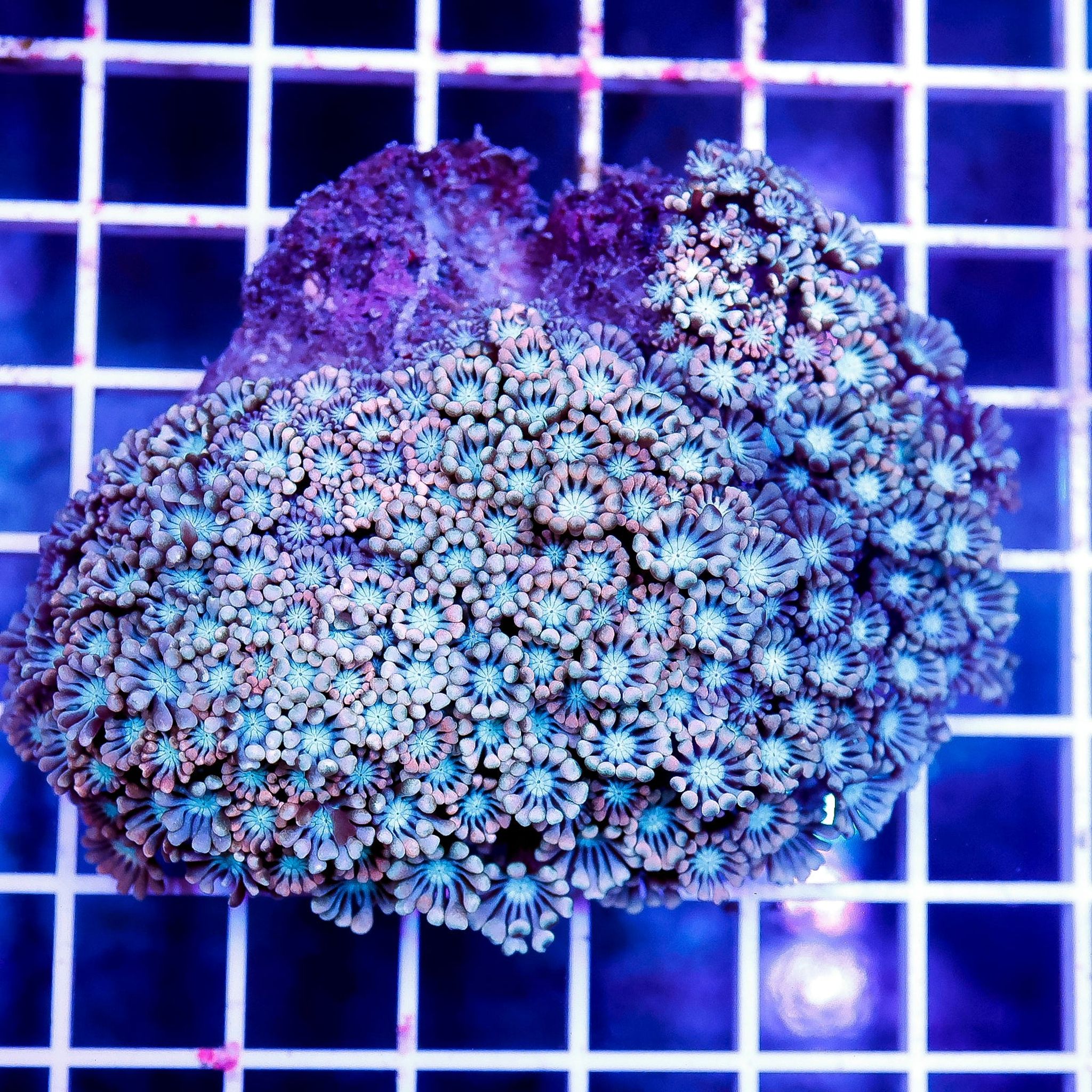

Alveopora Care Guide: Lighting, Flow, Feeding and Placement
Alveopora is often shelved next to Goniopora and given the same "expert only" warning, but the two large-polyp stony corals aren't equally demanding. This guide lays out the specific PAR range, flow pattern, feeding routine, and placement rules that keep Alveopora's fleshy polyps extended, plus the mistakes that most often cause them to shrivel up.
What Is Alveopora Coral?
Alveopora is a large-polyp stony (LPS) coral closely related to Goniopora, the coral commonly called the sunflower or flowerpot coral. The two genera share a fleshy, tentacle-covered look and a similar growth form, which is why hobbyists often lump their care together. That comparison undersells Alveopora — it's generally regarded as meaningfully hardier and more forgiving than Goniopora, making it a reasonable "middle ground" LPS: trickier than a hammer or torch coral, but far more approachable than its notoriously fragile cousin.
The clearest identification cue is the tentacle tip: Alveopora polyps typically end in 12 tentacle lobes, compared to the fewer, less pronounced lobes seen on most Goniopora. Colonies also show up in an unusual pastel palette — blues, pinks, greens, and golds not common in many other coral genera — which is part of why the genus draws attention despite its reputation.
Lighting Requirements
Moderate, consistent light is the target, not high intensity. Aim for roughly 50–100 PAR (µmol/m²/s) at the polyps, with a workable tolerance band of about 30–150 PAR. Too much light is riskier than too little — a coral kept slightly under target will simply grow slower, while one blasted with SPS-level intensity can bleach or retract within days.
Practical lighting guidelines:
- Measure at the polyp surface with a PAR meter when possible; don't estimate from fixture wattage alone.
- When introducing a new specimen or moving it, ramp intensity up gradually over 1–2 weeks rather than placing it straight into its target PAR.
- Consistency matters more than hitting an exact number — a stable 70 PAR beats a swinging 50–120 PAR.
- If polyps look pale, retracted, or "cooked" at the tips, move the coral lower or dim the fixture before assuming a different problem.
A LED lighting fixture with dimmable channels makes it far easier to hold Alveopora in this narrow moderate-light band without constantly repositioning the colony.
Water Flow
Alveopora wants medium-to-high, indirect and turbulent flow — never a direct, laminar jet aimed straight at the coral. The polyps are a useful real-time gauge of whether flow is dialed in correctly.
| Polyp behavior | Likely cause | Fix |
|---|---|---|
| Fully extended, gently swaying | Flow and light are well-matched | No change needed |
| Retracted or pinned flat ("wind-blown") | Flow too strong or too direct | Redirect powerhead, add a deflector, switch to random/pulsing flow |
| Limp, deflated, barely moving | Flow too weak | Increase pump output or reposition closer to a flow path |
| Closed for days after a water change | Recent parameter swing, not a flow issue | Hold steady and retest parameters before adjusting flow |
Random, turbulent movement from wave-maker style pumps suits this coral better than a single point source. Avoid pointing any powerhead directly at the colony even if the target GPH looks correct on paper.
Feeding
Alveopora is a passive planktivore that gets some energy from its zooxanthellae but noticeably improves in color and growth with supplemental feeding. Because the polyps are numerous and small, broadcast ("shotgun") feeding into the flow near the coral works better than trying to target-feed each polyp individually.
Good food choices:
- Powdered or liquid phytoplankton
- Rotifers
- Reef-specific pellet or powder blends formulated for filter- and passive-feeding corals
A reasonable default is 2–4 broadcast feedings per week. Daily light feeding is fine in a low-nutrient system with little natural plankton, while tanks already running a strong pod and plankton population need it less often. Feed small amounts frequently rather than large doses meant for fish — overfeeding fouls water and drives nuisance algae far more often than underfeeding stalls growth. Browse gel and powdered options sized for passive coral feeders.
Water Chemistry and Basic Parameters
Standard reef parameters apply, tracked as a stable trio rather than chased individually:
| Parameter | Target range |
|---|---|
| Calcium | 420–450 ppm |
| Alkalinity | 8–9 dKH |
| Magnesium | 1250–1350 ppm |
| Temperature | 76–80°F (24.4–26.7°C) |
| Salinity | 1.024–1.026 SG |
| pH | 8.0–8.4 |
Many care sheets jump straight to calcium/alkalinity/magnesium and skip the basics — but temperature, salinity, and pH stability matter just as much for keeping polyps extended. Magnesium in particular is an easy parameter to neglect while chasing calcium and alkalinity swings, and a magnesium slide is a common hidden cause of instability in the other two. Dose and test all three together, and prioritize day-to-day consistency over hitting an exact number on any single test.
Placement
Unlike most LPS, which get wedged into rockwork, Alveopora is naturally a bottom-dweller found on soft substrate and sandy areas in the wild. Give it:
- A sand bed or low rockwork placement, not high up on the display rock
- A frag plug set into the sand rather than glued into a rock crevice
- Several inches of open clearance in every direction, including nothing perched directly above it
This species can extend its tentacles considerably to feed, and it will sting or out-compete any coral placed within reach. Crowding neighbors too close causes tissue recession or aggression injuries on both corals, so treat the clearance radius as non-negotiable, not optional.
Growth and Propagation
Alveopora grows relatively quickly for an LPS. Frags and cuttings typically heal and re-extend their polyps within days, faster recovery than most large-polyp stonies manage. That quick recovery is one reason experienced keepers consider it a reasonable fragging candidate once a colony is established and healthy.
How Stable Flow From Your Sump Affects Alveopora
Alveopora's sensitivity to flow spikes isn't just about powerhead aim — it's also a plumbing issue most care guides skip entirely. If your return pump surges or an overflow can't keep pace, the resulting turbulence swings show up at the coral as exactly the "polyps stay closed for days" symptom described above.
A stable, sump-fed system depends on the overflow box handling water at least as fast as it arrives:
- Siphon-style overflows are compact and quiet but can lose prime and need an air gap or hole drilled correctly to stay reliable.
- Weir/gravity overflows are simpler and fail safer, though they typically need a larger footprint.
- A durbin- or Herbie-style dual-drain setup (one open drain plus one restricted, gurgle-free drain) gives quieter, steadier operation than a single-drain overflow and reduces the surges that come from a drain intermittently sucking air.
- Size the overflow's GPH capacity above your return pump's actual output, not just its rated maximum, so flow doesn't spike during a head-pressure change or after cleaning a pump impeller.
None of this replaces getting powerhead placement right in the display — but a tank that surges every time the sump water level shifts will undo careful in-tank flow tuning for a flow-sensitive LPS like this one.
Common Mistakes to Avoid
- Placing it high in the rockwork under intense light. This causes bleaching or retraction; move it down and re-acclimate gradually.
- Pointing a powerhead directly at the colony. Polyps stay closed under direct blast; switch to indirect or randomized flow.
- Skipping supplemental feeding. Light alone isn't enough — expect pale color and slow growth without broadcast feeding.
- Overfeeding at fish-food quantities. This fouls water and spikes nutrients; use small, frequent doses instead.
- Crowding neighboring corals within sting range. This causes tissue damage on both corals; leave real clearance.
- Ignoring magnesium. Chasing calcium and alkalinity alone while magnesium drifts causes recurring instability; test and dose all three together.
- Making sudden parameter changes during water changes or dosing. This keeps polyps retracted for days; prioritize stability over hitting a "perfect" number in one step.
Quarantine and Pest Watch
Before adding any new Alveopora to a display tank, quarantine it and inspect closely. Fleshy LPS corals like this one and Goniopora are targets for predatory snails and flatworms that feed on coral tissue at night. A coral dip during quarantine and a flashlight inspection after lights-out are worth the extra week before the colony goes into the main tank.
Frequently Asked Questions
Is Alveopora coral hard to keep?
It's an intermediate-level LPS — easier than Goniopora, but not a true beginner coral. The main challenges are consistent feeding, stable flow, and moderate, steady lighting rather than outright fragility.
What is the difference between Alveopora and Goniopora?
They're closely related and look similar at a glance, but Alveopora typically has more tentacle lobes (around 12), holds up better long-term, and is generally considered the hardier of the two genera.
Does Alveopora need to be fed?
Yes. It gets some energy from photosynthetic zooxanthellae, but it noticeably benefits from supplemental fine planktonic foods broadcast a few times per week.
What lighting is best for Alveopora?
Moderate PAR in the 50–100 range, with a tolerance band of roughly 30–150. Avoid high-intensity SPS-level lighting and acclimate gradually when changing fixtures or position.
Where should I place Alveopora in my tank?
Low in the tank — on sand or a stable low rock or plug — with several inches of clearance from any coral it could reach with extended tentacles or that could shade or sting it.
Why are my Alveopora's polyps not extending?
Check flow first (too strong or too weak), then recent parameter swings, lighting intensity, and feeding frequency. Retracted polyps are almost always one of these four factors rather than a sign the coral is dying.
Can Alveopora sting other corals?
Yes. It has notable tentacle reach for an LPS and can sting or out-compete neighbors placed too close, so give it real clearance in every direction.
How fast does Alveopora grow, and can I frag it?
It grows reasonably quickly for an LPS, and cut frags typically heal and re-extend polyps within days — faster recovery than most large-polyp stony corals.
For live specimens and everything needed to set up their spot in the tank, browse FishyHub's LPS hard coral selection.


