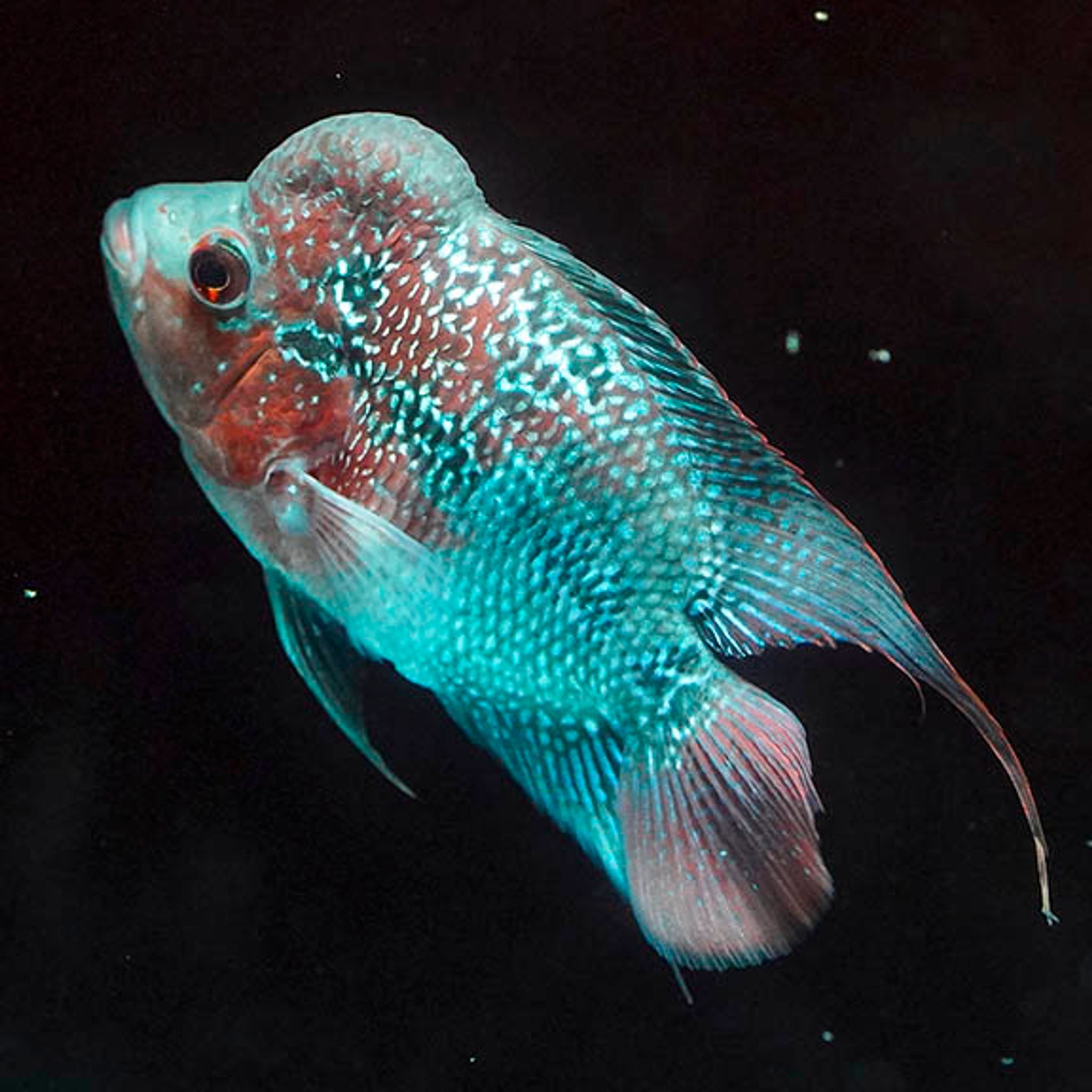
African Peacock Cichlid Care Guide: Tank Size, Diet, Water Parameters and Temperament
Peacock cichlids (Aulonocara) are the gentlest on-ramp into Lake Malawi cichlids, but they still need hard alkaline water, real floor space, and the right male-to-female ratio to thrive. This guide covers realistic tank sizes, water chemistry, feeding, and stocking so a first Malawi tank doesn't turn into a stressed, faded one.
Origin and Natural Behavior
Peacock cichlids are endemic to Lake Malawi in the East African Rift, one of three great Rift lakes along with Tanganyika and Victoria. About 20 described Aulonocara species exist, plus many line-bred color forms sold in stores. In the wild they live over sand and sand-and-rock transition zones, where they use sensory pores on their heads to detect invertebrates buried in the substrate, then dig or sift the sand to reach them.
This background explains most of their care requirements: they want fine sand rather than gravel, they need rockwork for territory boundaries, and they come from mineral-rich, highly alkaline water that a standard freshwater setup won't replicate on its own.
Size, Lifespan and Sexing
- Males: typically 5–6 inches (13–15 cm), with some species reaching about 7 in (18 cm).
- Females: usually about 1 inch smaller, around 4 inches (10 cm).
- Lifespan: 6–8 years on average, with 10+ years possible in stable, well-maintained tanks.
Males develop their full color between 6 and 12 months of age; females stay silver, brown, or gray for life. Because store juveniles are usually unsexed, either buy several extra to guarantee males and females, or buy fish that are already vented (sexed by examining the genital papilla) or clearly colored as adults. Club auctions and breeders are good sources for pre-sexed stock if you want to plan a group precisely.
Tank Size and Aquascape
Floor space matters far more than tank height for a fish that patrols and defends horizontal territory.
| Tank size | Footprint (approx.) | Realistic stocking |
|---|---|---|
| 40 gal breeder (151 L) | 36 × 18 in | Juvenile grow-out only, not a permanent home |
| 55 gal (208 L) | 48 × 13 in | 1 male + 4–5 females (practical minimum for a group) |
| 75 gal (284 L) | 48 × 18 in | Mixed group of 8–10, including tankmates |
| 90–125 gal (341–473 L) | 48–72 × 18–24 in | Multiple male color forms or an all-male peacock/hap community |
A 55-gallon tank is the practical floor for one male with a small harem; treat anything smaller as temporary. For a mixed Malawi community of haps and peacocks, aim for 75–125 gallons with roughly a 48 × 18 in (122 × 46 cm) footprint or larger.
Aquascape essentials:
- Fine sand substrate they can sift through comfortably.
- Rock piles and caves to break sightlines and create separate territories, which reduces chasing.
- Plenty of open swimming space between rock structures.
- Skip driftwood and peat, since both lower pH — the opposite of what these fish need.
- Plants are optional; hardy species like Anubias and Vallisneria can survive being dug around, though peacocks will occasionally uproot rather than eat them.
Water Parameters
Peacocks come from a large, stable, mineral-rich lake, and their water chemistry needs reflect that.
| Parameter | Target range | Note |
|---|---|---|
| Temperature | 76–82°F (24–28°C) | Lower 70s (°F) tolerated short-term; warmer end favors breeding and color |
| pH | 7.8–8.6 | 7.5 acceptable if rock-steady |
| General hardness (GH) | ~10–20 dGH | Soft water (4–6 dGH) is too low for a Rift Lake fish |
| Carbonate hardness (KH) | 8–12+ dKH | Buffers pH against swings |
| Ammonia / nitrite | 0 ppm | Non-negotiable |
| Nitrate | Under 20 ppm | Weekly water changes keep it here |
Buffering soft or municipal tap water: crushed coral or aragonite sand as substrate, or a commercial Malawi salt/buffer mix, will raise both pH and hardness gradually. Test GH and KH with a liquid test kit rather than guessing, and adjust in small steps over days, not all at once. Water from a salt-based home softener is unsuitable — it swaps hardness minerals for sodium and won't give peacocks the calcium and magnesium they need; use pre-softened or reverse-osmosis water remineralized for cichlids instead, or tap water treated with a buffer.
Stability matters more than hitting an exact number. A tank holding steady at pH 7.6 beats one swinging between 7.4 and 8.2.
Filtration and maintenance: peacocks are heavy eaters and produce real bioload. Filter at 5–10x tank volume per hour using a canister filter or sump, and change 25–40% of the water weekly. Skipped water changes let nitrate and dissolved waste build up, which fades color and contributes to bloat.
Diet
In the wild, peacocks are micropredators of small invertebrates buried in sand, not algae grazers and not strict carnivores that need mammal meat.
- Base diet: a quality sinking cichlid pellet made from whole marine protein sources (krill, shrimp, fish).
- Supplement: frozen brine shrimp, mysis shrimp, and daphnia.
- Color support: a pellet with some spirulina content helps bring out blues and yellows, especially under good lighting.
- Feeding schedule: 2–3 small meals a day, each finished within about 30 seconds, with one fasting day per week to support digestion.
Avoid: mammal meat such as beef heart, tubifex worms, and heavy bloodworm feeding. All three are linked to Malawi bloat and other gut problems in African cichlids — this is a common source of disagreement online, but the safer, better-supported approach is a protein-based pellet with modest plant content, not a bloodworm- or tubifex-heavy diet.
Temperament and Stocking
Peacocks rank among the mildest Malawi cichlids, but "mild for a cichlid" still means territorial males that will harass rivals and females, especially same-colored males or fish in a crowded tank. The honest summary: peaceful in a well-planned setup, aggressive in a crowded or mismatched one.
Harem Stocking
The standard approach: one male per 3–4 or more females. Never keep a single male with a single female — he will harass her relentlessly with nowhere for her to escape his attention.
All-Male Stocking
Only viable in larger tanks (75+ gallons):
- Choose males that look clearly different in color and pattern.
- Add them all at once so no fish has an established territorial head start.
- Slightly overstock to spread aggression across more targets rather than concentrating it on one fish.
Tankmates
Good matches: other peacocks, mild haps such as Copadichromis, Placidochromis, and blue dolphin, plus yellow labs. Non-cichlid options that tolerate high pH include Synodontis catfish, bristlenose and clown plecos, larger rainbowfish, and loaches — several of these are available in FishyHub's Plecos, Corys & Bottom Dwellers category.
Avoid: aggressive mbuna such as auratus, kenyi, and johanni-type Melanochromis/Maylandia, any fish small enough to be swallowed, and bettas or other slow, long-finned fish.
Popular Peacock Types and Related Fish
Several fish sold alongside peacocks are frequently confused with them or marketed under similar names. Care requirements are nearly identical across true peacock forms, but the related species below have different needs.
True Peacock Color Forms
- Sunshine/yellow peacock (A. stuartgranti "Maleri" / baenschi) and various blue forms are true species or recognized geographic variants.
- Strawberry peacock and OB (orange blotch) peacock are hybrid or line-bred forms, not wild species. If breeding for pure fry matters to you, don't mix different Aulonocara species or these hybrid lines together, and never represent hybrids as pure species when rehoming or selling fry.
Red Empress
Protomelas taeniolatus is a hap, not a peacock, despite frequent confusion. It reaches 6–7 inches, needs 75+ gallons, and makes a good peacock tankmate.
Electric Blue Hap
Sciaenochromis fryeri, also sold as the electric blue or blue cichlid, reaches 6–7 inches. It's a piscivorous hap needing 75+ gallons with one male to 4+ females, and it is more aggressive than peacocks and will eat small fry or fish.
Venustus and Livingstonii
Nimbochromis species are 8–10 inch ambush predators known for feigning death to lure prey close before striking. They need 125–150 gallons and are too large and predatory for a standard peacock community.
Blue Dolphin Cichlid
Cyrtocara moorii is a calm 8–10 inch sand sifter with a distinctive nuchal hump, compatible with peacocks in sufficiently large tanks.
Johanni Cichlid
A mbuna (Melanochromis), and an aggressive rock-dweller that should be kept away from peacocks.
Malawi Cichlids at a Glance
Lake Malawi cichlids fall into three broad groups, all sharing the need for hard, alkaline water and frequent water changes:
- Mbuna: rock-dwelling algae grazers, generally the most aggressive group.
- Haps: open-water or sand-dwelling carnivores, size and temperament vary widely by species.
- Peacocks (Aulonocara): sand-dwelling invertebrate hunters, the mildest of the three but still territorial.
Peacocks are widely considered among the most colorful freshwater fish available, and males color up best when they aren't dominated by a rival, water quality is high, and diet includes some color-supporting spirulina.
A Note on Conservation
The Victorian cichlid (Yssichromis piceatus), a Lake Victoria hap, is likely extinct in the wild and survives only through captive conservation programs. It's a useful reminder of why avoiding unintentional hybridization matters even in a home tank — once distinct forms are mixed, the genetics can't be separated back out.
Breeding Basics
Peacocks are maternal mouthbrooders. The male displays at a chosen spawning site; the female picks up the fertilized eggs and holds them in her mouth for about 21–28 days, releasing 10–25 fry (up to around 40 from larger, older females — brood size scales with female size and age). She won't eat while holding.
If isolating a holding female, do it carefully: stress from netting or an unfamiliar tank can cause her to spit or eat the brood prematurely. First foods for free-swimming fry are baby brine shrimp and finely crushed pellets.
Keeping Peacocks Healthy
- Quarantine every new fish for 3–4 weeks before adding it to the main tank.
- Watch for Malawi bloat (swollen belly, stringy white feces, rapid breathing), swim bladder issues, ich, and hole-in-the-head disease.
- Fish TB (mycobacteria) can occur in cichlid tanks and is zoonotic — wear gloves when handling tank water or sick fish, especially with any open cuts.
- At the first sign of bloat, stop feeding, do a water change, and treat early (a metronidazole-based treatment is commonly used); waiting rarely helps.
Common Mistakes
- Mixing with mbuna: peacocks get bullied, hide, and lose color in mixed mbuna tanks.
- Too few females or a 1:1 pair: the single female gets harassed relentlessly.
- Soft or acidic water, or pH swings from skipped water changes or driftwood in the tank.
- Overfeeding high-protein or meat-based foods, a leading cause of bloat.
- A male that won't color up: usually a dominant rival, chronic stress, poor water, or simple youth.
- Buying hybrids unknowingly, which undermines breeding-purity efforts down the line.
- Undersized filtration in a crowded tank, which lets nitrate creep up and stress the whole group.
Live peacocks, related haps, and compatible tankmates can be browsed in FishyHub's African Cichlids category, alongside filters and water treatment products sized for a heavily stocked cichlid tank.
Frequently Asked Questions
Can peacocks live with mbuna?
Generally no. Mbuna are more aggressive rock-dwellers that will bully peacocks into hiding and fading. The exception is a very large tank stocked with the mildest mbuna, such as yellow labs, and even then close monitoring is needed.
How many peacocks per tank?
A 55-gallon tank comfortably holds 1 male and 4–5 females. A 75-gallon tank can support a mixed group of 8–10 fish, including a few tankmates, given adequate filtration and rockwork.
Are peacock cichlids beginner-friendly?
Yes, for a cichlid — they're among the calmest Malawi species. Success depends on committing to hard, alkaline water and consistent weekly water changes rather than treating them like a typical community tank fish.
Can you keep a single peacock alone?
It's possible, but a lone male displays less natural behavior without rivals or females to color up for. A properly ratioed group is the better long-term setup.
Why is my peacock losing color?
The most common causes are stress, a subdominant social rank, poor water quality, or an inadequate diet. Check water parameters first, then look at whether a dominant tankmate is suppressing him.
How long does the female hold eggs?
About 3–4 weeks. She won't eat during this period, so don't be alarmed by a holding female refusing food — it's normal maternal mouthbrooding behavior.

